
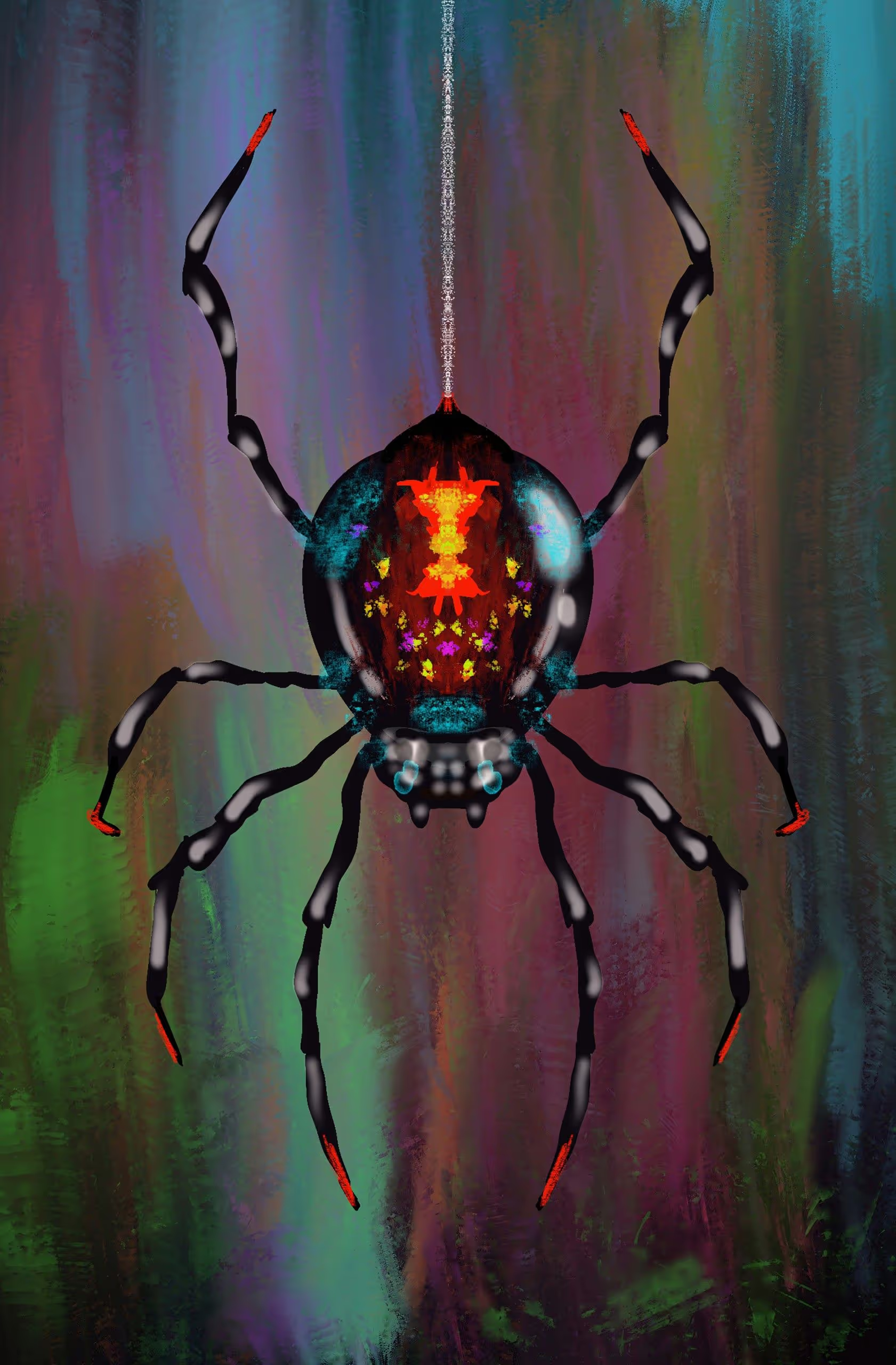
Arachnid Specimen
Jared Konopitski is an artist living and working in Sacramento, California. Jared works in many mediums; however, he primarily works with acrylic paintings. Jared has worked with many clients such as Art O Mat, Turning Art, Wide Open Walls, and more. In addition, Jared has curated numerous gallery shows and corporate art seminars. In his spare time, he enjoys facilitating art workshops with a focus on early art education. His work has been exhibited at galleries, festivals, and museums across the US and internationally, including:
The Smithsonian, Washington, D.C.
The Crocker Art Museum, Sacramento, CA
The Mutter Museum, Philadelphia, PA.
Stranger Factory, Algodones, New Mexico
Giant Robot, Los Angeles, CA
Baton Rouge Gallery, Surreal Salon, Louisiana
Jared has had his work seen in:
Adbusters Magazine(2023)
Juxtapoz.com (2018)
PBS Art Showcase television show (2015 – 2017)
The New Yorker (2014)
Color Ink Book (2013)
Papercut Magazine (2013)
Arcana’s Steampunk Originals (2013)
Heavy Metal Magazine (2012)
Catapult Magazine (2012), DisColouring Book (2012)
Penumbra eZine (2012)
And Wow! Cool! Psycho Nurse Calendar (2011)
Awards:
KVIE Art Auction Curator Award – 2019
I am inspired by all things beautifully weird, such as monsters, the bugs living under the rocks, creatures in jars, ghosts, all the nooks and crannies of nature. But I am also inspired by comics, cartoons, noise music and neon anything. So I try to paint the way these things make me feel. Sometimes it comes out fun, sometimes scary, sometimes cute, and sometimes ugly. But I love it all. I prefer painting with acrylics on wood. And after the acrylics are laid down, I love to go over everything with black Ink. The black ink brings out the detail and gives the whole painting a better sense of flow.

Arashiyama At Night
Born in Beacon NY, Mark is an artist based in Las Vegas, who is known for his impressionist paintings that capture people, places, and the events in his life. Timeless and tasteful, or modern and messy, images in his life demand to be examined. Mark often uses acrylic paint to create highly textured, three-dimensional works on canvas. A graduate of San Jose State’s art program, Mark’s first influence was his great uncle, Alfred Pizzarelli, an artist from New York City in the 1950s-60s. When admiring his uncle’s wonderful paintings, Mark would daydream about the people he painted, and interpret their expressions and colorful surroundings. Mark’s paintings are meant to burst with energy, life, and texture, beckoning the viewer to engage with the same wonderment he experienced as a child. You can find Mark’s artwork across Las Vegas in restaurants, wineries, and local galleries. When Mark’s not working, he’s spending time with his wife, Alicia, and their English bulldog, Belma.
So many things I think about when I look far away. Things I know, things I wonder, things I’d like to say.
After 20 wonderful years of painting, I decided that it was a perfect time to explore different landscapes. After months of researching different regions, I settled on Nara Park Japan. I found the history and landscapes to be intoxicating.
My artwork is a direct reflection of the different seasons of the park. I like to work in acrylics on canvas to enhance all the emotions and colors that Nara has to offer. I use bright or muted colors to communicate the magic and essence of the ever-changing seasons. Even as I branch out to other mediums or subject matters, I’m always tempted to come back to Nara Park.
If a viewer stops for just a moment to reflect on a piece I have created and feels emotion from the thousands of colors captured on canvas that reflect the different seasons, then I have succeeded in my work.
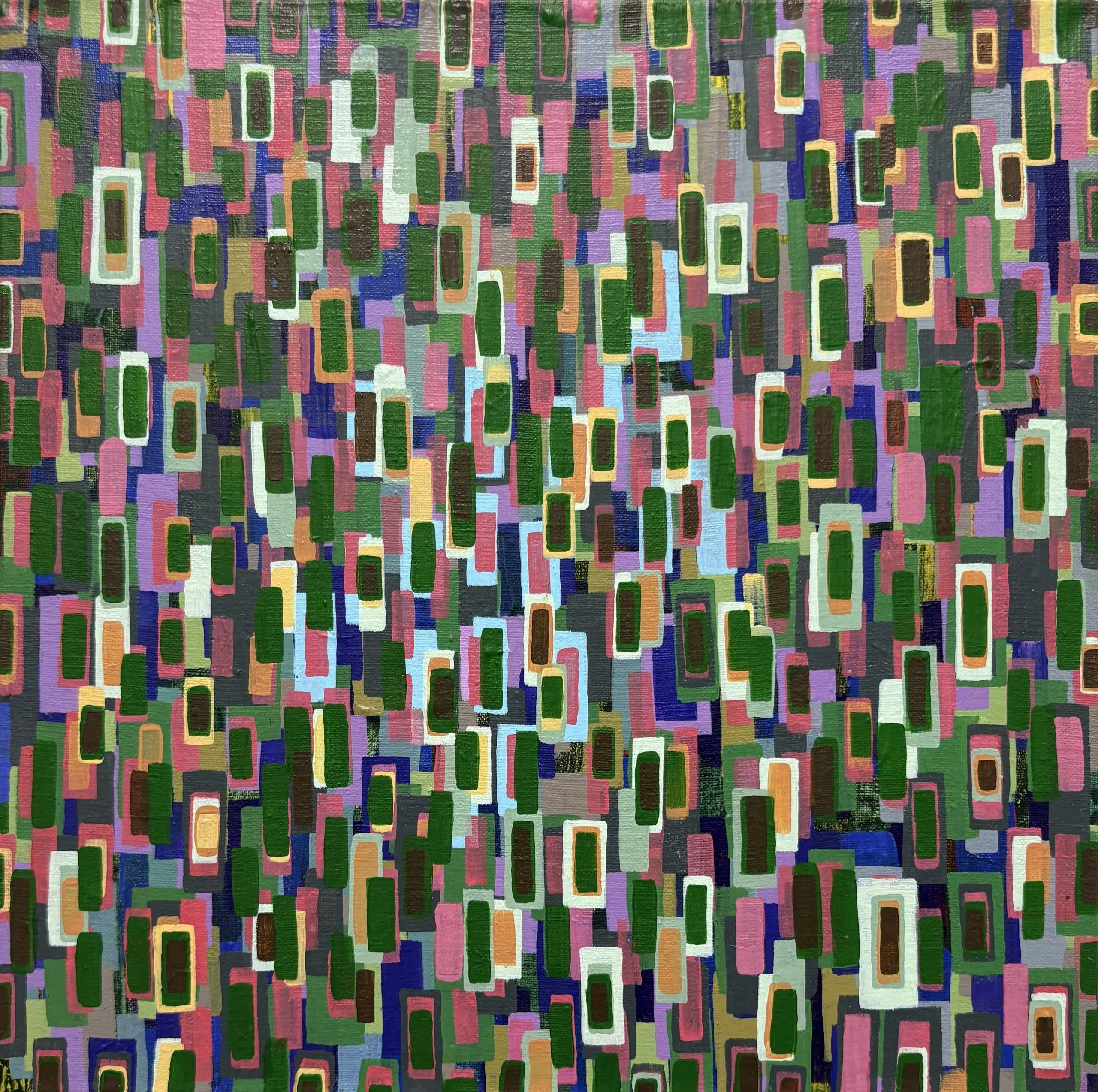
Arboricultural
Wallace Brown earned her MFA in Studio Art from the Meadows School of the Arts at Southern Methodist University (Dallas, TX) and a BFA in drawing and painting from CVAD at the University of North Texas (Denton, TX). Selected venues exhibiting her work include The Dallas Contemporary, UTD Haggerty Gallery, Hawn Gallery, The Dallas Art Fair, The 500X Gallery, Mighty Fine Arts Gallery, Studio 832, Axis Gallery, and Texas State University.
Abstract art from the early 20th century in Western Europe provides the springboard for her idiosyncratic paintings on canvas, paper, and wall. Theo Van Doesburg, associated with De Stijl from 1917 to 1931, along with the artist educators of the Bauhaus School from 1919 to 1933, are stalwart influences on her work. Research material to support her current inquiry comes directly from Joseph Albers’ Interaction of Color, 1963, Yale University.
Originally from Dallas, Wallace Brown lives and works in Austin, Texas.
Color has multiple infinities. Color has behavior. To speak in terms of hue over-simplifies our comprehensive understanding regarding the orchestration of light reflection and refraction within constantly changing environments. I begin a painting with an idea about the simultaneous contrast of color as described by Joseph Albers in the book Interaction of Color. Repetition of the hand-painted brushstroke is a meditative process that allows me to create form using color and shape alone. I read abstract art as one would read a book. The visual elements act as language without words.
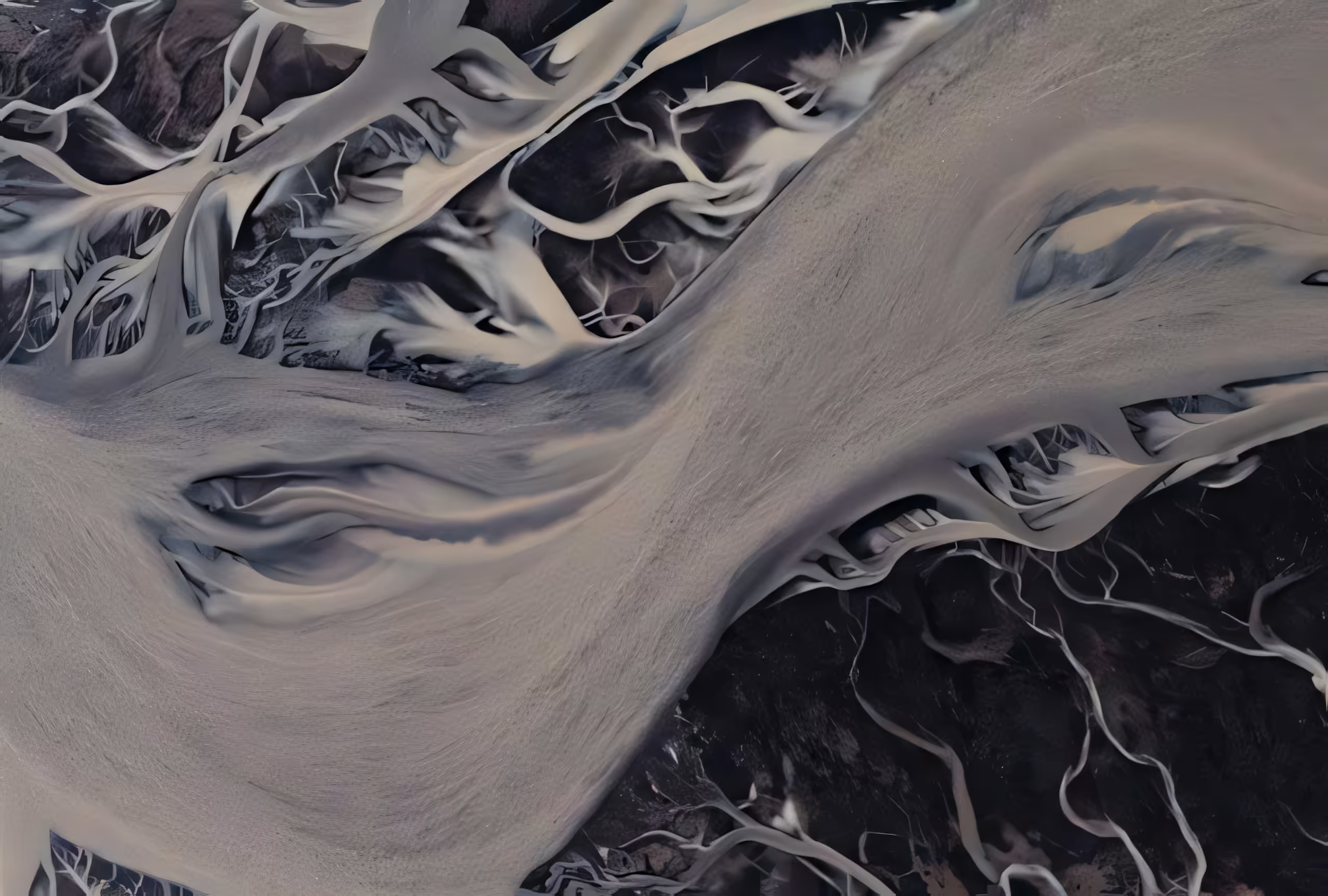
Arctic Flow
Mital Patel is a fine art photographer whose work explores the relationship between form, minimalism, and emotional presence in natural environments. His imagery often focuses on isolating subjects within vast landscapes, using light, scale, and restraint to create a sense of stillness and contemplation.
Working across wildlife and remote environments, Patel’s recent work has shifted toward more minimal and conceptual interpretations of nature, where composition and tonal control play a central role.
His work has been exhibited and recognized internationally, with a growing focus on fine art presentation and gallery-based storytelling.
Ice exists in a narrow spectrum of tone, where color is restrained, and form becomes the primary language. In this body of work, I explore the Arctic as a study in subtle variation shifts in light, texture, and scale within a limited palette.
Each image isolates a different presence: dominance, stillness, and quiet transience. The restrained blues and greys are not just aesthetic choices, but a way to remove distraction and focus attention on structure and atmosphere.
By working within a singular color space, the landscape becomes less about place and more about perception, where form, silence, and scale begin to dissolve into something introspective.
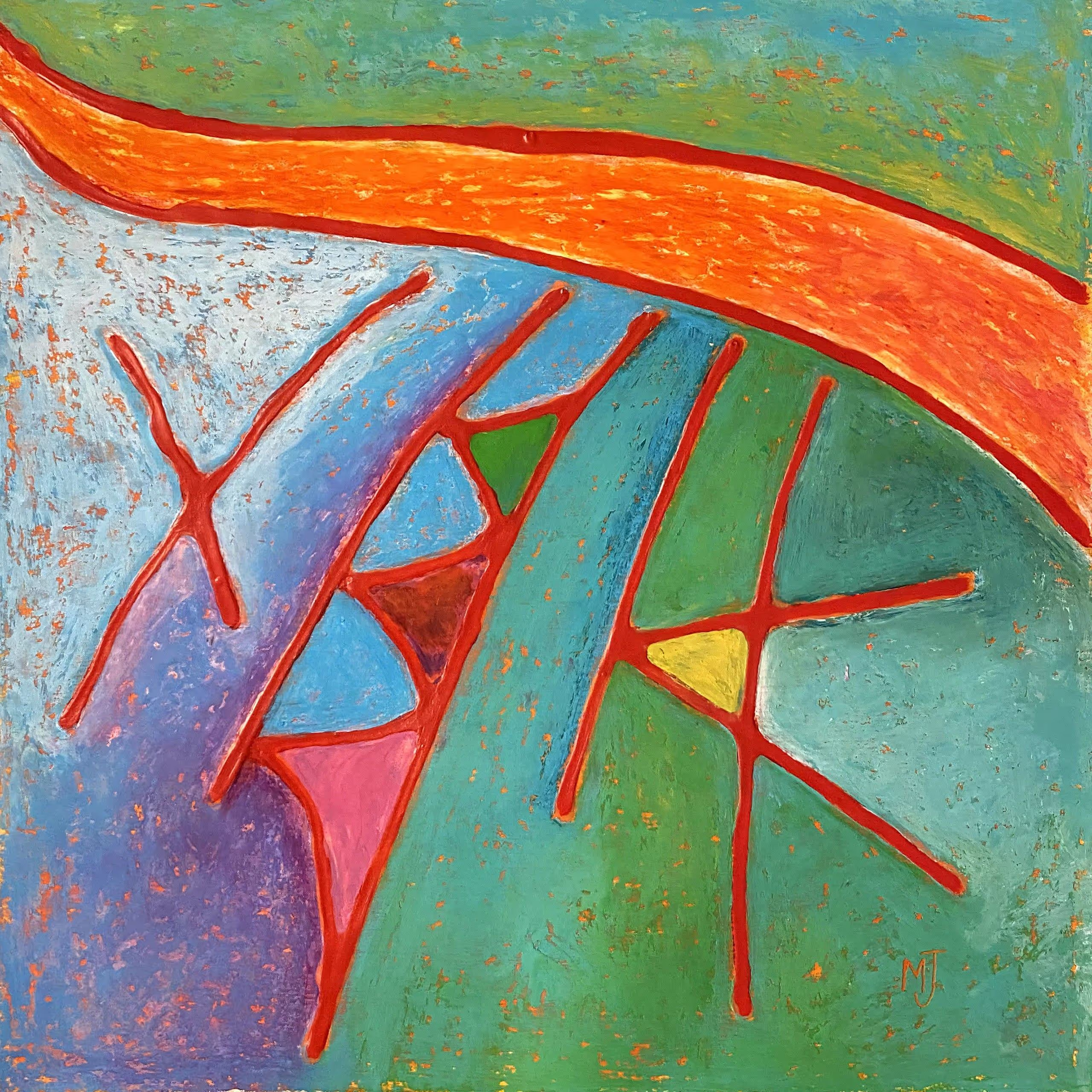
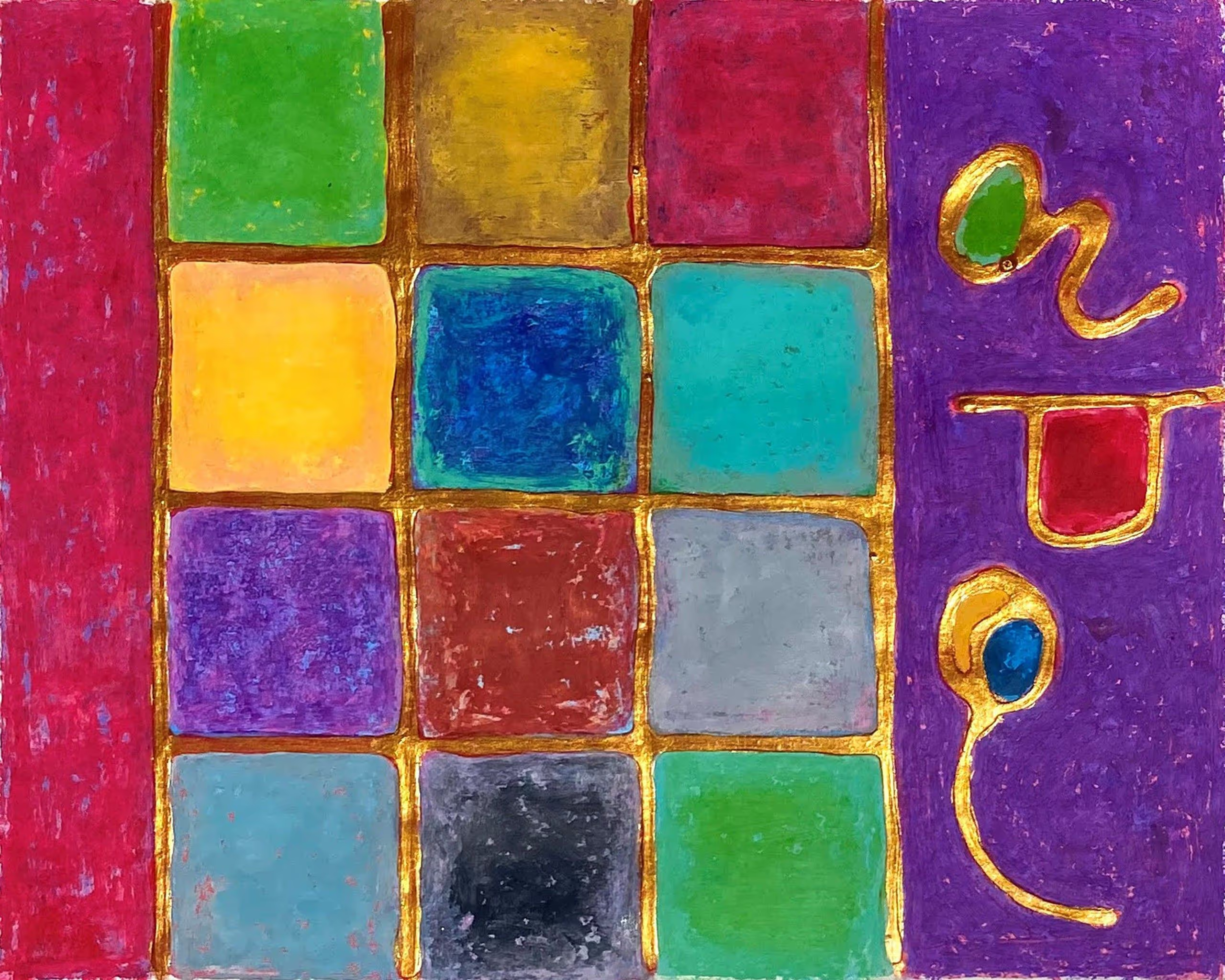
Armor Of God – Belt Of Truth
Marla Jean Clinesmith is a Louisiana-based painter whose work engages the visual and conceptual depth of the ancient Paleo Hebrew pictographic language within a contemporary abstract framework. Her practice examines how early symbolic systems functioned as both image and language — carrying layered meaning through form, structure, and gesture.
Working primarily in acrylic and often incorporating metallic elements, Clinesmith constructs luminous fields of color that serve as both atmosphere and architecture. Ancient letterforms emerge within these layered surfaces, not as illustration, but as structural components that inform composition, tension, and visual rhythm. Her work explores how symbolic language continues to shape perception and spiritual imagination across time.
A two-time recipient of the Denis Diderot Grant for residency at Château Orquevaux in France, Clinesmith also has four paintings in the Château’s permanent collection. Her paintings have been included in regional and national juried exhibitions, including the Adonai Global Art Fund Exhibition, where she was awarded First Place.
Through an ongoing studio practice, Clinesmith continues to investigate the intersection of abstraction, language, and sacred text — creating paintings that invite contemplative engagement while remaining grounded in contemporary painterly concerns.
Creativity rarely emerges in isolation; it is shaped by the influences that quietly form an artist’s way of seeing. My work is profoundly informed by a sustained engagement with the Ancient Hebrew—Paleo Hebrew—pictographic language, a visual system in which each letter functions not merely as text but as image, gesture, and bearer of layered meaning.
These primordial forms offer more than historical intrigue; they preserve a mode of thought in which language and symbol were inseparable. I am drawn to their ability to communicate complex spiritual ideas with striking visual economy, allowing ancient perception to speak into contemporary space.
Biblical texts remain a steady influence in my work, especially those that speak of God’s presence within human life. The ancient pictographs deepen my understanding of these themes, revealing layers of meaning that shape how I build each painting. I do not aim to illustrate scripture, but to express its depth and mystery through the painting itself.
Working primarily in acrylic and frequently incorporating gold leaf or metallic elements, I build layered fields of color that serve as both atmosphere and architecture. Color remains central to my process — a sensibility first awakened through formal study of color theory and continually refined in the studio.
By uniting luminous color with sacred pictographs, I seek to create paintings that operate as contemplative spaces — places where ancient consciousness and contemporary experience meet, inviting viewers into reflection rather than conclusion.
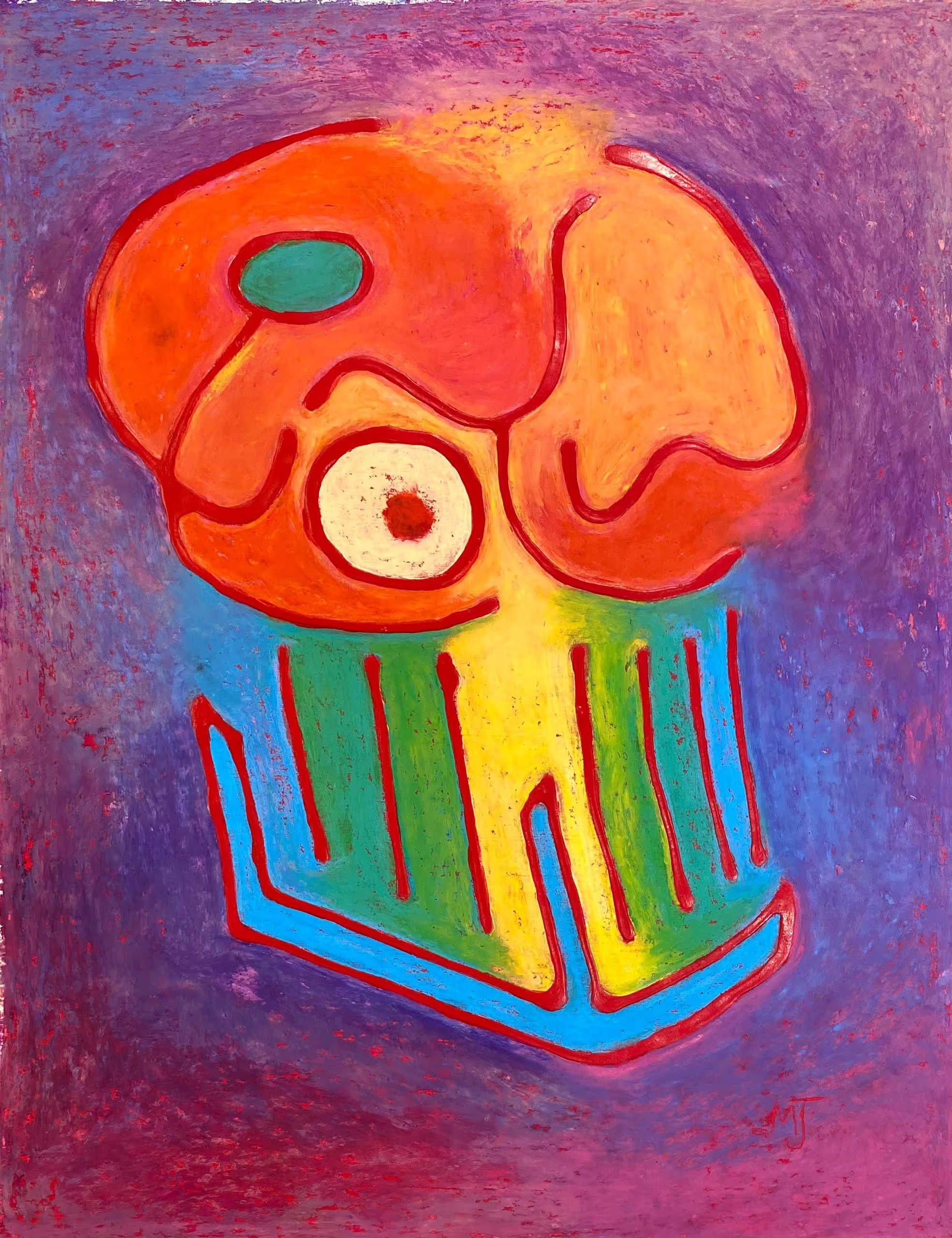
Armor Of God – Breastplate Of Righteousness
Marla Jean Clinesmith is a Louisiana-based painter whose work engages the visual and conceptual depth of the ancient Paleo Hebrew pictographic language within a contemporary abstract framework. Her practice examines how early symbolic systems functioned as both image and language — carrying layered meaning through form, structure, and gesture.
Working primarily in acrylic and often incorporating metallic elements, Clinesmith constructs luminous fields of color that serve as both atmosphere and architecture. Ancient letterforms emerge within these layered surfaces, not as illustration, but as structural components that inform composition, tension, and visual rhythm. Her work explores how symbolic language continues to shape perception and spiritual imagination across time.
A two-time recipient of the Denis Diderot Grant for residency at Château Orquevaux in France, Clinesmith also has four paintings in the Château’s permanent collection. Her paintings have been included in regional and national juried exhibitions, including the Adonai Global Art Fund Exhibition, where she was awarded First Place.
Through an ongoing studio practice, Clinesmith continues to investigate the intersection of abstraction, language, and sacred text — creating paintings that invite contemplative engagement while remaining grounded in contemporary painterly concerns.
Creativity rarely emerges in isolation; it is shaped by the influences that quietly form an artist’s way of seeing. My work is profoundly informed by a sustained engagement with the Ancient Hebrew—Paleo Hebrew—pictographic language, a visual system in which each letter functions not merely as text but as image, gesture, and bearer of layered meaning.
These primordial forms offer more than historical intrigue; they preserve a mode of thought in which language and symbol were inseparable. I am drawn to their ability to communicate complex spiritual ideas with striking visual economy, allowing ancient perception to speak into contemporary space.
Biblical texts remain a steady influence in my work, especially those that speak of God’s presence within human life. The ancient pictographs deepen my understanding of these themes, revealing layers of meaning that shape how I build each painting. I do not aim to illustrate scripture, but to express its depth and mystery through the painting itself.
Working primarily in acrylic and frequently incorporating gold leaf or metallic elements, I build layered fields of color that serve as both atmosphere and architecture. Color remains central to my process — a sensibility first awakened through formal study of color theory and continually refined in the studio.
By uniting luminous color with sacred pictographs, I seek to create paintings that operate as contemplative spaces — places where ancient consciousness and contemporary experience meet, inviting viewers into reflection rather than conclusion.
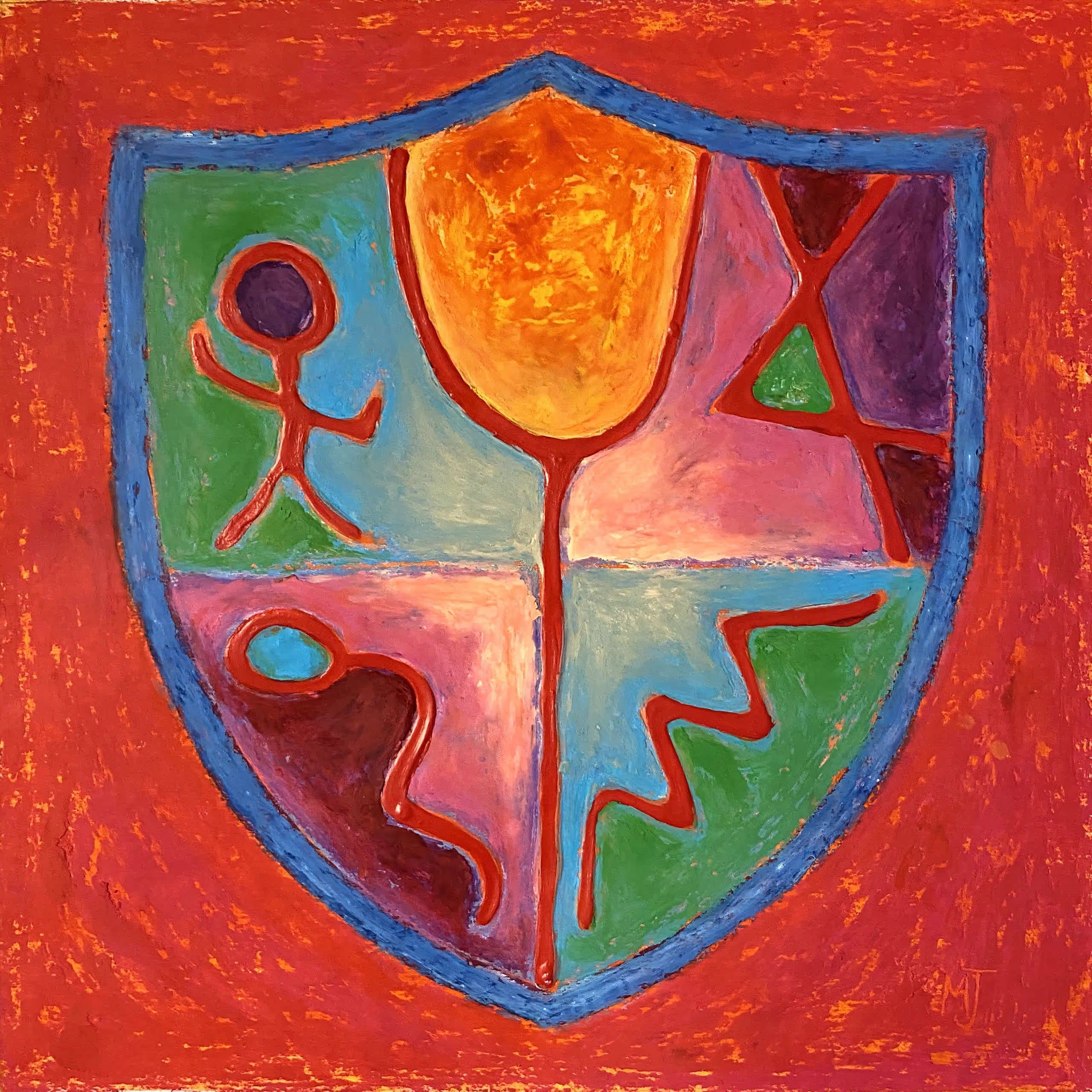
Armor Of God – Helmet Of Salvation
Marla Jean Clinesmith is a Louisiana-based painter whose work engages the visual and conceptual depth of the ancient Paleo Hebrew pictographic language within a contemporary abstract framework. Her practice examines how early symbolic systems functioned as both image and language — carrying layered meaning through form, structure, and gesture.
Working primarily in acrylic and often incorporating metallic elements, Clinesmith constructs luminous fields of color that serve as both atmosphere and architecture. Ancient letterforms emerge within these layered surfaces, not as illustration, but as structural components that inform composition, tension, and visual rhythm. Her work explores how symbolic language continues to shape perception and spiritual imagination across time.
A two-time recipient of the Denis Diderot Grant for residency at Château Orquevaux in France, Clinesmith also has four paintings in the Château’s permanent collection. Her paintings have been included in regional and national juried exhibitions, including the Adonai Global Art Fund Exhibition, where she was awarded First Place.
Through an ongoing studio practice, Clinesmith continues to investigate the intersection of abstraction, language, and sacred text — creating paintings that invite contemplative engagement while remaining grounded in contemporary painterly concerns.
Creativity rarely emerges in isolation; it is shaped by the influences that quietly form an artist’s way of seeing. My work is profoundly informed by a sustained engagement with the Ancient Hebrew—Paleo Hebrew—pictographic language, a visual system in which each letter functions not merely as text but as image, gesture, and bearer of layered meaning.
These primordial forms offer more than historical intrigue; they preserve a mode of thought in which language and symbol were inseparable. I am drawn to their ability to communicate complex spiritual ideas with striking visual economy, allowing ancient perception to speak into contemporary space.
Biblical texts remain a steady influence in my work, especially those that speak of God’s presence within human life. The ancient pictographs deepen my understanding of these themes, revealing layers of meaning that shape how I build each painting. I do not aim to illustrate scripture, but to express its depth and mystery through the painting itself.
Working primarily in acrylic and frequently incorporating gold leaf or metallic elements, I build layered fields of color that serve as both atmosphere and architecture. Color remains central to my process — a sensibility first awakened through formal study of color theory and continually refined in the studio.
By uniting luminous color with sacred pictographs, I seek to create paintings that operate as contemplative spaces — places where ancient consciousness and contemporary experience meet, inviting viewers into reflection rather than conclusion.
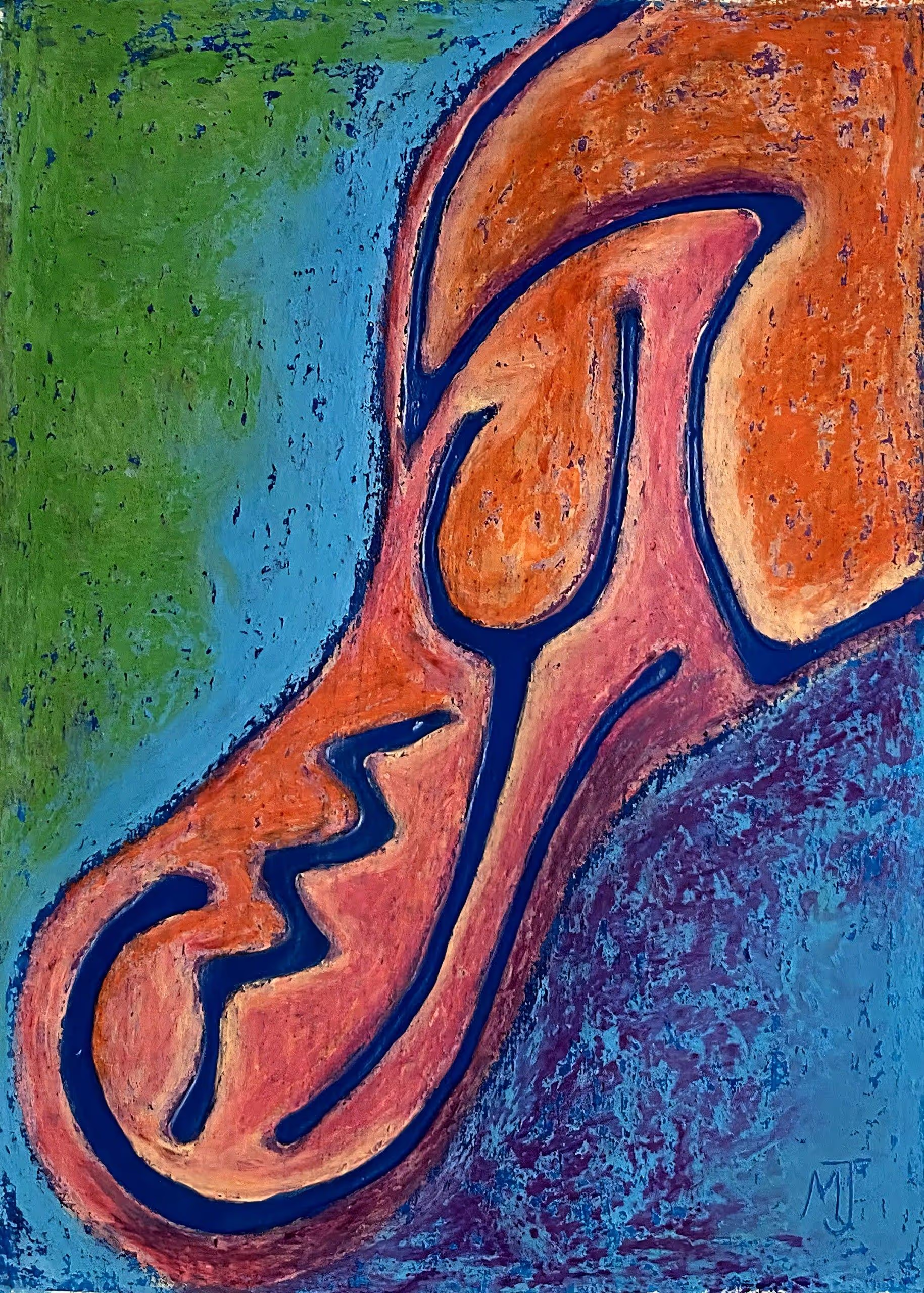
Armor Of God – Shield Of Faith
Marla Jean Clinesmith is a Louisiana-based painter whose work engages the visual and conceptual depth of the ancient Paleo Hebrew pictographic language within a contemporary abstract framework. Her practice examines how early symbolic systems functioned as both image and language — carrying layered meaning through form, structure, and gesture.
Working primarily in acrylic and often incorporating metallic elements, Clinesmith constructs luminous fields of color that serve as both atmosphere and architecture. Ancient letterforms emerge within these layered surfaces, not as illustration, but as structural components that inform composition, tension, and visual rhythm. Her work explores how symbolic language continues to shape perception and spiritual imagination across time.
A two-time recipient of the Denis Diderot Grant for residency at Château Orquevaux in France, Clinesmith also has four paintings in the Château’s permanent collection. Her paintings have been included in regional and national juried exhibitions, including the Adonai Global Art Fund Exhibition, where she was awarded First Place.
Through an ongoing studio practice, Clinesmith continues to investigate the intersection of abstraction, language, and sacred text — creating paintings that invite contemplative engagement while remaining grounded in contemporary painterly concerns.
Creativity rarely emerges in isolation; it is shaped by the influences that quietly form an artist’s way of seeing. My work is profoundly informed by a sustained engagement with the Ancient Hebrew—Paleo Hebrew—pictographic language, a visual system in which each letter functions not merely as text but as image, gesture, and bearer of layered meaning.
These primordial forms offer more than historical intrigue; they preserve a mode of thought in which language and symbol were inseparable. I am drawn to their ability to communicate complex spiritual ideas with striking visual economy, allowing ancient perception to speak into contemporary space.
Biblical texts remain a steady influence in my work, especially those that speak of God’s presence within human life. The ancient pictographs deepen my understanding of these themes, revealing layers of meaning that shape how I build each painting. I do not aim to illustrate scripture, but to express its depth and mystery through the painting itself.
Working primarily in acrylic and frequently incorporating gold leaf or metallic elements, I build layered fields of color that serve as both atmosphere and architecture. Color remains central to my process — a sensibility first awakened through formal study of color theory and continually refined in the studio.
By uniting luminous color with sacred pictographs, I seek to create paintings that operate as contemplative spaces — places where ancient consciousness and contemporary experience meet, inviting viewers into reflection rather than conclusion.
Armor Of God – Shoes Of Peace
Marla Jean Clinesmith is a Louisiana-based painter whose work engages the visual and conceptual depth of the ancient Paleo Hebrew pictographic language within a contemporary abstract framework. Her practice examines how early symbolic systems functioned as both image and language — carrying layered meaning through form, structure, and gesture.
Working primarily in acrylic and often incorporating metallic elements, Clinesmith constructs luminous fields of color that serve as both atmosphere and architecture. Ancient letterforms emerge within these layered surfaces, not as illustration, but as structural components that inform composition, tension, and visual rhythm. Her work explores how symbolic language continues to shape perception and spiritual imagination across time.
A two-time recipient of the Denis Diderot Grant for residency at Château Orquevaux in France, Clinesmith also has four paintings in the Château’s permanent collection. Her paintings have been included in regional and national juried exhibitions, including the Adonai Global Art Fund Exhibition, where she was awarded First Place.
Through an ongoing studio practice, Clinesmith continues to investigate the intersection of abstraction, language, and sacred text — creating paintings that invite contemplative engagement while remaining grounded in contemporary painterly concerns.
Creativity rarely emerges in isolation; it is shaped by the influences that quietly form an artist’s way of seeing. My work is profoundly informed by a sustained engagement with the Ancient Hebrew—Paleo Hebrew—pictographic language, a visual system in which each letter functions not merely as text but as image, gesture, and bearer of layered meaning.
These primordial forms offer more than historical intrigue; they preserve a mode of thought in which language and symbol were inseparable. I am drawn to their ability to communicate complex spiritual ideas with striking visual economy, allowing ancient perception to speak into contemporary space.
Biblical texts remain a steady influence in my work, especially those that speak of God’s presence within human life. The ancient pictographs deepen my understanding of these themes, revealing layers of meaning that shape how I build each painting. I do not aim to illustrate scripture, but to express its depth and mystery through the painting itself.
Working primarily in acrylic and frequently incorporating gold leaf or metallic elements, I build layered fields of color that serve as both atmosphere and architecture. Color remains central to my process — a sensibility first awakened through formal study of color theory and continually refined in the studio.
By uniting luminous color with sacred pictographs, I seek to create paintings that operate as contemplative spaces — places where ancient consciousness and contemporary experience meet, inviting viewers into reflection rather than conclusion.