

Knock Knock
Yue Zeng is a Chinese-American self-taught artist, mother, and wife, who has been living in the United States since 2008 and currently resides in Woodbury, Minnesota. Zeng’s artistic practice focuses on oil painting, with her subjects mainly being mythical creatures and imaginary landscapes. With a style between impressionism and fantasy, she explores the vividness of their spirit in saturated colors and organic forms. Zeng’s interest in the arts started in elementary school, sparking her desire to create later in life. In her twenties, she obtained her Master in Science from SUNY College of Environmental Science and Forestry in Syracuse, New York. In 2017 due to physical complications, Zeng had to leave the chemistry industry. Transformed by the experience, she decided to revisit her art practice and make it her career regardless of the obstacles she would face. Since then, Zeng has flourished in her artistic expression, finding her true passion in oil painting. Although Zeng explores other painting mediums such as gouache, pastel, and digital, oil and canvas feel the most natural. This medium allows her to relax and be free with the changeability of the material and exploration of color within the subjects she paints.
My paintings are an outlet to express the imagination I have inside my head that I can not put into words. After trying many mediums, I always find myself coming back to paint and brushes. In my current artistic practice, I use oil paint and mainly create portraits of mythical creatures and animals transfixed in the shifting colors of seascapes and landscapes. There is a natural spirit and magic to these creatures and their energy draws me in. Choosing to paint these creatures as real living wildlife rather than abstractions, I use bold and vivid colors to express the imagination intertwined with reality, finding magic between the seams. Using a saturated color palette, I create bold and striking imagery, contrast between foreground and background, subject and landscape, and light and darkness. Weaving their bodies and the surface of the landscape into each other through organic forms and flowing brush strokes, I find beauty, strength, and innocence in these creatures that reflect my inner world.
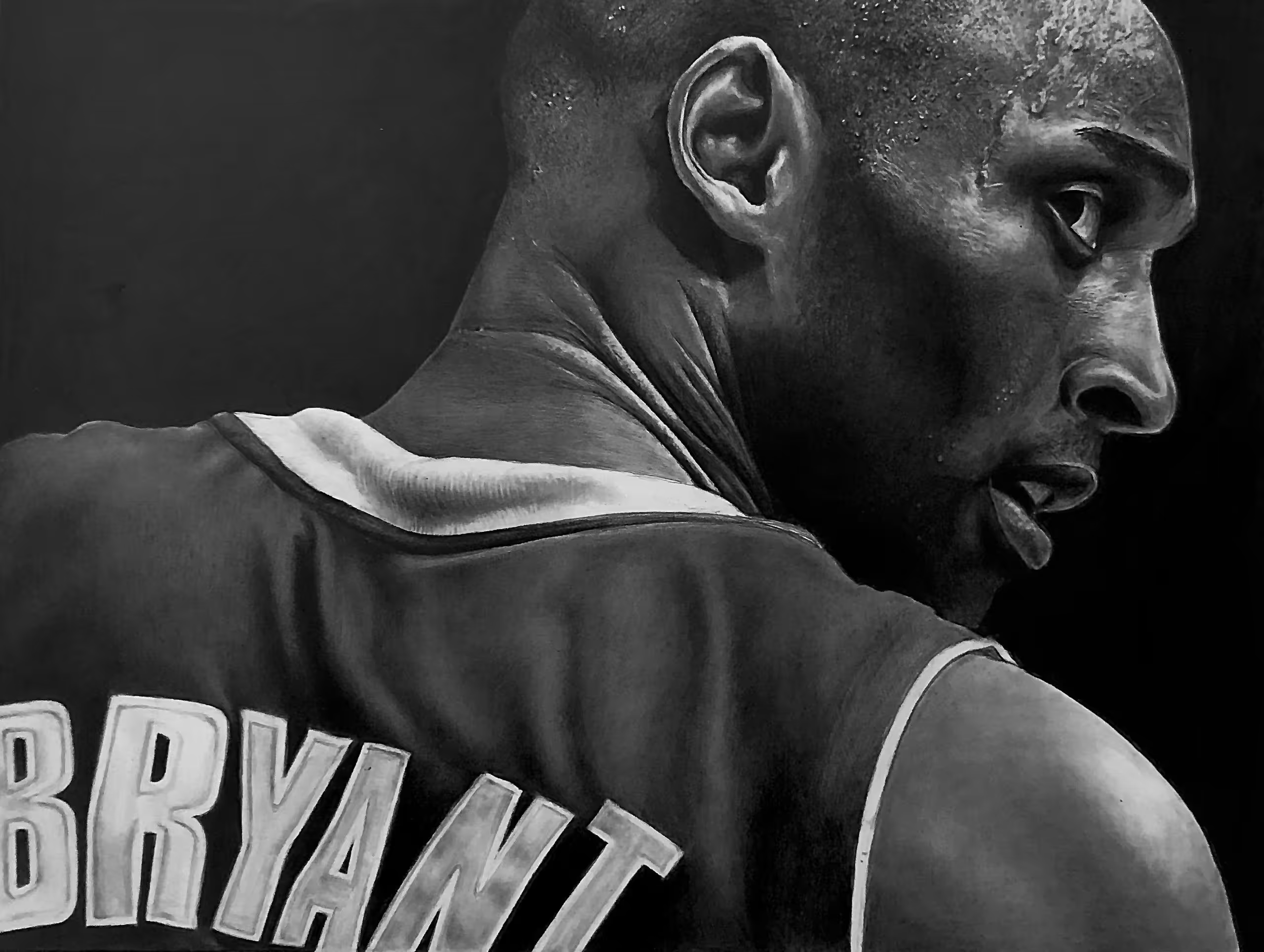
Kobe
When I was in grade school and high school, I did a lot of art. I like to think it offered me an incredible foundation for what would come much later. In high school, I studied under Walt Bartman, doing oil painting primarily. I was accepted into the Maryland College of Art and Design on a figure drawing scholarship program that they offered to high school students when I was 16. After high school, I went on to pursue my other passion — helping people. I’ve spent the last 25 years working as a psychotherapist. Sometime in the middle of all of that, I had kids (twins), and eventually came back to drawing in 2017. What I do now is primarily self-taught, though I do feel my training and education as a child have created an invaluable foundation for my work today. I’ve watched countless hours of slowed-down YouTube videos and tutorials, and have spent thousands of hours drawing, practicing, and improving. It’s been a wonderful and challenging journey, and I’ve loved every minute of it! My goal moving forward is to continue to learn and challenge myself as I transition to art full-time. I feel the next step is to get my name out there to the art world. I have just recently started applying to calls via café, and have been accepted into a small handful of international juried shows. My goal as an artist is the same as my goal as a human — connection. I work to find the place where we all meet; that place where our differences recede, and we can settle in. That’s why I draw, to find that snapshot moment where someone can look at my art and go, Oh, yes. I know that feeling.
My artistic practice centers on portraiture—on drawing out the unseen essence of a subject and translating it through the delicate control of graphite. I explore the quiet power of detail—each mark is an invitation to slow down, to look closer, and to witness what is often overlooked. Every drawing is a form of deep listening, an act of attention that honors the emotional and psychological presence of the individual.
I believe hyperrealism, when pursued with discipline and sensitivity, becomes more than a replication of the visible world—it becomes a mirror, a bridge, and sometimes, a wound made visible. I’m fascinated by the complexity of the human face and the subtle interplay of light, texture, and expression that gives a portrait its emotional charge. As a psychotherapist, I’m naturally attuned to nuance, which shapes my artistic philosophy: that realism can reveal as much about the internal world as the external one. It allows me to build tonal depth slowly, almost sculpturally, honoring the patience, presence, and attention each subject deserves.
My style has evolved over the last eight years to a refined form of realism that balances technical control with expressive intent. I see art as a language, and my goal is to create a sense of atmosphere and feeling. I’m currently exploring new directions, including the integration of charcoal for its expressive depth and contrast.
My goal as an artist is the same as my goal as a human — connection. I work to find the place where we all meet; that place where our differences recede, and we can settle in. That’s why I draw, to find that snapshot moment where someone can look at my art and go, Oh, yes. I know that feeling.
My artistic practice centers on portraiture—on drawing out the unseen essence of a subject and translating it through the delicate control of graphite. I explore the quiet power of detail—each mark is an invitation to slow down, to look closer, and to witness what is often overlooked. Every drawing is a form of deep listening, an act of attention that honors the emotional and psychological presence of the individual.
I believe hyperrealism, when pursued with discipline and sensitivity, becomes more than a replication of the visible world—it becomes a mirror, a bridge, and sometimes, a wound made visible. I’m fascinated by the complexity of the human face and the subtle interplay of light, texture, and expression that gives a portrait its emotional charge. As a psychotherapist, I’m naturally attuned to nuance, which shapes my artistic philosophy: that realism can reveal as much about the internal world as the external one. It allows me to build tonal depth slowly, almost sculpturally, honoring the patience, presence, and attention each subject deserves.
My style has evolved over the last eight years to a refined form of realism that balances technical control with expressive intent. I see art as a language, and my goal is to create a sense of atmosphere and feeling. I’m currently exploring new directions, including the integration of charcoal for its expressive depth and contrast. I’ve just completed my largest piece to date—a graphite portrait measuring three feet tall and two feet wide—which has expanded both my physical and emotional engagement with the medium, allowing space for story, intimacy, and connection.
My goal is to create drawings that don’t simply replicate life but evoke it—quietly, powerfully, and with honesty.
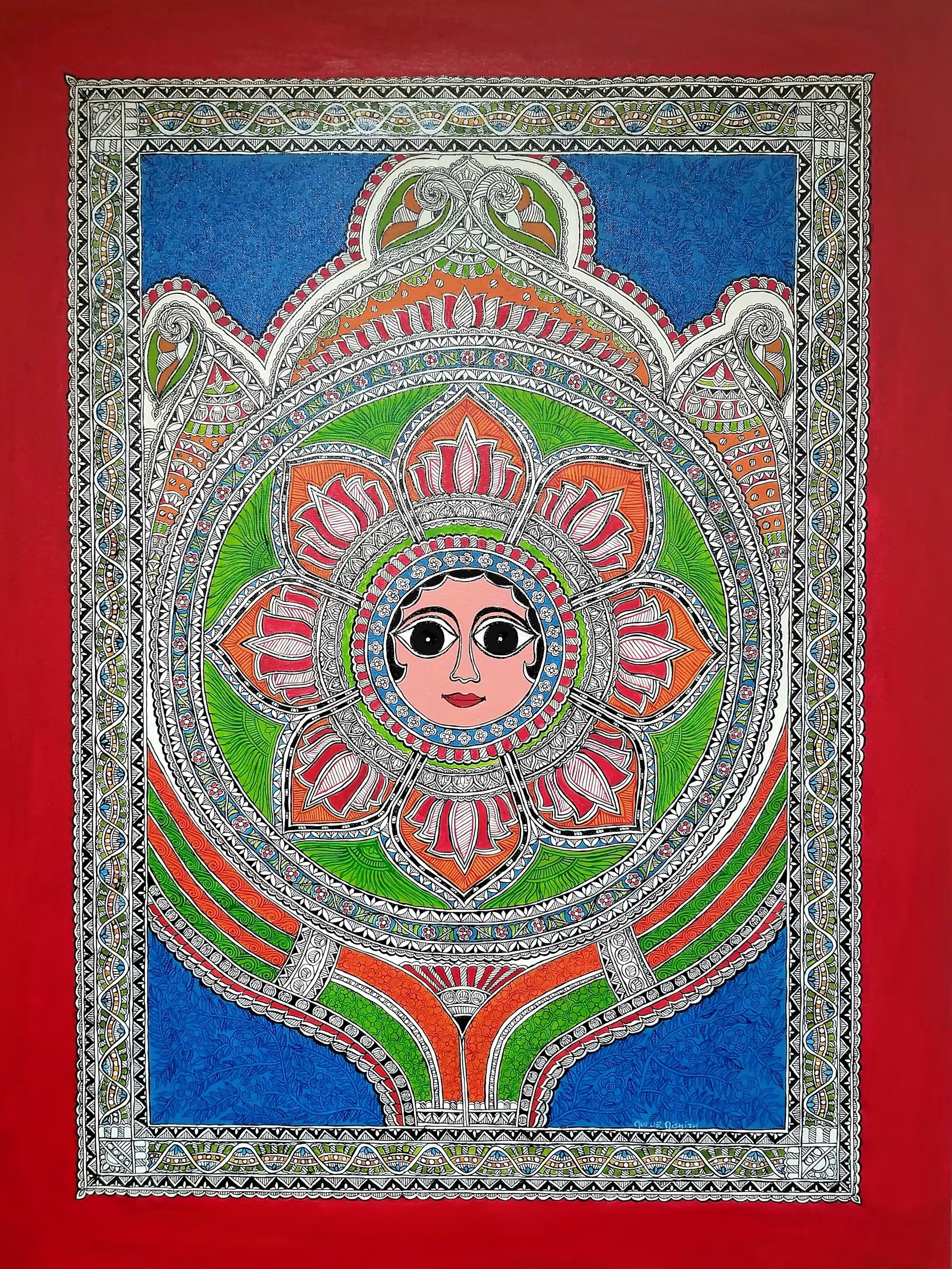
Kopal (New Leaf)
Nupur Nishith is a USA-based, award-winning artist inspired by Mithila or Madhubani paintings. Roots in Darbhanga-Madhubani, like any Maithil girl, Nupur inherited Mithila Art from her Mother, Dr Mridula Prakash, the first PhD in History of Mithila Painting. She did an MBA and pursued a career in Marketing and Banking with Bank of Baroda. Relocated to the US when her husband was transferred to the New York office in 2011. She rediscovered her art and developed her unique and distinct style in the contemporary art world with a traditional art form, using varied themes and tools. Works on various surfaces ranging from Paper, Canvas, Glass, Clay, Ceramic, Wood, Aluminum, Murals on walls, ceilings, and floors, and installations to Digital tools and software. Her painting Dheeya was awarded by a jury from the Museum of Modern Art (MoMA), NY. Her art has featured in United Nations, Consulate General Of India, NY, Disney family house, Dr Harvey Manes, Nassau County Museum of Art, NY, Asian Art Museum, SFO, CA, Gracie Mansion, New York Mayor Residence, CBS Sunday Morning News, ABC7 News, News12 NY, Huffington Post, Daily California, Indian National Award winning movie Mithila Makhaan among others. With more than 60 exhibitions in the US, she has 8 Solo exhibitions and around 6 Curatorial ventures. Art Ambassador to share dias as a Speaker for Art and Culture of Bihar with Hon. Consulate General of India, NY, and Emmy Nominated Host to some of the internationally acclaimed people, International Mithila Mahila Summit, Nupur is a great advocate of Mithila Art and Culture globally. Nupur actively supports other Artists as one of the leaders in various art organizations, including former Vice President, Pro Arts, the leading art group in New Jersey. She is the founder of Creative Mithila, which intends to promote Mithila Art globally.
I practice art inspired by Mithila or Madhubani folk art from India. I paint on canvas, paper, cloth, wood, ceramic, terracotta, glass, aluminum, along with murals on walls, ceilings, floors, and 3D installations. Even digital paintings for an even wider reach. I have evolved a unique style of art with an amalgamation of traditional motifs of ancient folk art with modern contemporary themes and tools with global appeal.
Mithila Artform is famous for the details in the paintings in a flat two-dimensional perspective with no shading or overlapping. Taking it to the next level, I draw inspiration for my art from my experience and surroundings. I visualize objects and situations in perspective to create the symbolic motifs and designs that make my art unique and distinct. Mithila paintings use natural and bright colors with symbolic distinct features, which I never hesitate to experiment with while conserving the essence of the art form. While a set of my paintings is inspired by the colors in the artform, mostly primary colors, the other set is mostly black and white or subtle use of a few colors in line work, also inspired by the artform. Paints range from various contemporary commercial paints to natural vegetable paints used with brush or dip nibs. I like to work mostly freehand without using any stencils or pattern tools on my projects.
I have learned through observation and everyday experiments. During research and production, new areas of interest arise and lead to the next body of work. So, every piece that I create has a story to tell based on the research and its process of development
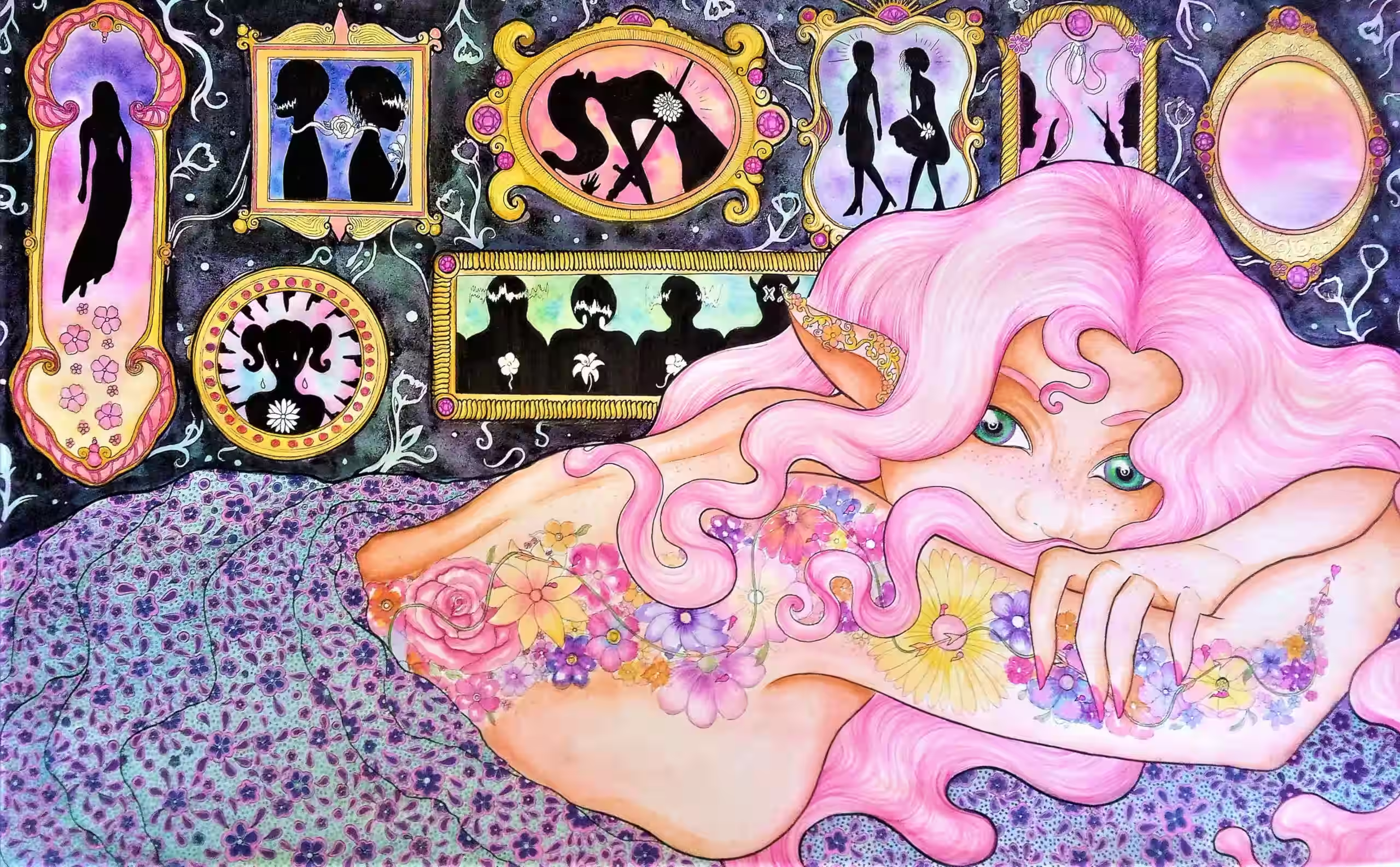
L’enfer
As an Irish-born Artist and Poet, Chadains’s work is heavily inspired by ideas of fantasy, classism, and the movement of feminism concerning the rise of the 4th industrial woman and her place in society. Chadain’s art and poetry have been exhibited and published worldwide, from featuring in Poetry Ireland’s Queer Anthology of the next generation of Irish Creatives, to work exhibited from Serbia to the USA.
My hyper-feminine imagery and style are used to discuss our modern distaste for femininity, despite its allure. This a perfect dichotomy with modern cultures’ obsession with beauty but contempt of feminine interests, impressions, and representations.
My practice is partly born from my aphantasia and astigmatism, quirks that leave me unable to visualize normally, something which lends itself well to my continuous iteration process.
I merge my experience as an outsider artist with my intersectional feminist and classical lens. I studied the classics, both in texts like Medea and in the art to give myself an understanding of what was created in the male gaze so I could truly paint my feminine subjects and femininity from an informed gaze. An art movement is never finished until every gaze is seen and every story is accounted for.
I prefer to engage the viewer in the intersection of poetic language, technology, and visual symbolism to discover the impact of my ideas on the viewer, emotionally challenging the viewer on their preconceived notions of what it means to be feminine.
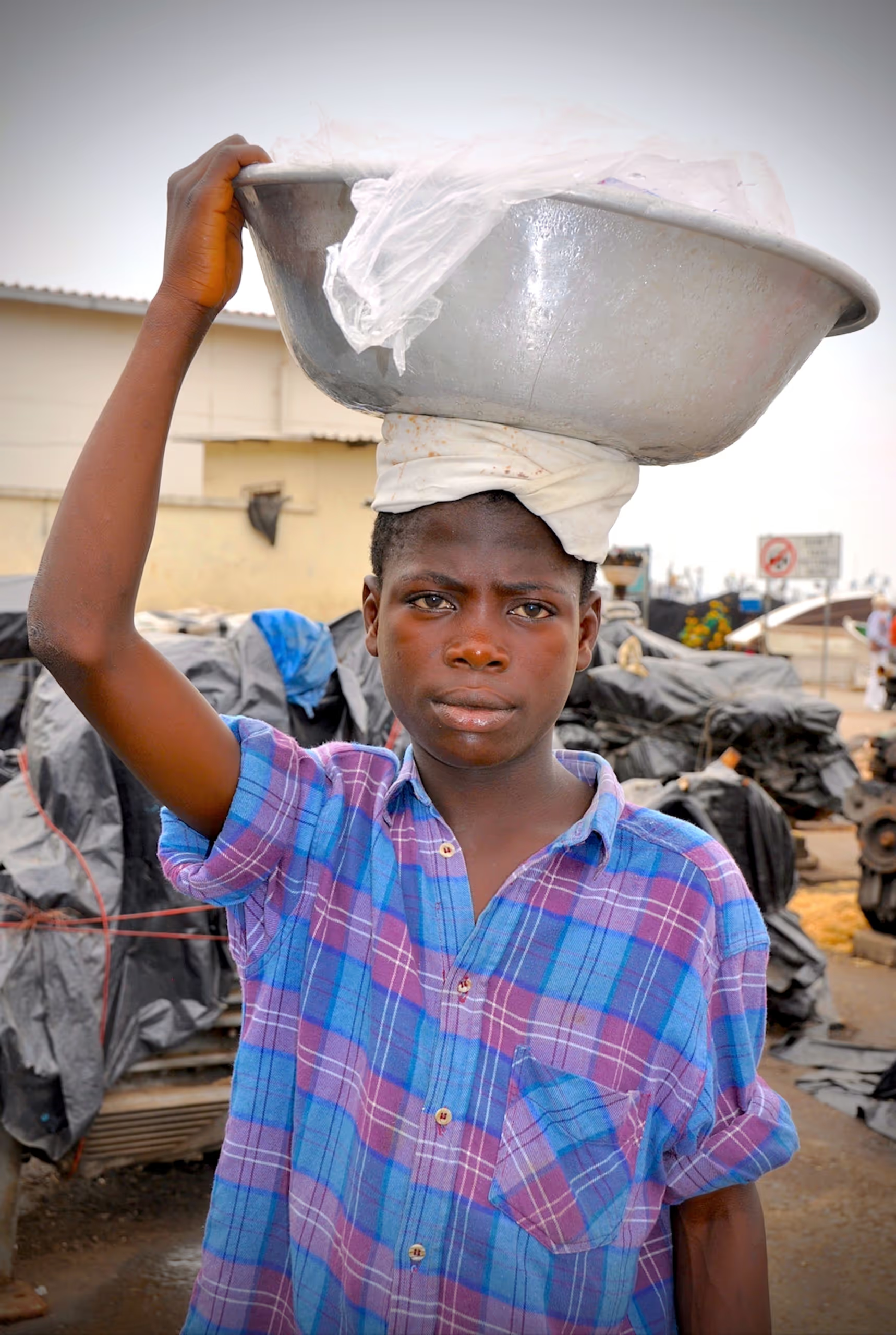
Lad Of Ghana
Karen Safer is an international, award-winning photographic artist and poet with a musical bent. A Los Angeles native, born to creative, scholarly-minded parents who encouraged her world travel (230+ countries/territories visited).
Early on, she was greatly influenced by movies, music, books, and plays, and as a student of art and history, inspired by ancients to moderns – Assyria to Cindy Sherman. She has a bachelor’s/master’s degree in Art from UCLA and California State University. She is a member of the Los Angeles Art Association, IAA-USA, Women United, Praxis Gallery, LACMA, MOCA, IAA-USA, in Who’s Who of Professional Women, ArtTour Magazine (NY), AATOLAU interview, Artist Talk Magazine (UK), Lens Magazine, etc. She was given a camera and crayons at 3 and exposed to/inspired by California motifs: light, trees, the ocean, music, and vernacular architecture that defined/influenced her left-handed aesthetic. She began taking pictures of family and friends, progressing from painting to developing black-and-white photos in college. She was fortunate to begin a life of travel as a teen that shaped her love of the exotic paired with an eye for the formal, accidental, and unusual while subliminally seeking the “beautiful” that jiggles the lens/frame of my eye.
She is featured in magazines, catalogs, and books and exhibited internationally in over 80+ galleries/museums with over 370+ exhibitions from London, Rome, Berlin, Glasgow, Budapest, Athens, Prague, Paris, Barcelona, Florence, Venice, Sao Paulo, from California to New York, winning 360+ First and other awards – most recently: Black & White SPIDER Awards nominee, 21st Julia Margaret Cameron Awards in Abstract and in Architecture categories, Botticelli International Prize in Florence, LA Art Show 2024, 17th Annual Color Awards and soon in Tokyo Metropolitan Museum, Art Expos in Basel and Armenian Modern Art Museum in Yerevan.
“A photographer has the whole world big or small to capture.” – kjs
Influences: I am a student of art, architecture, history, literature, film, and music. I have been heavily influenced by so many sources but here I’ve chosen to highlight art and photography influences from Hopper to Cartier-Bresson and from Atget to Cindy Sherman. So many influences on life from cities to nature to music and art. I love color and all its vibrance while I venerate black and white. I embrace all the many influences that have touched my art and my life deeply.

Lady Of The Lake
Nikki is a Fine Artist based in the South Lakes, Cumbria, UK. Nikki studied Theatre Design in Birmingham before completing a PGCE in Lancaster and a MA in Film and TV Production Design in Kingston. After completing her studies Nikki went on to be Head of Art and Design, Photography, and Media Studies in a school outside London before moving back to the Lake District in 2010. Nikki currently teaches full-time A-level and Post 18 Art, Design, and Photography as well as working on her own creative practice. Nikki has always worked on her own creative practice whilst working full time and completed commissions over the years in a variety of media and subject matter as well as being a lifestyle and wedding photographer for a short time.
Nikki lives with her Italian husband and two boys and can be found avidly reading or walking their beagle in the beautiful surroundings of the Lakes when she isn’t teaching or being creative.
When I consider my own artwork, I often struggle to find the words to describe my work, creating art is a need for me, to unload my thoughts and emotions. My artwork comes from within and often contains locations or motifs that are personal or from my surroundings. I have always enjoyed color and nature, and when I paint, I love exploring different color palettes to provoke different emotions and feelings. Art to me should be something to be enjoyed and bring different meanings to those who look upon it.
I enjoy working with portraits, the human face can show a variety of emotions and can create mystery and intrigue. I have a passion and love for lighting, color, and a sense of narrative within my work due to my background in film. My love of narrative and storytelling within the image, I hope creates intrigue and invites the viewer to interpret ideas for themselves, to question and be thoughtful.
During the pandemic, painting was my lifeline. I enjoyed rediscovering color within portraiture and using elements at juxtapositions to develop compositions that created new ideas. My work contains motifs of floral elements associated with emotions, feminine traits, and awareness of balance within compositions, through color and texture. The lockdown gave me time to re-energize my artwork and reflect inwardly to express outwardly in my painting. Through expressing floral elements, I have explored the Queen of flowers the peony in recent work. A flower that can bring joy and beauty into the world during some dark times. These flowers represent regrowth, strength, and resilience as well as feminine beauty and softness. My most recent work has explored Goddesses and the divine feminine with symbolism within the flowers selected, colors, and other elements helping to tell a story.
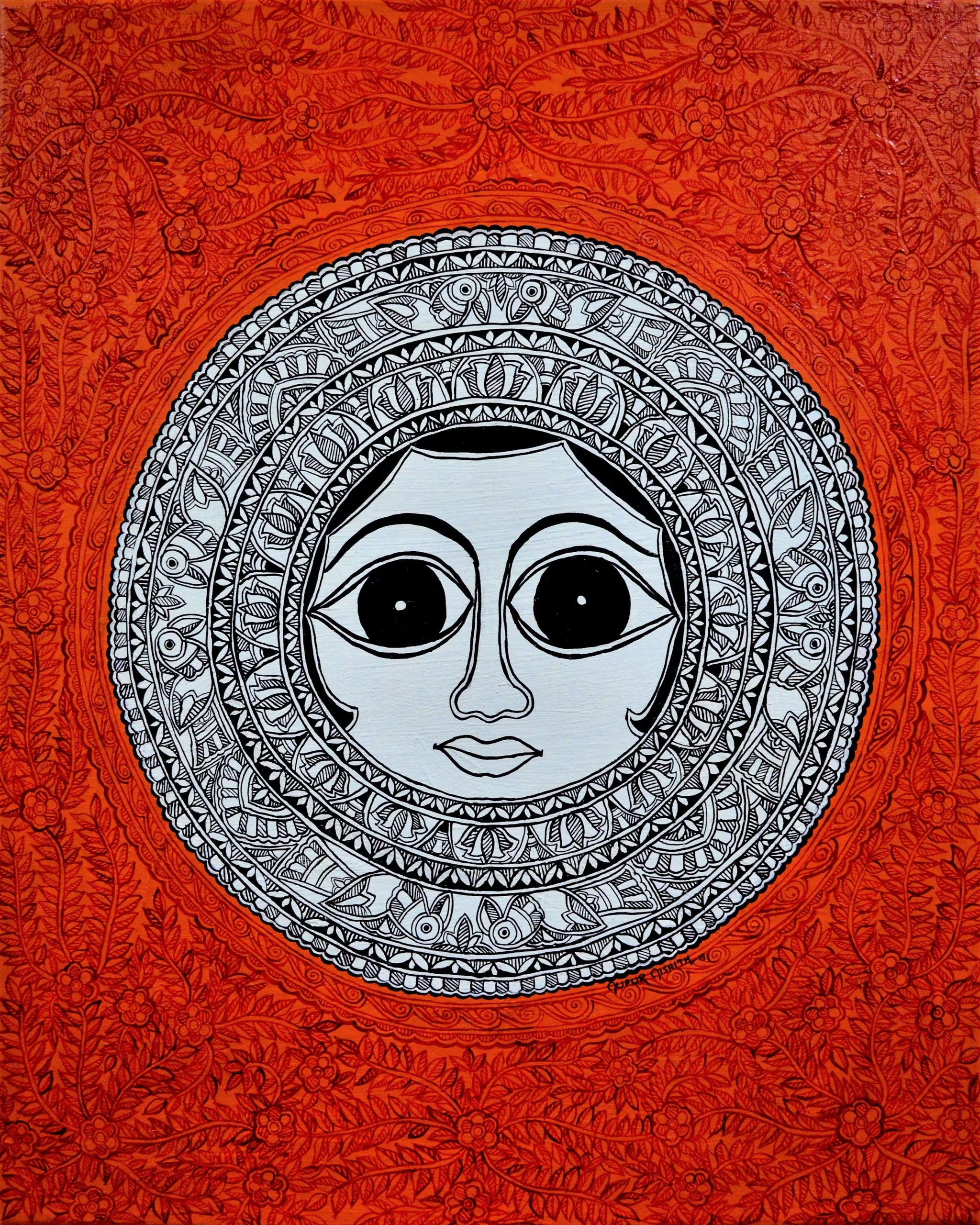
Lalima (Red Rays)
Nupur Nishith is a USA-based, award-winning artist inspired by Mithila or Madhubani paintings. Roots in Darbhanga-Madhubani, like any Maithil girl, Nupur inherited Mithila Art from her Mother, Dr Mridula Prakash, the first PhD in History of Mithila Painting. She did an MBA and pursued a career in Marketing and Banking with Bank of Baroda. Relocated to the US when her husband was transferred to the New York office in 2011. She rediscovered her art and developed her unique and distinct style in the contemporary art world with a traditional art form, using varied themes and tools. Works on various surfaces ranging from Paper, Canvas, Glass, Clay, Ceramic, Wood, Aluminum, Murals on walls, ceilings, and floors, and installations to Digital tools and software. Her painting Dheeya was awarded by a jury from the Museum of Modern Art (MoMA), NY. Her art has featured in United Nations, Consulate General Of India, NY, Disney family house, Dr Harvey Manes, Nassau County Museum of Art, NY, Asian Art Museum, SFO, CA, Gracie Mansion, New York Mayor Residence, CBS Sunday Morning News, ABC7 News, News12 NY, Huffington Post, Daily California, Indian National Award winning movie Mithila Makhaan among others. With more than 60 exhibitions in the US, she has 8 Solo exhibitions and around 6 Curatorial ventures. Art Ambassador to share dias as a Speaker for Art and Culture of Bihar with Hon. Consulate General of India, NY, and Emmy Nominated Host to some of the internationally acclaimed people, International Mithila Mahila Summit, Nupur is a great advocate of Mithila Art and Culture globally. Nupur actively supports other Artists as one of the leaders in various art organizations, including former Vice President, Pro Arts, the leading art group in New Jersey. She is the founder of Creative Mithila, which intends to promote Mithila Art globally.
I practice art inspired by Mithila or Madhubani folk art from India. I paint on canvas, paper, cloth, wood, ceramic, terracotta, glass, aluminum, along with murals on walls, ceilings, floors, and 3D installations. Even digital paintings for an even wider reach. I have evolved a unique style of art with an amalgamation of traditional motifs of ancient folk art with modern contemporary themes and tools with global appeal.
Mithila Artform is famous for the details in the paintings in a flat two-dimensional perspective with no shading or overlapping. Taking it to the next level, I draw inspiration for my art from my experience and surroundings. I visualize objects and situations in perspective to create the symbolic motifs and designs that make my art unique and distinct. Mithila paintings use natural and bright colors with symbolic distinct features, which I never hesitate to experiment with while conserving the essence of the art form. While a set of my paintings is inspired by the colors in the artform, mostly primary colors, the other set is mostly black and white or subtle use of a few colors in line work, also inspired by the artform. Paints range from various contemporary commercial paints to natural vegetable paints used with brush or dip nibs. I like to work mostly freehand without using any stencils or pattern tools on my projects.
I have learned through observation and everyday experiments. During research and production, new areas of interest arise and lead to the next body of work. So, every piece that I create has a story to tell based on the research and its process of development
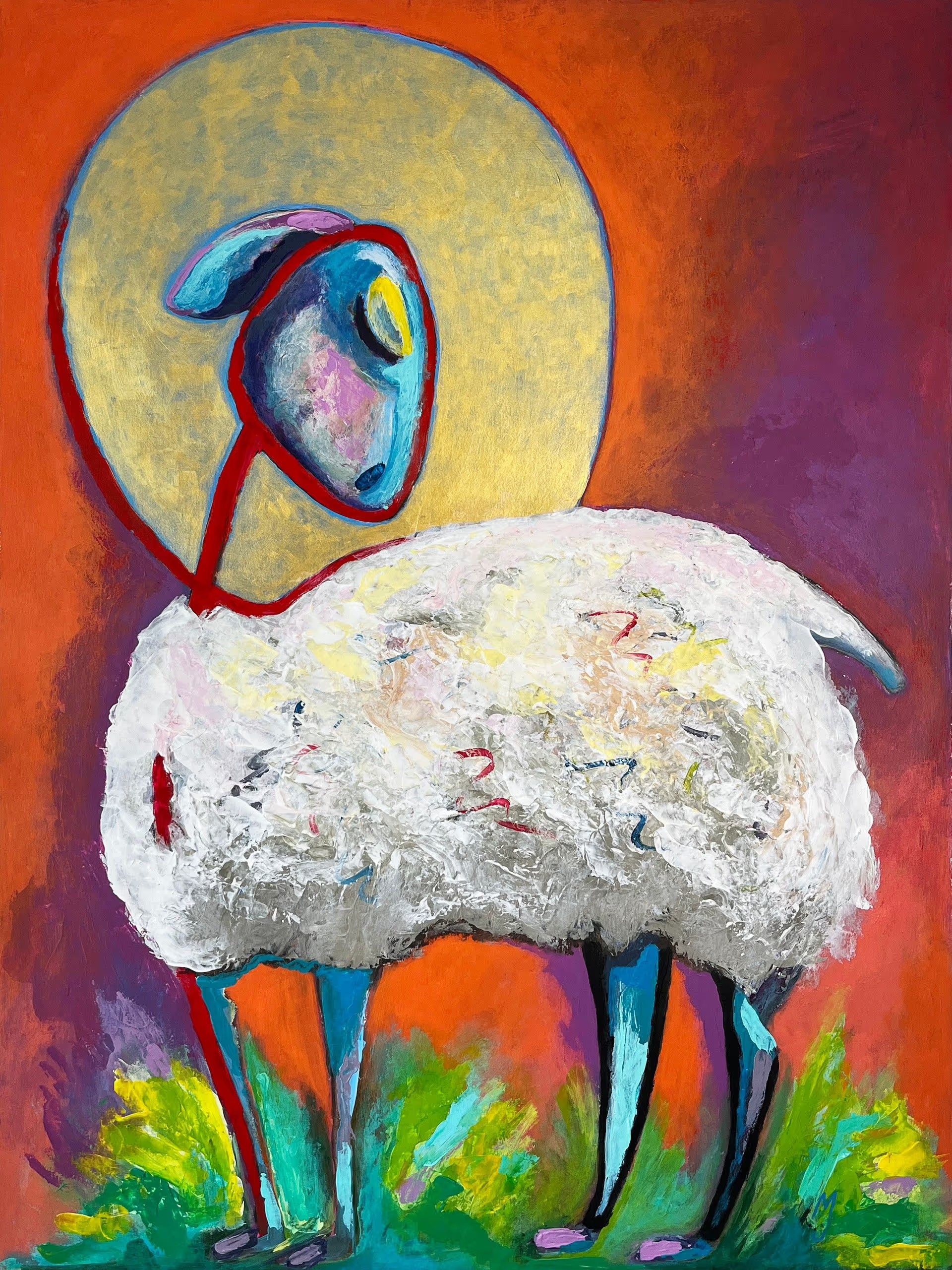
Lamb Of God
Marla Jean Clinesmith is a Louisiana-based painter whose work engages the visual and conceptual depth of the ancient Paleo Hebrew pictographic language within a contemporary abstract framework. Her practice examines how early symbolic systems functioned as both image and language — carrying layered meaning through form, structure, and gesture.
Working primarily in acrylic and often incorporating metallic elements, Clinesmith constructs luminous fields of color that serve as both atmosphere and architecture. Ancient letterforms emerge within these layered surfaces, not as illustration, but as structural components that inform composition, tension, and visual rhythm. Her work explores how symbolic language continues to shape perception and spiritual imagination across time.
A two-time recipient of the Denis Diderot Grant for residency at Château Orquevaux in France, Clinesmith also has four paintings in the Château’s permanent collection. Her paintings have been included in regional and national juried exhibitions, including the Adonai Global Art Fund Exhibition, where she was awarded First Place.
Through an ongoing studio practice, Clinesmith continues to investigate the intersection of abstraction, language, and sacred text — creating paintings that invite contemplative engagement while remaining grounded in contemporary painterly concerns.
Creativity rarely emerges in isolation; it is shaped by the influences that quietly form an artist’s way of seeing. My work is profoundly informed by a sustained engagement with the Ancient Hebrew—Paleo Hebrew—pictographic language, a visual system in which each letter functions not merely as text but as image, gesture, and bearer of layered meaning.
These primordial forms offer more than historical intrigue; they preserve a mode of thought in which language and symbol were inseparable. I am drawn to their ability to communicate complex spiritual ideas with striking visual economy, allowing ancient perception to speak into contemporary space.
Biblical texts remain a steady influence in my work, especially those that speak of God’s presence within human life. The ancient pictographs deepen my understanding of these themes, revealing layers of meaning that shape how I build each painting. I do not aim to illustrate scripture, but to express its depth and mystery through the painting itself.
Working primarily in acrylic and frequently incorporating gold leaf or metallic elements, I build layered fields of color that serve as both atmosphere and architecture. Color remains central to my process — a sensibility first awakened through formal study of color theory and continually refined in the studio.
By uniting luminous color with sacred pictographs, I seek to create paintings that operate as contemplative spaces — places where ancient consciousness and contemporary experience meet, inviting viewers into reflection rather than conclusion.

Lamp
Kylo-Patrick Hart is an award-winning photographer and chair of the Department of Film, Television, and Digital Media at Texas Christian University (Fort Worth, Texas, USA). He received his formal training in digital media arts while a student at the University of Michigan and Wayne State University, with additional instruction provided by offerings of the Maine Media Workshops and Santa Fe Workshops. His photographs have been exhibited in numerous cities throughout the United States and in several countries abroad.
Photography has been my passion since early childhood. My motivation is to discover and capture the beauty, even when it is not always readily self-evident, that surrounds us continuously in all areas of our everyday lives. I believe the finest images are those that are serious yet playful, aesthetically appealing yet a bit quirky. As both an artist and an admirer, my favorite photographs tend to be ones whose contents speak loudly for themselves — even when it is not immediately clear exactly what they are saying.