
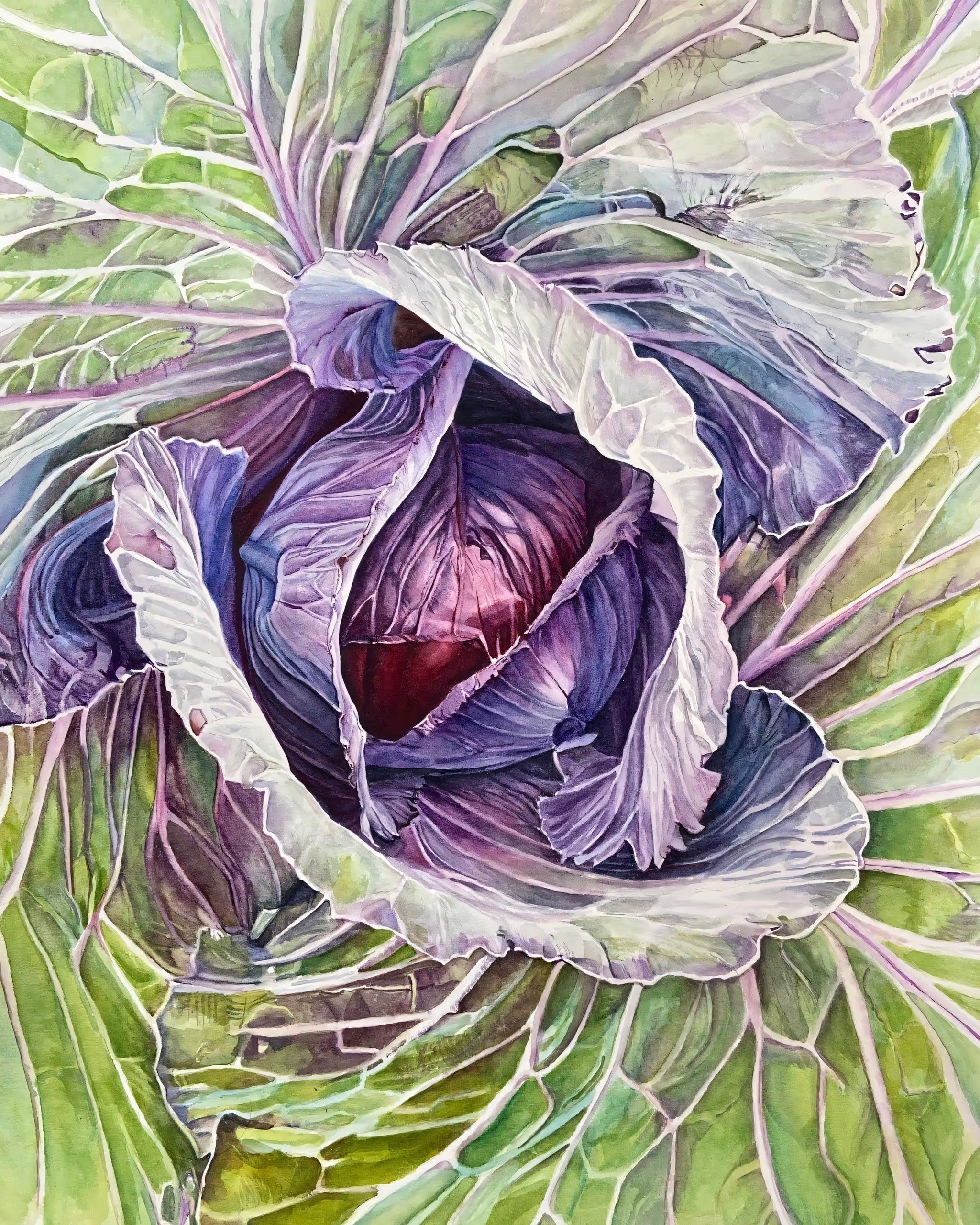
Dragon Eye Cabbage
Karen Romani is a watercolor artist living in the Midwest. She’s originally from New York, but decided to go to St. Louis for college and decided to stay. She married after college and has 3 wonderful grown children and 5 grandchildren. Her art journey started after retiring from a career as a Physical Therapist. Always creative and looking for something fun to do, she came across a watercolor class. From that moment, she was hooked. Her career in art has allowed her to meet a wonderful group of people and taken her to places she only dreamed of going to in the past. Karen joined several art guilds, became a Signature Member of several Societies around the country, and has entered and won awards in some of the country’s most prestigious societies.
As a member of the American Society of Botanical Artists, Karen has attended the annual conference, enabling her to take classes with some of the best botanical artists around the world.
Karen is presently teaching and sharing her art with galleries in St. Louis and around the country. Karen couldn’t think of a better way to spend her retirement years, which includes spending time with her children and grandchildren.
Botanical art has been my focus for several years, working in watercolor and encaustic wax. I’ve dedicated my energy to education and practice of all forms of flora, mostly representational work. The more detailed, the better. My work is vivid, with a focus on intense colors, especially lights and darks. Vegetables, especially cabbage, have caught my attention. These ornamental cabbages have a variety of colors and interesting forms. These paintings are so fun to paint.

Dream
Meet Sue Anderson, the creative force behind Susan Locke Photography. Susan is a talented photographer with a passion for capturing the beauty of the world around us. Her work is a celebration of the natural world and the moments that make life special.
Susan’s love of photography began at a young age when she received her first camera as a gift. Over the years, she has honed her skills, experimenting with different techniques and styles to create stunning images that capture the essence of her subjects.
Susan’s photography is characterized by its timeless beauty and attention to detail. Her images are infused with a sense of wonder and awe, and they transport viewers to a world of beauty and tranquility. Whether she is capturing the majesty of a mountain landscape or a surreal world, Susan’s photographs are a testament to the power of art to evoke emotion and inspire us to see the world in new ways.
My dreams and the fantastical world of my imagination serve as the sources of my inspiration. I enjoy capturing the essence of my playful view of the world and transforming it into fun photographic compositions that are both captivating and thought-provoking. I invite the viewer to explore the depths of their imagination and to embrace the surreal and magical aspects of life. I aim to produce magical, enchanted, and wonder-filled images that take viewers to a realm where anything is conceivable.

Dream Tree
Bruce Sanders is an expressionist and abstract painter living in Malibu, California. Bruce’s work blurs the lines between representational and abstract art. It delves into a space between the real world and a mystical-magical realm. Bruce employs kinetic forms, dynamic colors, and primal emotions in all of his art. By doing so, his work compels viewers to empathize, analyze, and interpret their own feelings.
Bruce’s work has been exhibited in shows in Laguna, Newport Beach, Santa Monica, Ventura, Los Angeles, Sacramento, and Palm Springs. Bruce is a member of the Los Angeles Art Association/Gallery 825. He is a Member Artist of TAG Gallery in Los Angeles near LACMA. Bruce is also a Member Artist of Artlounge Collective in Los Angeles. His work has been purchased by collectors locally, nationally, and internationally. Three of his paintings are in a private gallery in Vienna, Austria. Bruce has authored four catalog art books: INTROSPECTION, I BELIEVE IN ANGELS, THE HEART WANTS WHAT THE HEART WANTS, and IMAGINATION. UCLA School of Dentistry has a collection of eighteen of his paintings.
I am an artist based in Malibu, California.
My paintings are recordings of humble attempts to “look inward.” This process seems to be less of a clinical evaluation and more of a spiritual search. My work is the product of reflecting upon the blessings, joys, sorrows, and losses I have experienced over a lifetime. I try to use color, texture, line, and form as vehicles for the expression of my feelings and emotions.
I believe that my work blurs the lines between representational and abstract art. It delves into a space between the real world and a “mystical-magical” dream-like realm. Working mostly with acrylics on canvas, I try to employ kinetic forms, dynamic colors, and heavy texturing in my art. My hope is that those who view my paintings will be “drawn in” to analyzing, empathizing, and evoking their own feelings and emotions.
This solo show entitled “MAGICAL FLOWERS / MYSTICAL TREES” comes before the 9th anniversary of my beloved wife, Barbara’s passing. Barbara loved working in the garden; and she treasured the blessings of flowers, trees, and plants. She thought of a garden as a “sacred place” and she found great peace there.
Why are flowers “magical?” Flowers are one of nature’s great gifts. Even if a person is having a bad day, the sight of a beautiful bouquet or a field of flowers can bring a smile to a person’s face and perhaps a little joy. Flowers bring bright colors to the world, but they are very fragile. We must learn to appreciate the blessing of flowers while they are in bloom. On the other hand, trees tend to be very sturdy and resilient. They are “here” before we were born, and it is likely they will be “here” long after we are gone. There are seasons when trees are in bloom, and seasons when they are barren. But trees “endure.” For me, their roots grow deep into the earth; and this represents our ancestors, heritage, and traditions. Their branches and foliage represent future generations, and continual growth and change. These enduring qualities make trees “mystical” and perhaps “spiritual.”
I would like to dedicate this show to honor Barbara’s memory, and I would like to thank HMVC GALLERY NEW YORK for giving me this wonderful opportunity to exhibit my work.
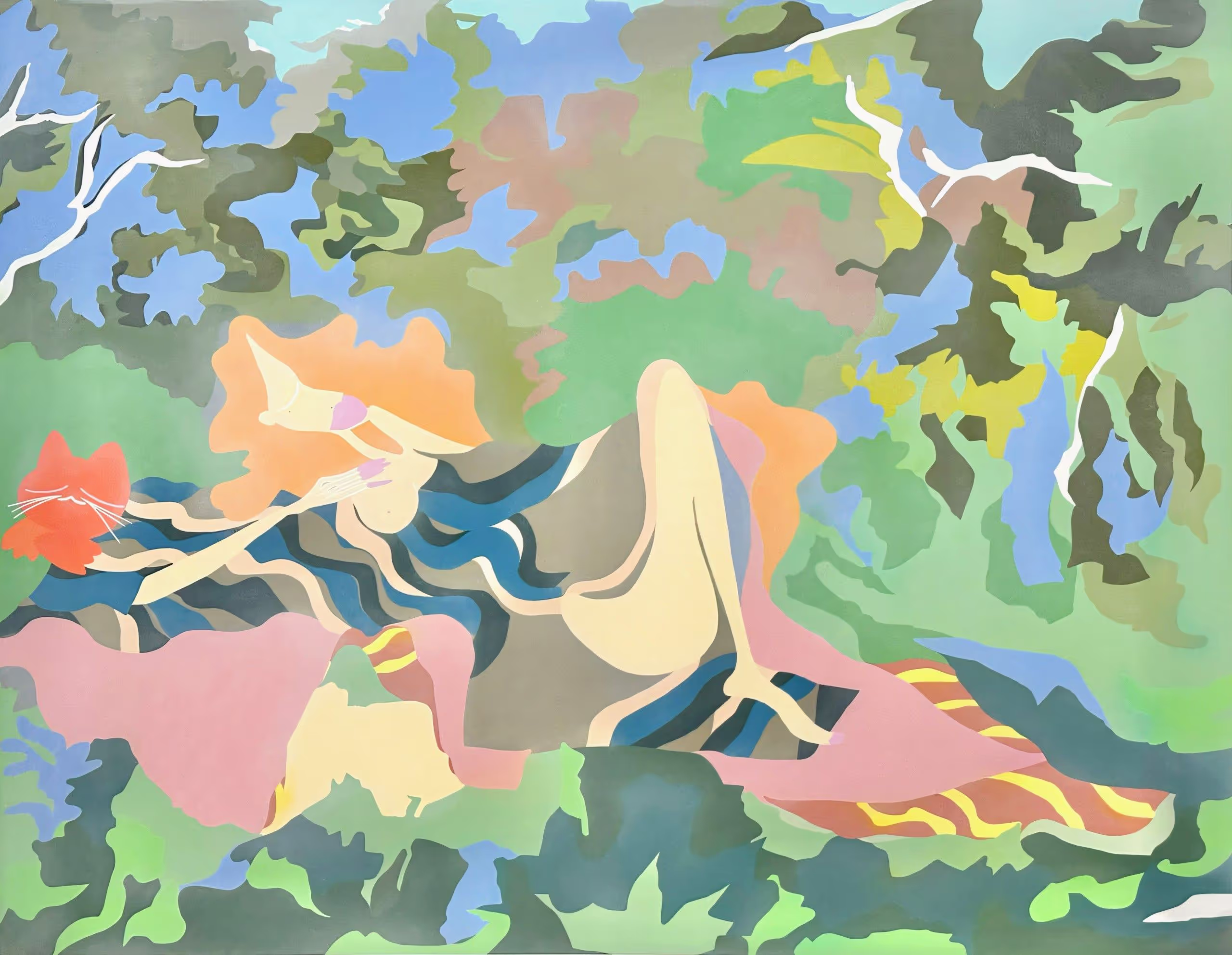
Dreaming Of A Better World
Darling Graham is a contemporary visual artist whose multidisciplinary practice incorporates drawing, photography, and digital media. She describes her distinctive style as “feminine superflat art,” a refined and concept-driven approach that blends traditional techniques with digital tools to explore identity, femininity, and personal evolution.
Born in Rome, Italy, Darling began her artistic journey at the Liceo Artistico Via Ripetta, where the city’s rich history and architecture left a lasting impression. At nineteen, she moved to Canada, later earning a Bachelor of Fine Arts in Visual Arts and Photography from the University of Ottawa. After graduating, she relocated to Montreal, where she gained recognition as one half of the acclaimed photography duo Leda & St. Jacques, known for their visually compelling work in both editorial and commercial settings.
Now based between Canada and the United States, Darling has developed a unique visual language that feels intimate yet symbolically rich. Her work often pairs soft, flat color palettes with the presence of a central female figure, who is stylized, ageless, and emotionally complex. The character’s direct gaze invites the viewer into a layered inner world shaped by memory, mythology, and quiet introspection. A recurring element in her work is her cat, an enigmatic presence that can be seen as a companion, observer, alter ego, or symbol of emotional continuity. This subtle detail adds a sense of tension and depth to her compositions.
Darling’s process often begins with photographic self-portraits, which she then translates into delicate graphite drawings and digitally paints in soft pastel tones. The final creations are predominantly large-format inkjet fine art prints, presenting introspective visual stories that blur the line between personal narrative and universal experience. Her witty titles serve as gentle guides, offering context without limiting interpretation.
Overall, Darling’s work functions as a personal journal: elegant and emotionally resonant, inviting viewers into a space where intimate reflection and broader themes quietly converge.
Art is my existential library. I unfold my work as a personal journal of dreams, fears, happiness, and insecurities, always touched by humor. My style, which I call “feminine superflat art,” blends photography, drawing, and digital painting to create delicate, symbolic compositions. Each piece begins with self-portrait photography and evolves through graphite, pastel, and digital color, forming soft narratives about identity and transformation. The recurring female figure and her cat act as reflections of self and emotional continuity. Creating art means existing in a parallel universe where dreams meet reality, and everything becomes possible. My goal is to offer a moment of beauty, thought, or quiet wonder to those who look at my art, to invite them into my world where fragility becomes strength and imagination gives meaning to being.
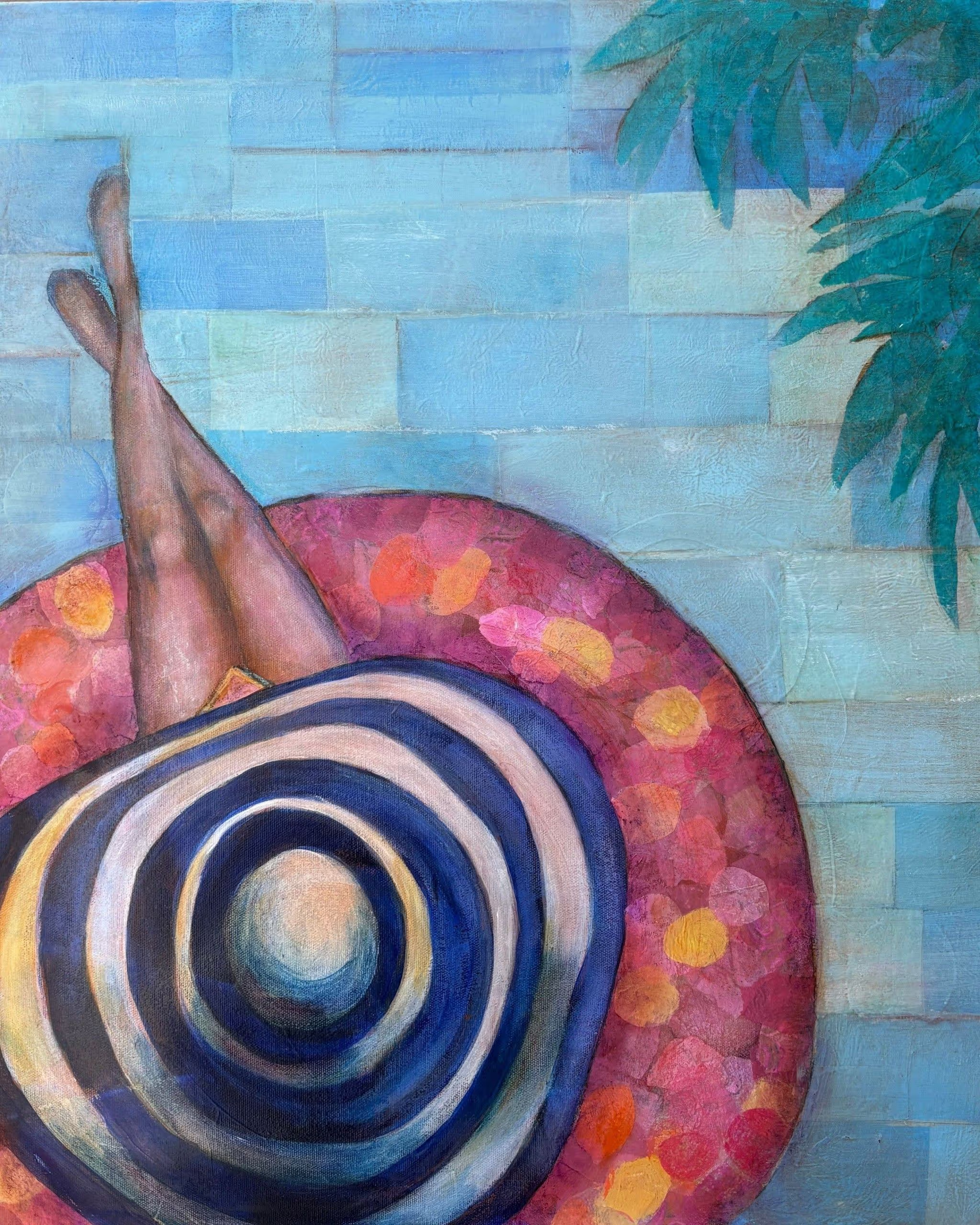
Drift Away
Jody Nelson is a Palm Desert, California-based mixed media artist whose layered, luminous paintings have been featured in juried exhibitions and both group and solo shows, with original work available through Saatchi Art and held in private collections across the United States and Canada. Drawn to expressive color, richly built-up surfaces, and the emotional resonance of still moments, her paintings transform the quiet textures of everyday life into bold, joyful works. Working in acrylic, pastel, and collage, Nelson builds each painting through layers of torn paper and mark-making, creating surfaces that carry their own history before the figure arrives. Each piece balances energy with calm — an ongoing invitation to pause, to notice, and to find beauty in the ordinary.
I paint women in the quiet moments — not the moments the world sees, but the ones that happen in between. The exhale after the effort. The stillness that arrives when we finally stop moving long enough to feel something.
My work is built in layers — torn paper, acrylic, pastel, and mark-making — each surface carrying its own history before the figure arrives. The women I paint are never performing. They are resting, remembering, belonging to themselves and to each other. Emotion, for me, lives in the body before it reaches the face. In shoulders that relax. In feet sinking into warm sand. In a chin lifted toward the sun.
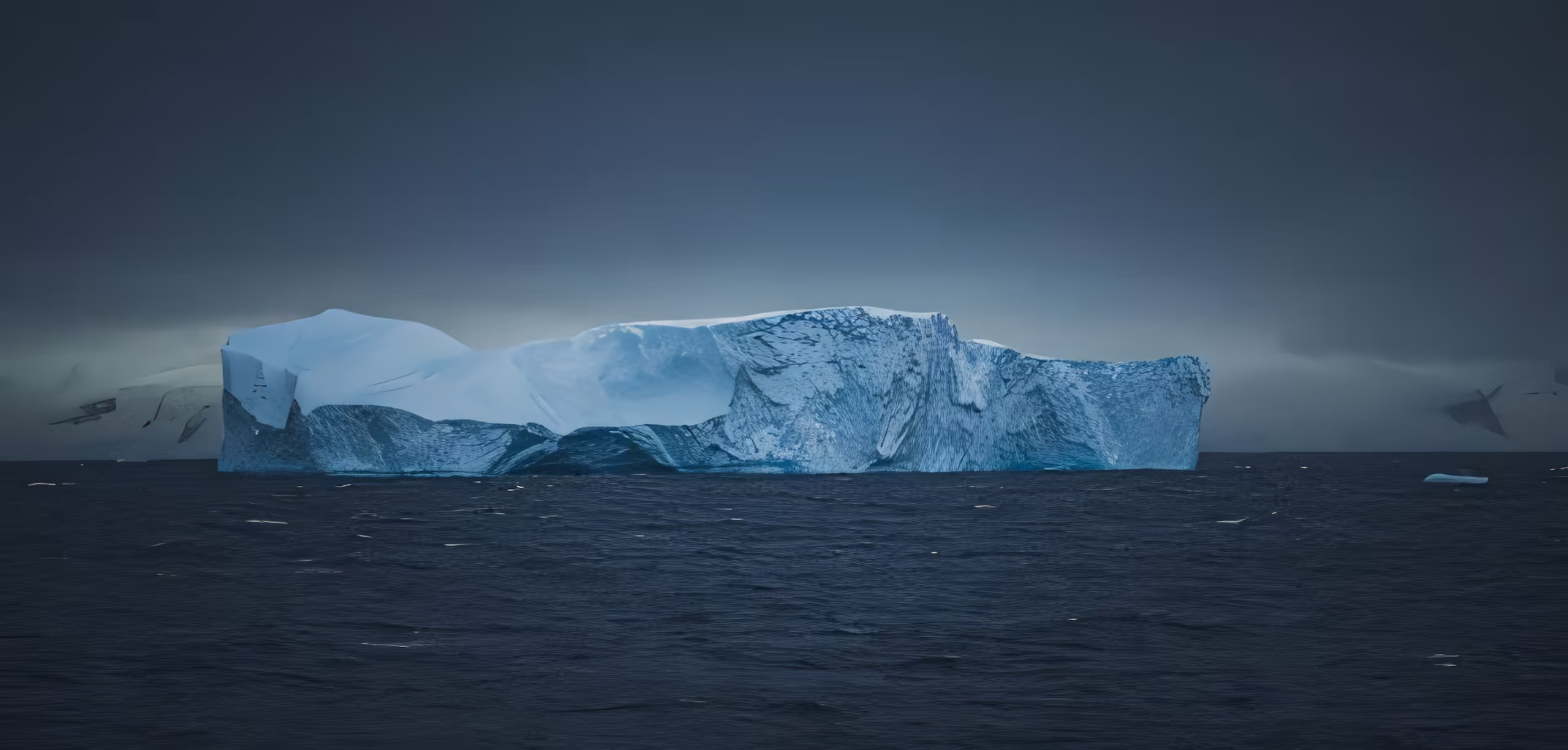
Drifting Monolith
Mital Patel is a fine art photographer whose work explores the relationship between form, minimalism, and emotional presence in natural environments. His imagery often focuses on isolating subjects within vast landscapes, using light, scale, and restraint to create a sense of stillness and contemplation.
Working across wildlife and remote environments, Patel’s recent work has shifted toward more minimal and conceptual interpretations of nature, where composition and tonal control play a central role.
His work has been exhibited and recognized internationally, with a growing focus on fine art presentation and gallery-based storytelling.
Ice exists in a narrow spectrum of tone, where color is restrained, and form becomes the primary language. In this body of work, I explore the Arctic as a study in subtle variation shifts in light, texture, and scale within a limited palette.
Each image isolates a different presence: dominance, stillness, and quiet transience. The restrained blues and greys are not just aesthetic choices, but a way to remove distraction and focus attention on structure and atmosphere.
By working within a singular color space, the landscape becomes less about place and more about perception, where form, silence, and scale begin to dissolve into something introspective.
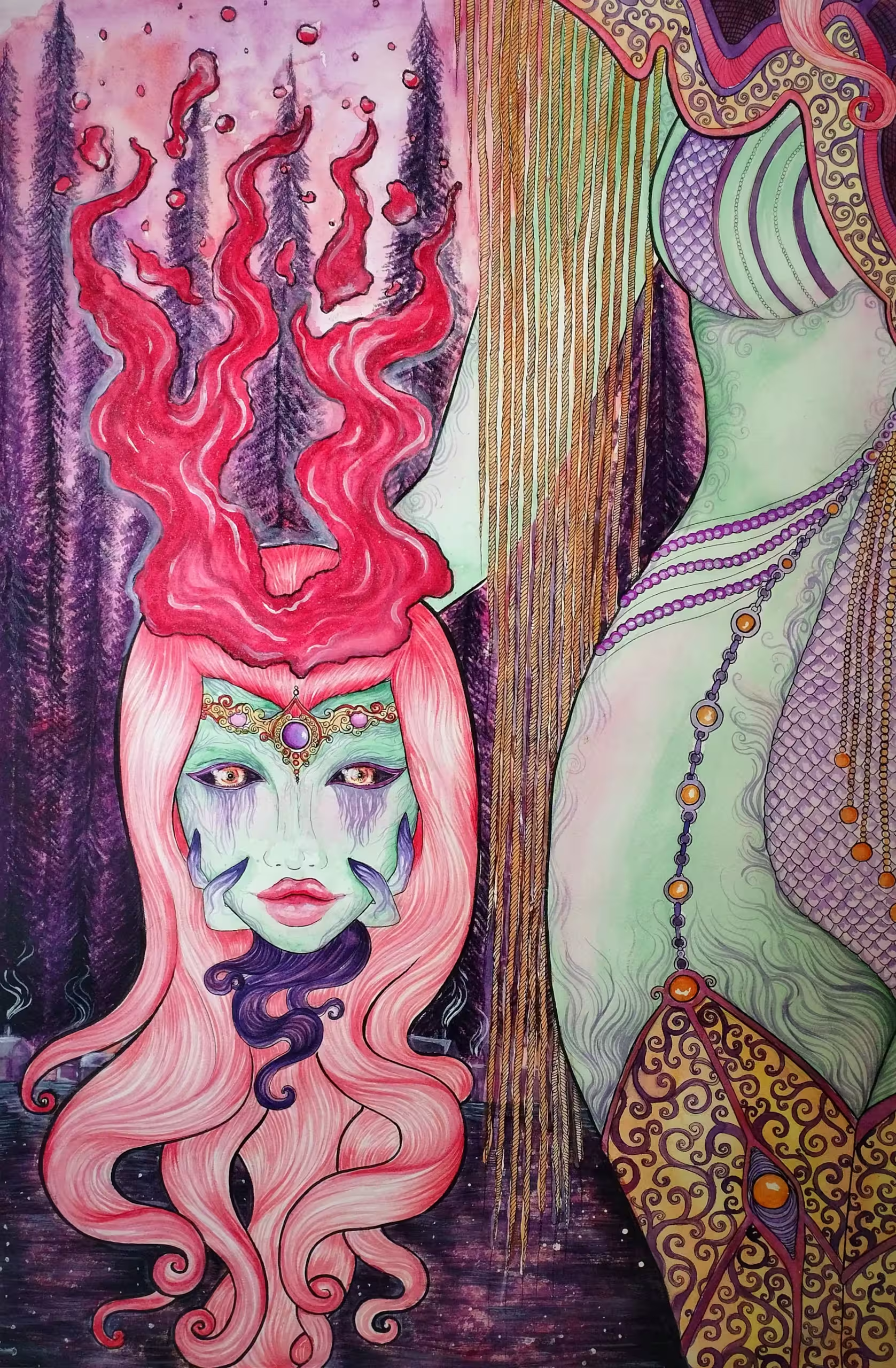
Dullahan
As an Irish-born Artist and Poet, Chadains’s work is heavily inspired by ideas of fantasy, classism, and the movement of feminism concerning the rise of the 4th industrial woman and her place in society. Chadain’s art and poetry have been exhibited and published worldwide, from featuring in Poetry Ireland’s Queer Anthology of the next generation of Irish Creatives, to work exhibited from Serbia to the USA.
My hyper-feminine imagery and style are used to discuss our modern distaste for femininity, despite its allure. This a perfect dichotomy with modern cultures’ obsession with beauty but contempt of feminine interests, impressions, and representations.
My practice is partly born from my aphantasia and astigmatism, quirks that leave me unable to visualize normally, something which lends itself well to my continuous iteration process.
I merge my experience as an outsider artist with my intersectional feminist and classical lens. I studied the classics, both in texts like Medea and in the art to give myself an understanding of what was created in the male gaze so I could truly paint my feminine subjects and femininity from an informed gaze. An art movement is never finished until every gaze is seen and every story is accounted for.
I prefer to engage the viewer in the intersection of poetic language, technology, and visual symbolism to discover the impact of my ideas on the viewer, emotionally challenging the viewer on their preconceived notions of what it means to be feminine.
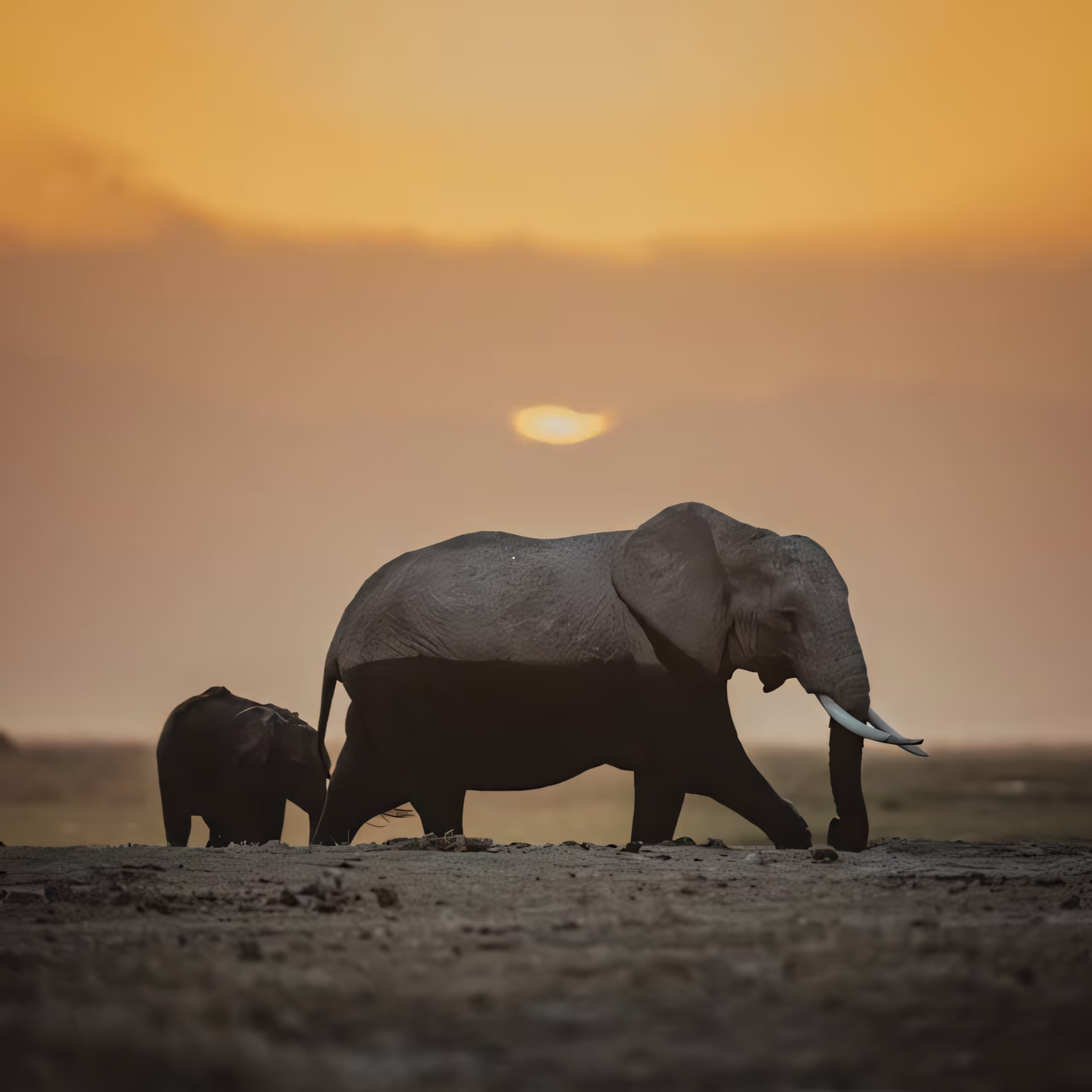
Dusk Descendants
Mital Patel is a fine art photographer whose work explores the relationship between form, minimalism, and emotional presence in natural environments. His imagery often focuses on isolating subjects within vast landscapes, using light, scale, and restraint to create a sense of stillness and contemplation.
Working across wildlife and remote environments, Patel’s recent work has shifted toward more minimal and conceptual interpretations of nature, where composition and tonal control play a central role.
His work has been exhibited and recognized internationally, with a growing focus on fine art presentation and gallery-based storytelling.
Ice exists in a narrow spectrum of tone, where color is restrained, and form becomes the primary language. In this body of work, I explore the Arctic as a study in subtle variation shifts in light, texture, and scale within a limited palette.
Each image isolates a different presence: dominance, stillness, and quiet transience. The restrained blues and greys are not just aesthetic choices, but a way to remove distraction and focus attention on structure and atmosphere.
By working within a singular color space, the landscape becomes less about place and more about perception, where form, silence, and scale begin to dissolve into something introspective.
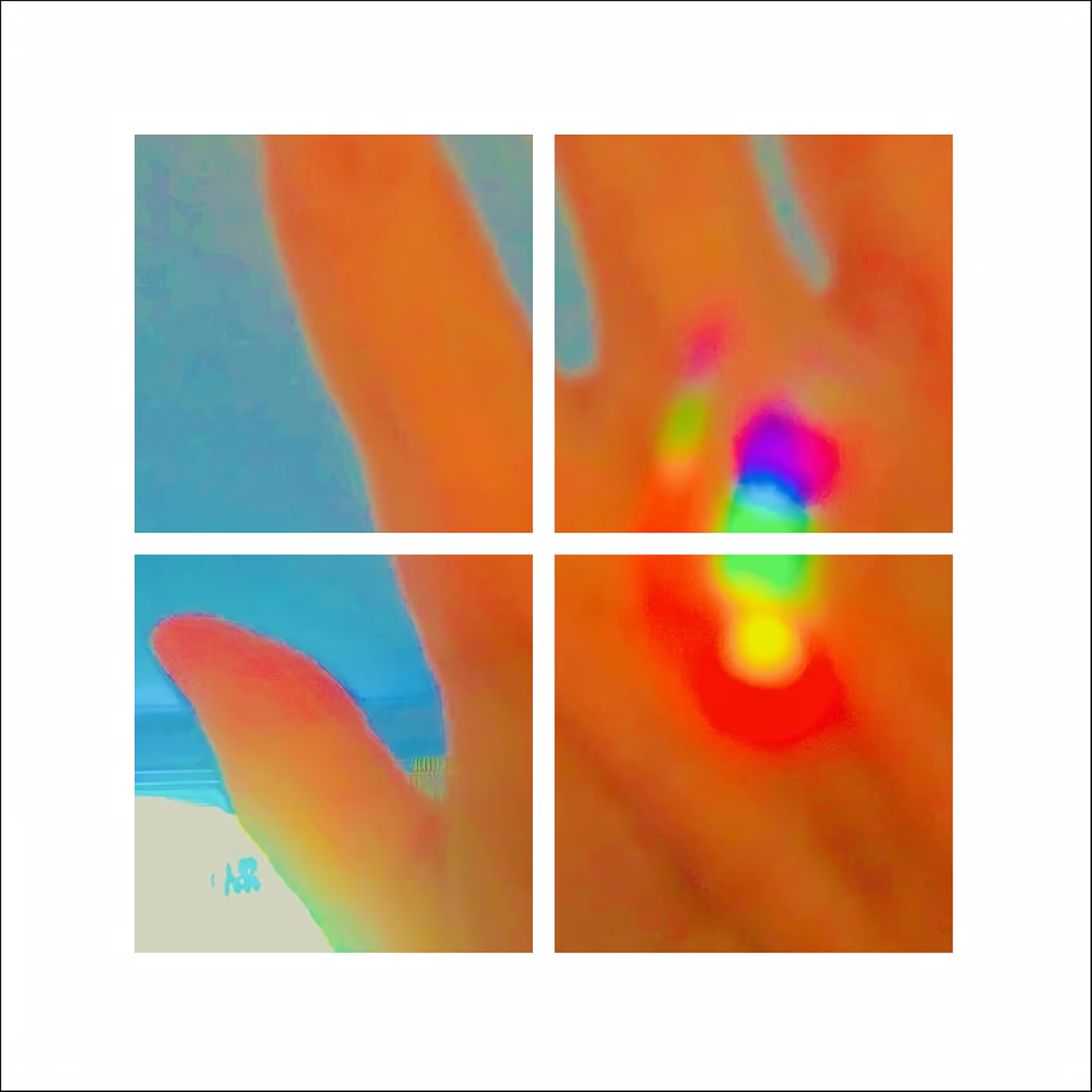
E.T. Hamsa
Sylvia Bandyke, Royal Oak, MI, USA, is largely a self-taught photographer, having taken studio and art history classes in college. She began her art career by displaying photo collages in ArtPrize, an independent international art competition in Grand Rapids, MI, from 2014 to 2018. Subsequently, she has been juried into more than 100 group exhibitions in 24 states and accepted into numerous online international exhibitions. An awarded artist, she keeps an eye open for interesting views of a subject while looking for hidden beauty every day. Most recently, she was a caregiver to her elderly mother and was able to create some memorable, unique art as a result of this experience.
I prefer using the collage format to integrate associated images into a cohesive unit that is even more compelling because of the embedded story. Having been a playwright and technical writer, I am accustomed to delivering content with a message. So now, as a visual communicator, I continue to provide meaning via the structure of the collage format, wherein the four photos confirm, augment, or even contradict each other if warranted. I enjoy offering the richness that the multiplicity of images provides, along with the impact gained through thoughtful positioning of them. Ultimately, I intend to have my work act as a doorway to the viewer’s own mental and emotional framework regarding the collection of images, perhaps finding their own very personal meaning in them.