
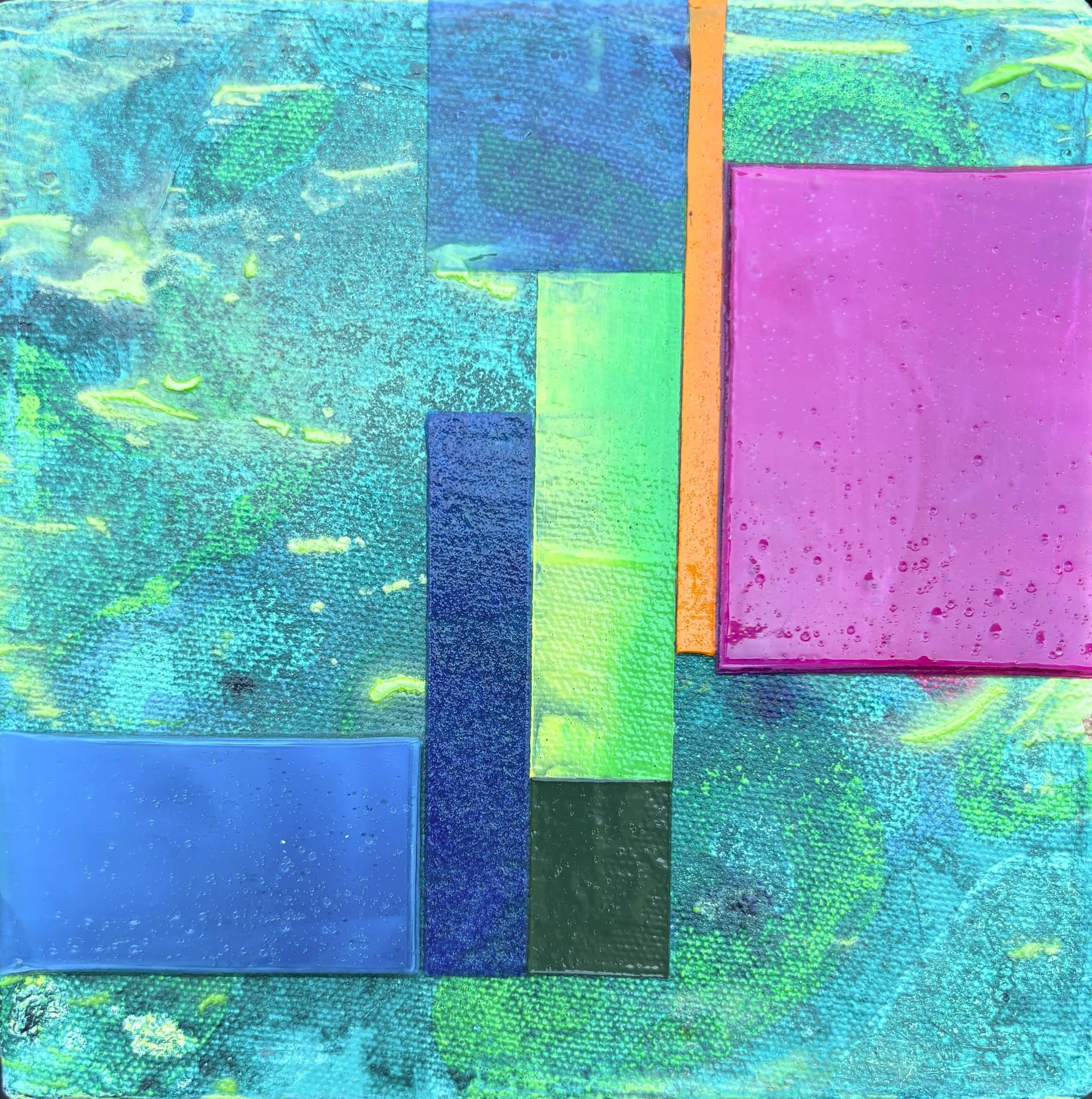
The Raft
Wallace Brown earned her MFA in Studio Art from the Meadows School of the Arts at Southern Methodist University (Dallas, TX) and a BFA in drawing and painting from CVAD at the University of North Texas (Denton, TX). Selected venues exhibiting her work include The Dallas Contemporary, UTD Haggerty Gallery, Hawn Gallery, The Dallas Art Fair, The 500X Gallery, Mighty Fine Arts Gallery, Studio 832, Axis Gallery, and Texas State University.
Abstract art from the early 20th century in Western Europe provides the springboard for her idiosyncratic paintings on canvas, paper, and wall. Theo Van Doesburg, associated with De Stijl from 1917 to 1931, along with the artist educators of the Bauhaus School from 1919 to 1933, are stalwart influences on her work. Research material to support her current inquiry comes directly from Joseph Albers’ Interaction of Color, 1963, Yale University.
Originally from Dallas, Wallace Brown lives and works in Austin, Texas.
Color has multiple infinities. Color has behavior. To speak in terms of hue over-simplifies our comprehensive understanding regarding the orchestration of light reflection and refraction within constantly changing environments. I begin a painting with an idea about the simultaneous contrast of color as described by Joseph Albers in the book Interaction of Color. Repetition of the hand-painted brushstroke is a meditative process that allows me to create form using color and shape alone. I read abstract art as one would read a book. The visual elements act as language without words.
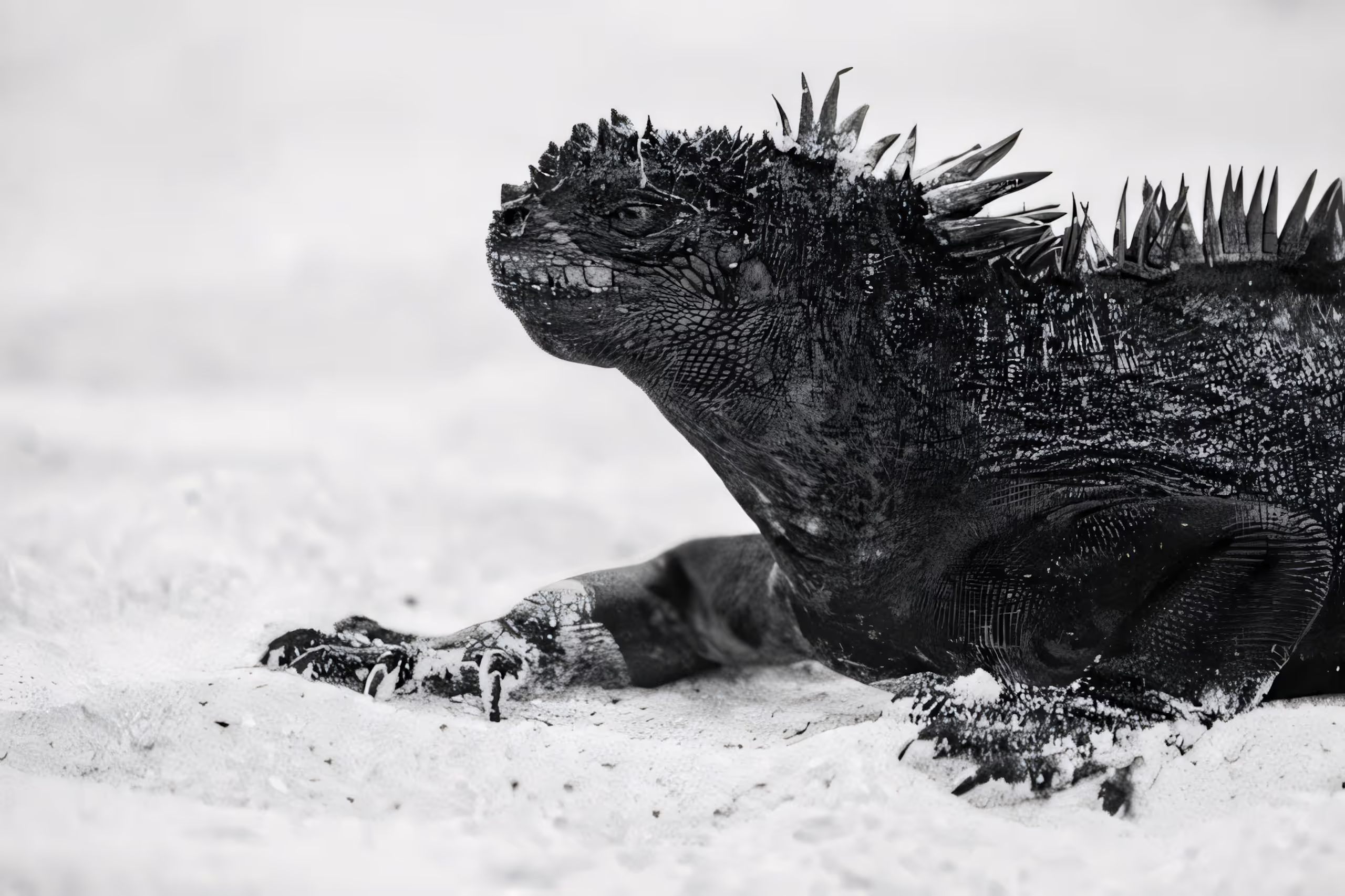
The Resilient One
Mital Patel is a fine art photographer whose work explores the relationship between form, minimalism, and emotional presence in natural environments. His imagery often focuses on isolating subjects within vast landscapes, using light, scale, and restraint to create a sense of stillness and contemplation.
Working across wildlife and remote environments, Patel’s recent work has shifted toward more minimal and conceptual interpretations of nature, where composition and tonal control play a central role.
His work has been exhibited and recognized internationally, with a growing focus on fine art presentation and gallery-based storytelling.
Ice exists in a narrow spectrum of tone, where color is restrained, and form becomes the primary language. In this body of work, I explore the Arctic as a study in subtle variation shifts in light, texture, and scale within a limited palette.
Each image isolates a different presence: dominance, stillness, and quiet transience. The restrained blues and greys are not just aesthetic choices, but a way to remove distraction and focus attention on structure and atmosphere.
By working within a singular color space, the landscape becomes less about place and more about perception, where form, silence, and scale begin to dissolve into something introspective.

The Sea Hag
Susan Bagrationoff is a professional surrealist whose body of work focuses on mythology and mysterious creatures. Faeries and folklore are the subjects of her creations using the beauty of nature within the Pacific Northwest for realistic reference. She creates her works with copious amounts of modeling paste, multiple layers of acrylic paint in brilliant hues, and metallic mediums to give a magickal ‘vibe’ from her creations.
Susan graduated with her Bachelor of Fine Arts in 2002 from Florida International University in Miami, Florida. In 2013, Susan started her own art education studio, Artsy Fartsy Art Lessons, which relocated to Kent, WA in 2016. Susan is a member of ARTrails, which is an annual art show that takes place in Centralia, Washington in late September. Since 2023, Susan has displayed works in various exhibitions at Gallery B612 and The Fishbowl in Seattle. In 2024, some of Susan’s works were published in ArtistTalk and Novum Artis magazines. She also exhibits her art through online organizations such as HMVC Gallery New York, Biafarin, and Arteom Gallery.
In a world of so much chaos, an escape into the realm of faeries brings peace and glamour into our dimension. Faeries always hold my fascination when I encounter them within our realm. I utilize the magic within my artistic soul to summon these creatures so that anyone can experience their charm and be inspired to believe in what they cannot see.
My work is conjured onto canvas using copious amounts of modeling paste and acrylic paints with multiple layers of various brushstrokes and the use of palette knife techniques. Brilliant colors and metallic hues are used to enable the faeries to emphasize their `vibe`, inspiring the viewer to discover the essence of these beings. The texture of their skin, hair, and backgrounds are vital to conveying the elemental qualities of each fae. I am perpetually discovering new ways to bring my faeries to life so they can gaze upon us humans as we admire their portraits.
This piece, “Just Venting”, sums up the release of various stressors that have been brought to the world’s attention over the past year.
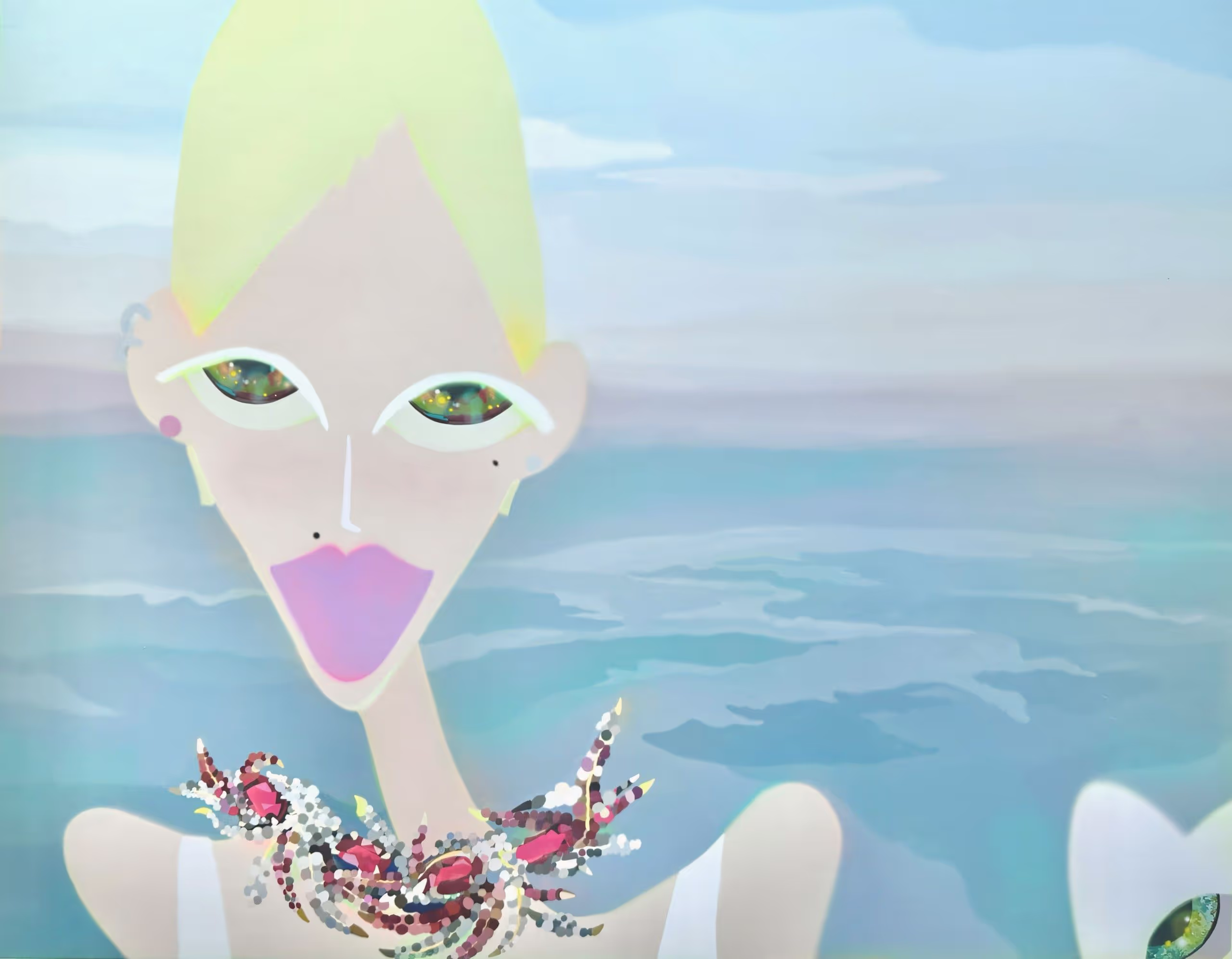
The Sky Is The Limit
Darling Graham is a contemporary visual artist whose multidisciplinary practice incorporates drawing, photography, and digital media. She describes her distinctive style as “feminine superflat art,” a refined and concept-driven approach that blends traditional techniques with digital tools to explore identity, femininity, and personal evolution.
Born in Rome, Italy, Darling began her artistic journey at the Liceo Artistico Via Ripetta, where the city’s rich history and architecture left a lasting impression. At nineteen, she moved to Canada, later earning a Bachelor of Fine Arts in Visual Arts and Photography from the University of Ottawa. After graduating, she relocated to Montreal, where she gained recognition as one half of the acclaimed photography duo Leda & St. Jacques, known for their visually compelling work in both editorial and commercial settings.
Now based between Canada and the United States, Darling has developed a unique visual language that feels intimate yet symbolically rich. Her work often pairs soft, flat color palettes with the presence of a central female figure, who is stylized, ageless, and emotionally complex. The character’s direct gaze invites the viewer into a layered inner world shaped by memory, mythology, and quiet introspection. A recurring element in her work is her cat, an enigmatic presence that can be seen as a companion, observer, alter ego, or symbol of emotional continuity. This subtle detail adds a sense of tension and depth to her compositions.
Darling’s process often begins with photographic self-portraits, which she then translates into delicate graphite drawings and digitally paints in soft pastel tones. The final creations are predominantly large-format inkjet fine art prints, presenting introspective visual stories that blur the line between personal narrative and universal experience. Her witty titles serve as gentle guides, offering context without limiting interpretation.
Overall, Darling’s work functions as a personal journal: elegant and emotionally resonant, inviting viewers into a space where intimate reflection and broader themes quietly converge.
Art is my existential library. I unfold my work as a personal journal of dreams, fears, happiness, and insecurities, always touched by humor. My style, which I call “feminine superflat art,” blends photography, drawing, and digital painting to create delicate, symbolic compositions. Each piece begins with self-portrait photography and evolves through graphite, pastel, and digital color, forming soft narratives about identity and transformation. The recurring female figure and her cat act as reflections of self and emotional continuity. Creating art means existing in a parallel universe where dreams meet reality, and everything becomes possible. My goal is to offer a moment of beauty, thought, or quiet wonder to those who look at my art, to invite them into my world where fragility becomes strength and imagination gives meaning to being.
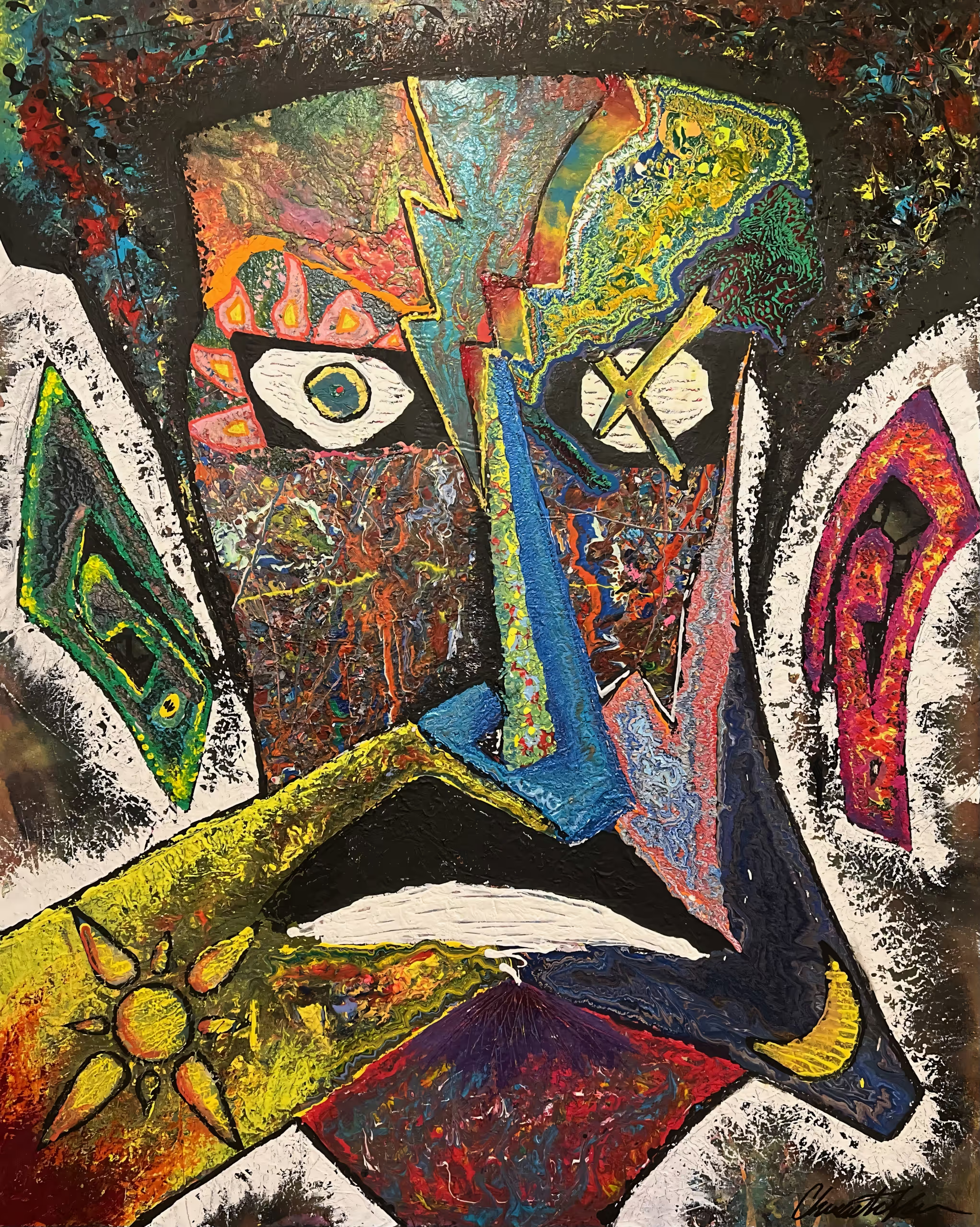
The Storm
I am a first-generation Ecuadorian American artist, born and raised with a passion for creativity. From a young age, I was drawn to the vibrant world of graffiti, a love that not only shaped my artistic vision but also led me to win multiple competitions, including mural contests. In high school, I was honored to be voted “Most Artistic,” an acknowledgment that fueled my desire to pursue art in all its forms.
With a Bachelor’s degree in Architecture, I developed a strong foundation in design and structure, which seamlessly blends into my work as both an artist and a third-generation stone mason. I am the owner of Art in Stone Masonry and Design, a company that specializes in creating one-of-a-kind stone works, combining my architectural skills with my family’s craftsmanship traditions.
Painting has always been an integral part of my life. While I’ve explored various styles, my current focus is abstract painting, where I express emotion and energy through color, texture, and form. My art is a reflection of my journey, influenced by my cultural roots, my experiences in the world of
As an avid traveler, my work is deeply influenced by new experiences, unfamiliar landscapes, and fleeting encounters. I am drawn to abstract faces—sometimes inspired by people I meet along the way, but more often, reflections of myself. Each piece becomes a visual diary, capturing emotions, moments, and memories that words cannot fully express.
My process is intuitive and unrestrained. I begin by emptying my mind, allowing color to lead the way. The shades and tones I choose are often those that stood out to me during my travels—vivid hues from a bustling city, muted earth tones from a quiet desert, or the unexpected contrast of light and shadow. Using brushes, spray paint, or scraping techniques, I layer and distort until a face emerges, raw and undefined, yet deeply familiar.
I believe my best work comes when I stop thinking and simply let it flow. In that space of pure instinct, I find truth—not just in the faces I create, but in the connection between movement, memory, and emotion.
The Tapestry
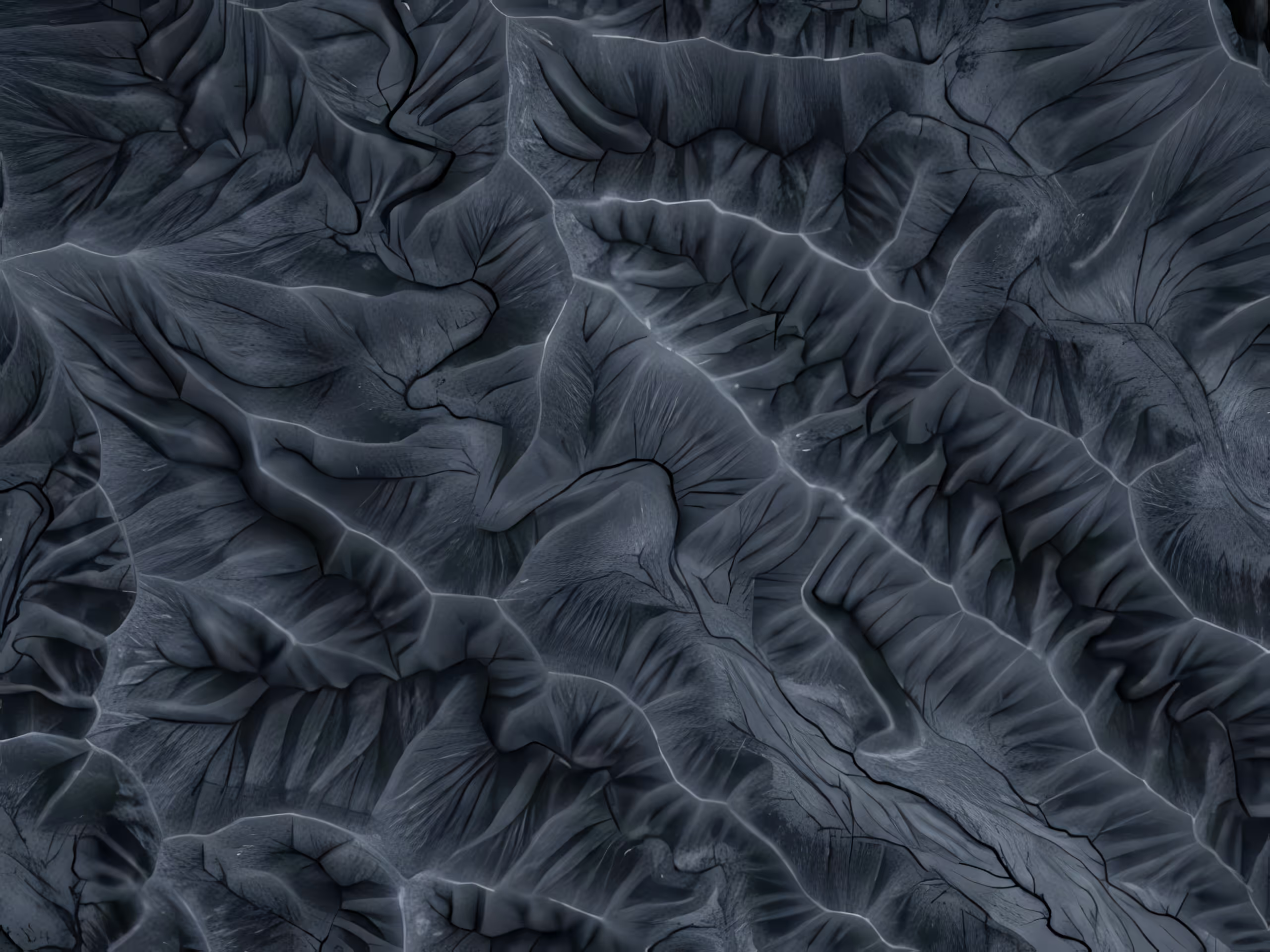
Mital Patel is a fine art photographer whose work explores the relationship between form, minimalism, and emotional presence in natural environments. His imagery often focuses on isolating subjects within vast landscapes, using light, scale, and restraint to create a sense of stillness and contemplation.
Working across wildlife and remote environments, Patel’s recent work has shifted toward more minimal and conceptual interpretations of nature, where composition and tonal control play a central role.
His work has been exhibited and recognized internationally, with a growing focus on fine art presentation and gallery-based storytelling.
Ice exists in a narrow spectrum of tone, where color is restrained, and form becomes the primary language. In this body of work, I explore the Arctic as a study in subtle variation shifts in light, texture, and scale within a limited palette.
Each image isolates a different presence: dominance, stillness, and quiet transience. The restrained blues and greys are not just aesthetic choices, but a way to remove distraction and focus attention on structure and atmosphere.
By working within a singular color space, the landscape becomes less about place and more about perception, where form, silence, and scale begin to dissolve into something introspective.
The Ten Commandments
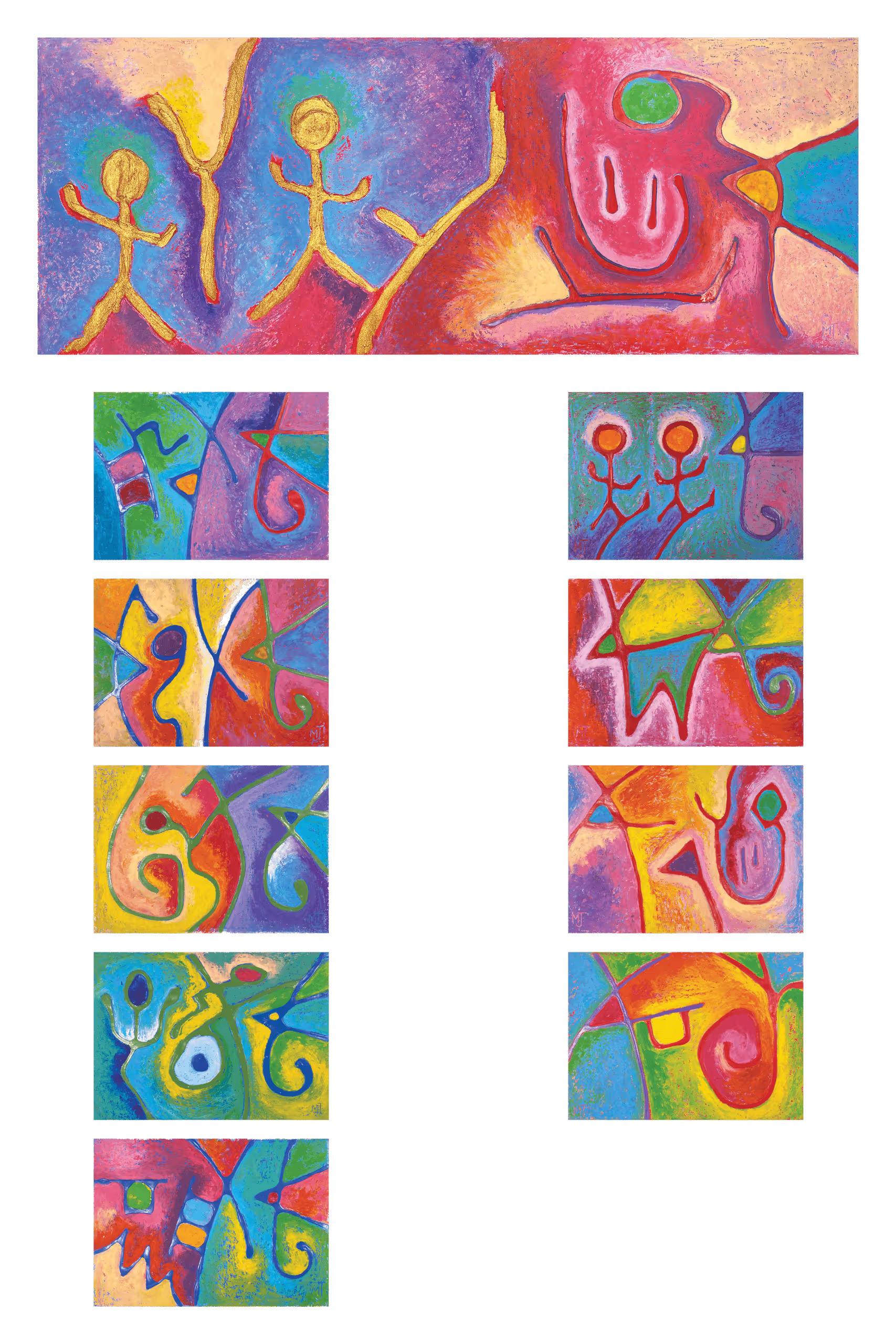
Marla Jean Clinesmith is a Louisiana-based painter whose work engages the visual and conceptual depth of the ancient Paleo Hebrew pictographic language within a contemporary abstract framework. Her practice examines how early symbolic systems functioned as both image and language — carrying layered meaning through form, structure, and gesture.
Working primarily in acrylic and often incorporating metallic elements, Clinesmith constructs luminous fields of color that serve as both atmosphere and architecture. Ancient letterforms emerge within these layered surfaces, not as illustration, but as structural components that inform composition, tension, and visual rhythm. Her work explores how symbolic language continues to shape perception and spiritual imagination across time.
A two-time recipient of the Denis Diderot Grant for residency at Château Orquevaux in France, Clinesmith also has four paintings in the Château’s permanent collection. Her paintings have been included in regional and national juried exhibitions, including the Adonai Global Art Fund Exhibition, where she was awarded First Place.
Through an ongoing studio practice, Clinesmith continues to investigate the intersection of abstraction, language, and sacred text — creating paintings that invite contemplative engagement while remaining grounded in contemporary painterly concerns.
Creativity rarely emerges in isolation; it is shaped by the influences that quietly form an artist’s way of seeing. My work is profoundly informed by a sustained engagement with the Ancient Hebrew—Paleo Hebrew—pictographic language, a visual system in which each letter functions not merely as text but as image, gesture, and bearer of layered meaning.
These primordial forms offer more than historical intrigue; they preserve a mode of thought in which language and symbol were inseparable. I am drawn to their ability to communicate complex spiritual ideas with striking visual economy, allowing ancient perception to speak into contemporary space.
Biblical texts remain a steady influence in my work, especially those that speak of God’s presence within human life. The ancient pictographs deepen my understanding of these themes, revealing layers of meaning that shape how I build each painting. I do not aim to illustrate scripture, but to express its depth and mystery through the painting itself.
Working primarily in acrylic and frequently incorporating gold leaf or metallic elements, I build layered fields of color that serve as both atmosphere and architecture. Color remains central to my process — a sensibility first awakened through formal study of color theory and continually refined in the studio.
By uniting luminous color with sacred pictographs, I seek to create paintings that operate as contemplative spaces — places where ancient consciousness and contemporary experience meet, inviting viewers into reflection rather than conclusion.

The Two Venuses: Sacred And Profane
Born and raised in the tough Italian neighborhood of Ducktown, Atlantic City, NJ, John Calabrese currently resides in Denton, Texas with his wife Margaret. He received his BA in Art from Catholic University, Washington, D. C., MFA in painting from Pratt Institute and his PhD in Comparative Arts from Ohio University.
He is Professor Emeritus of art at Texas Woman’s University where he taught art history, aesthetics, history of film noir, the art of Alfred Hitchcock, and was in charge of the studies abroad art history program which he initiated in 1994. He has published articles on Paul Klee, J. R. R. Tolkien’s “Lord of the Rings,” and Alfred Hitchcock’s “Vertigo” and “The Trouble with Harry.”
He has painted the boxer Joe Frazier and drawn portraits of Frank Sinatra and Mickey Mantle. He had coffee with Joe DiMaggio and is a lifelong Yankees fan.
His work has been exhibited in numerous national juried exhibits among which are: “Wanderlust” Art Fluent Online Gallery, MA; “Intergalactic Open” Shock Boxx Gallery, Hermosa Beach, CA; 14th Annual Contemporary International Drawing Discourse, Univ. of NC, Ashville; 28th Arts North International, Hopkins Center for the Arts, Hopkins, MN; and the upcoming CAL International, Conroe Art League, Conroe, TX and another “Wanderlust” Webster Arts Gallery, Webster Groves, MO.
Delicate nuance of value and texture become tools in conveying powerful dramatic statements about earthly beings who are not afraid to wonder, think, dream, and take that one step beyond.
The inhabitants of the cosmic atmosphere appear at odds with their surroundings, (many of which are actually specifically named astronomical objects). This is the result when the merely earthly confronts its unavoidable connection to the awe, mystery, and majesty of the heavens.
However, when fragile earthly beauty confronts sublime heavenly beauty, the earthly is reverently and silently humbled.
I would like to dedicate this exhibit to the memory of my dear friends Chris, Desi, and Franco.
I greatly appreciate HMVC Gallery New York for this opportunity to showcase my drawings.

The Ugly Duckling
Yue Zeng is a Chinese-American self-taught artist, mother, and wife, who has been living in the United States since 2008 and currently resides in Woodbury, Minnesota. Zeng’s artistic practice focuses on oil painting, with her subjects mainly being mythical creatures and imaginary landscapes. With a style between impressionism and fantasy, she explores the vividness of their spirit in saturated colors and organic forms. Zeng’s interest in the arts started in elementary school, sparking her desire to create later in life. In her twenties, she obtained her Master in Science from SUNY College of Environmental Science and Forestry in Syracuse, New York. In 2017 due to physical complications, Zeng had to leave the chemistry industry. Transformed by the experience, she decided to revisit her art practice and make it her career regardless of the obstacles she would face. Since then, Zeng has flourished in her artistic expression, finding her true passion in oil painting. Although Zeng explores other painting mediums such as gouache, pastel, and digital, oil and canvas feel the most natural. This medium allows her to relax and be free with the changeability of the material and exploration of color within the subjects she paints.
My paintings are an outlet to express the imagination I have inside my head that I can not put into words. After trying many mediums, I always find myself coming back to paint and brushes. In my current artistic practice, I use oil paint and mainly create portraits of mythical creatures and animals transfixed in the shifting colors of seascapes and landscapes. There is a natural spirit and magic to these creatures and their energy draws me in. Choosing to paint these creatures as real living wildlife rather than abstractions, I use bold and vivid colors to express the imagination intertwined with reality, finding magic between the seams. Using a saturated color palette, I create bold and striking imagery, contrast between foreground and background, subject and landscape, and light and darkness. Weaving their bodies and the surface of the landscape into each other through organic forms and flowing brush strokes, I find beauty, strength, and innocence in these creatures that reflect my inner world.