
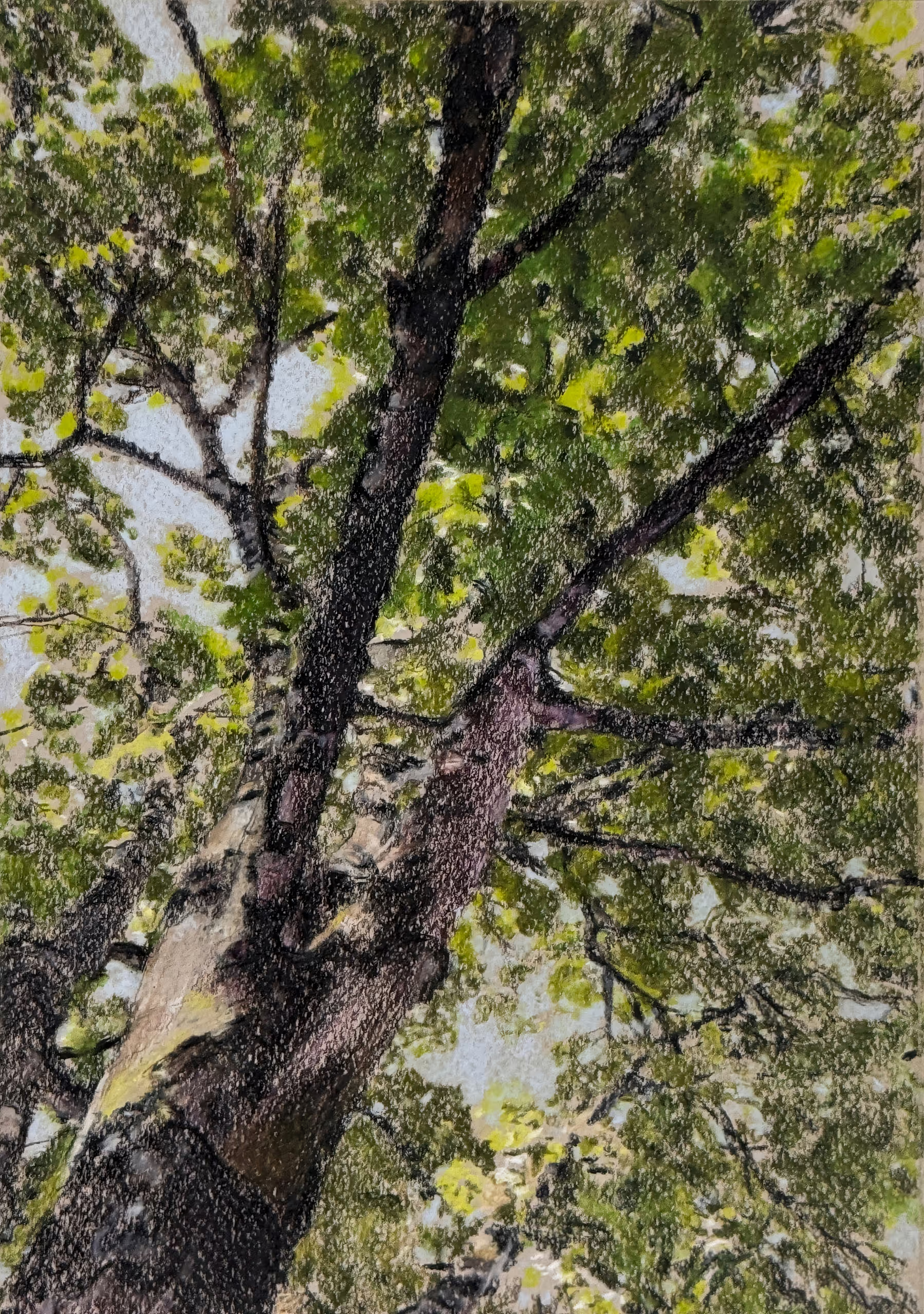
Maple Tree
Lael Salaets has been drawing since early childhood.
He enlisted in the US Marines and was stationed at Okinawa, Japan. There, he studied Eastern philosophy, art, and culture. Wabi-sabi, the idea that nothing is perfect, finished, or permanent, influenced much of his pencil work.
After his deployment to Operations Desert Shield and Desert Storm, drawing became a meditative process to cope with PTSD. He studied fine art and design at the University of Oregon and Lane Community College, where he received a scholarship and an AAS in graphic design.
He resides in Eugene and is a member of the Maude Kerns Art Center and the Oregon Society of Artists based in Portland.
My primary medium is graphite and colored pencil. Much of my work is inspired by wabi-sabi, a philosophy that nothing is perfect, finished, or permanent. Thus, the experience of drawing is a focused, meditative process – to observe and capture subjects at a particular moment of interest.
Through the use of subtle layers, color depth, and a broad range of values, the composition emerges. I seek to achieve balance, the proportional relationship of abstract shapes into positive and negative space.
The sweep of pencil marks and how they flow together develops a strong framework, resulting in imagery that evokes a sense of calm and appreciation for the present and the unfinished imperfection of reality.

Marias Kitchen
G.M. Owen is from the middle Tennessee area; he is a self-taught painter with no formal training other than art classes in middle school. He started painting around the age of twelve years old, placing art in the annual juried art competition at the State Fair Art Show, and later joining a local art guild in his late teens. After high school, he was hired as a staff sign artist for the Coca-Cola Bottling company in Nashville, Tennessee, and later worked as a sign artist for trade show/expo companies working in the southeastern states. By the mid-eighties, the art of free-hand lettering was replaced by computers and wide-format printing. He re-entered tech school to study desktop publishing, and he has worked for the last 30 years as a graphic designer in the wine & spirits industry. He has always painted and placed art in venues, restaurants, and juried art shows along the way. His style of art ranges from portraits to still life fruit. He uses non-traditional oil paint which is an oil-based enamel and reflects back to paint he used as a sign artist painting billboards and walls for Coca-Cola company when he was younger.
I think about paintings and I see pictures of different images and I try to convey that or what I see in a magazine or online into a painting. A lot of times I will first make a mockup of what I want to create using Photoshop and then I will paint that image on canvas. At times the painting takes a different path from what I started out thinking about painting.

Marie
Houston-based printmaker and sculptor, Alexandra Ellena, has been honing her skills in printmaking for the past several years. She discovered her second love of sculpture while obtaining her MFA at Houston Baptist University. While attending her artist residency in Germany in 2021 she continued to experiment more with both sculpture and printmaking, occasionally combining the two in singular works allowing each component to facilitate each other.
Alexandra’s evolution from 2D to both 2D and 3D work has allowed her to introduce other ideas and elements into her work extending her range and talent. Her focus on the unknown and alien among us challenges the viewers to step away from the mundane and question what could be. She utilizes texture in her sculptures and plate manipulation in her prints to create a whimsical yet foreboding story for these pieces to reveal.
Cryptids are recognized by all walks of life, each with their own story behind them. These animal-like creatures carry stories to teach lessons or give warnings in different cultures.
Normally recognized as supernatural or mythical creatures, their stories drew me to explore them as most people have heard of them or know about them. Being pulled to the odd or unusual myself, I find it intriguing that all cultures have their own versions of these cryptids. During my study, I found cryptids not only vary around the world but there are new cryptids being discovered today in the world of technology.
Choosing to work in 2D and 3D alludes to the question of their existence. 2D represented by copper and dry point etching gives the viewer a feeling of comfort in the sense they’re only images. Whereas the 3D sculptures place these entities within our world and space making the viewer think more about their existence. I chose to use plate manipulation to create a mysterious feel to the images. However, the sculptures are focused more on large dimensions and texture to create a lifelike feel of what it would be like to be face-to-face with one of these entities. Large scale creates a more in-your-face approach to introduce these beasts to our world, while the texture gives it a likeness to creatures we cohabitate with on a daily basis. All of these components challenge the viewer to question the existence of these legends as well as their own comfort with them.
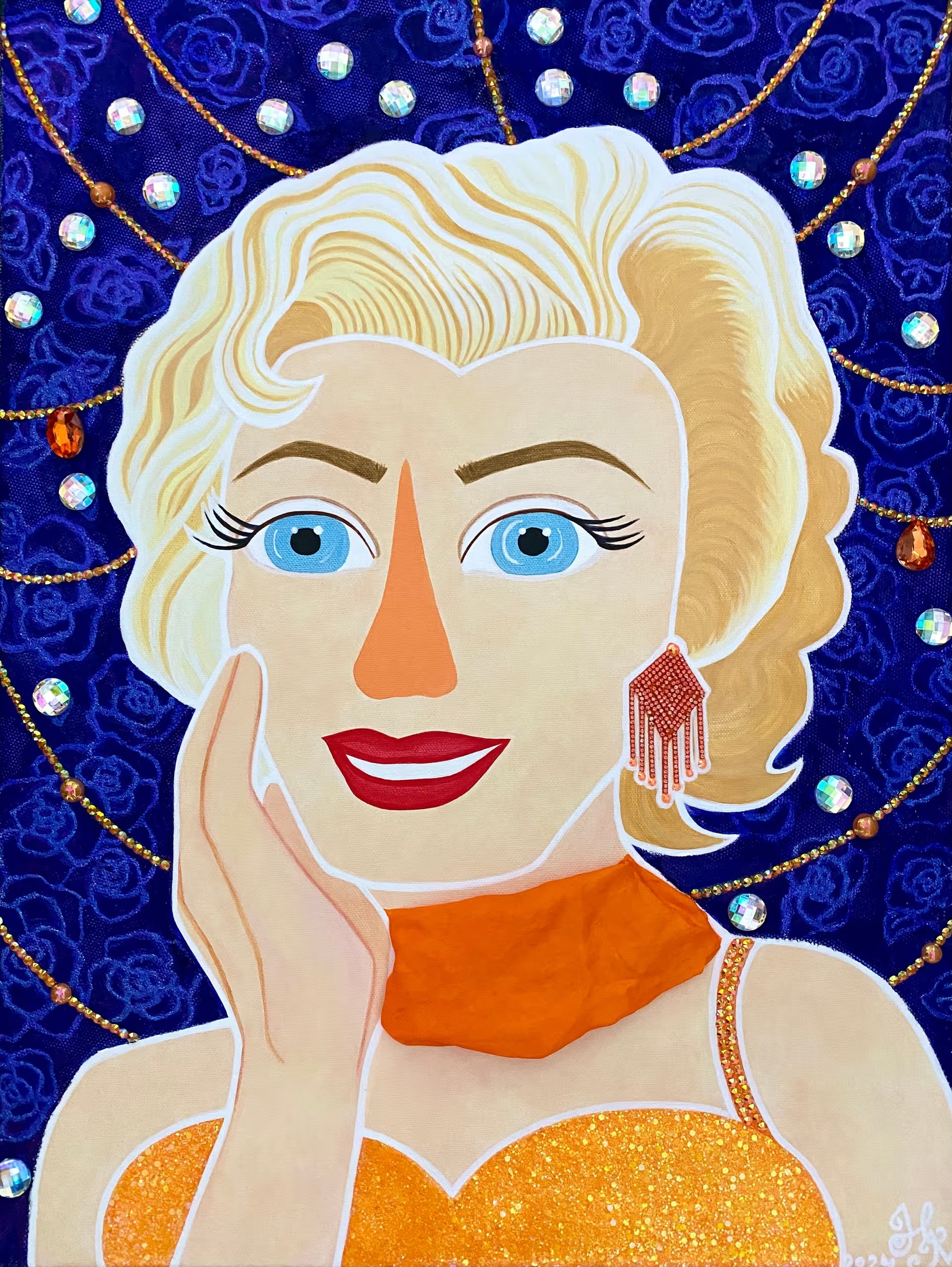
Marilyn & Orange Diamonds
Heini Mika is a Finnish artist living and working in New York City. Heini holds a Bachelor’s degree in Fine Arts from the University of Worcester (UK) and she also has a degree in Fine Art and Visual Communications from Finland’s prestigious Pekka Halonen Academy of Art. Heini’s paintings have received global recognition, being showcased on four continents in prominent locations such as NYC, Paris, the UK, the UAE, and Indonesia. Her artworks have been featured in many notable publications, including the British Vogue, and several of her pieces are cherished within private collections.
Heini’s ultra-contemporary paintings serve the viewer with a palette of vibrant colors and dynamic shapes while she gives you her unique perspective on women, fairytales, and history. They have been an important source of inspiration for Heini throughout her career as an artist and this can be observed in her rich and intriguing original artworks.
Since forever women have been the subject of great art, but rarely were we allowed to create great art. As a female artist living in the 21st Century, I find great inspiration in the female icons of the past. Famous women from Marie Antoinette to Miley Cyrus, have served as profound sources of inspiration for me, due to their distinctive styles and unique spirits. In my art practice, I explore the contrast between the public portrayal of the women I admire and their true selves. My aim is to discover how the images of these influential women, given by pop culture, impact and shape my own artistic impressions of them. Just like the women I paint, I am an unconventional woman in the eyes of my society and with my art practice I want to invite viewers to look past the glittering images and see the depth and complexity of the women I paint, myself included.
Ultimately, my work serves as a reflection and exploration of this complex dynamic. While my intention is to showcase the vibrant and visually captivating image that pop culture has crafted around the women I idolize, I also remain very conscious of the underlying darkness that hides beneath the surface of their seemingly lighthearted images.
As a Finn, I grew up on satire, dark humor, and happy endings and that is well reflected in my work. At first glance, my cartoonish mixed media paintings may depict my subject’s pop culture image perfectly, which is usually colorful, ditzy, and lacking in substance, but I am actually satirizing our perceptions of my female heroines. We are all guilty of prioritizing a person’s image over the narrative. But whether the viewer understands this duality or not, I still want them to have a good time when viewing my artwork.
I choose to work with acrylics, rhinestones, and glitters because their vibrant hues and plastic textures are well suited for creating eye-catching artworks that are unique to me, and perfect for the subject matter.

Marinade
Originally from Boston, MA, now based in Brooklyn, NY, Emily (Em) is a dedicated visual artist emerging in the art world. Art has played a role in her life since childhood, as her initial struggles with speech and dyslexia led her to use visual devices for expression beyond language. During her undergraduate, Emily studied under Matt Saunders and Annette Lemieux, exploring various mediums in studio art. In her recent body of work, Emily’s paintings and illustrations focus on the female form in surreal environments, seeking to shift the narrative and perspective of the self versus the other. In the summer of 2023, Emily will be showcasing this body of work in a solo show at the Pleiades Gallery in Manhattan. Selected pieces from this series were recently on display in Maverick Expo, a group show supported by Bitforms Gallery, Disrupted Realism, an internationally juried exhibition at the Buckham Gallery, Art Basel in Miami, and featured in various virtual exhibitions during the height of the pandemic. Her 2018 series on altered states were selected for the Flagler County Art League’s Faces & Figures juried exhibition, featured in The Book of Art publication, and displayed in Emotions, an international online exhibition by Gallerium. In 2021, she worked alongside Santa Fe based artist Brad Smith, showcasing her work in his gallery on Canyon Road. Currently, Emily is a member and practicing artist of Kunstraum LLC, an artist collective and studio space in Brooklyn, New York.
Originally inspired by the literature of Simone De Beauvoir, I use surrealism to depict worlds where the female form is celebrated as both the subjective and the objective; the self and the other. Within the work, the hand of the creator comes into contrast with the creation itself in subtle moments that reveal my artist process –deliberately untouched canvas, unfinished figure sketches, moments that allow the viewer to complete the story, enter the narrative and contribute to the creation itself. Since the book of Genesis, the female form has been understood as the other, pulled from Adam’s rib, “…she is defined and differentiated with reference to man and not he with reference to her” (The Second Sex, Beauvoir). Confronting this ideology, I offer an alternative world, a multi-dimensional playground for the form to inhabit, create, and be created. Here, I celebrate, rather than define, nature’s complex duality. These worlds play with time and space, allowing the viewer to feel grounded in the sense of reality, while still lost in the navigation of the surreal landscape.
In this series, I use linear perspective to manipulate our understood measures of dimensionality. By integrating mirrors and long shadows, my recent work expands on my original exploration of ‘the self and the other’. While the mirrors directly pull the viewer into the piece, the figure’s long shadows add an element of time, a growing moment that captures the intangible nature of self-reflection.
This piece constructs worlds of tomorrow by reframing the duality of the human experience into a singular narrative –where the figure is not detached, but rather an integral part of the environment, shifting with our understood notions of the subjective and the objective. In essence, I seek to harness the feeling that we can and will be a part of something greater than ourselves.
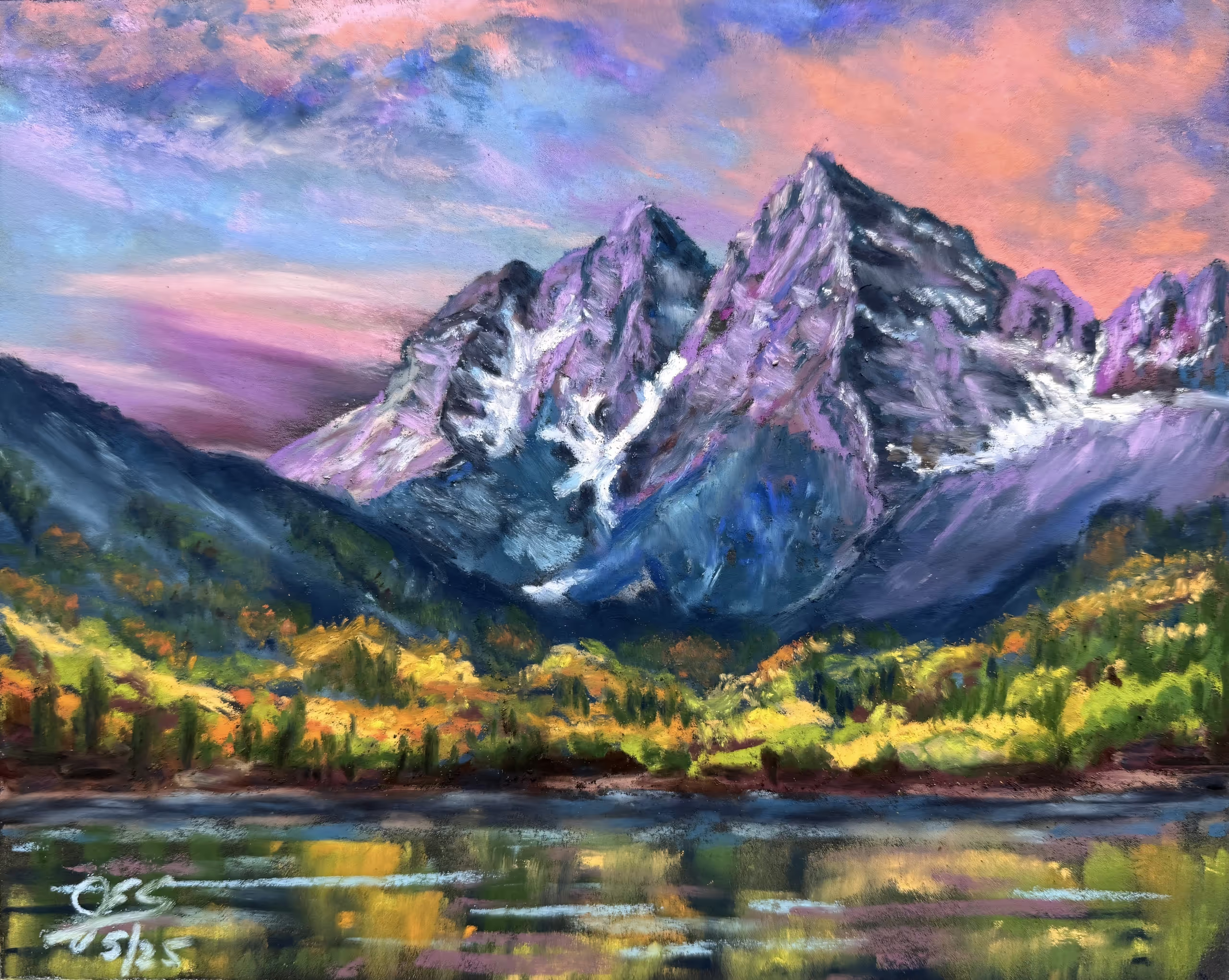
Maroon Bells
Jim Slavik has been a creative spirit from an early age, exploring drawing, charcoal, acrylics, and mixed media throughout childhood to high school. Though his artistic pursuits took a back seat to a successful career in finance, he never lost his connection to the visual arts. Upon retiring and relocating to Colorado, Jim rekindled his artistic passion after enrolling in a soft pastel class in early 2023. This experience marked the beginning of his “next act” — a renewed and evolving journey as a visual artist.
Jim’s work spans a range of mediums and subjects, reflecting a spirit of curiosity and experimentation. Since re-entering the art world, he has been honored to exhibit in numerous juried shows and contribute original pieces to charitable fundraisers. Through his practice, he founded Do Good Art, a mission-driven endeavor through which he donates 100% of his art sale profits to charities close to his heart, particularly those addressing cancer and Colorado-based causes. With each piece, he aims to inspire beauty while contributing to a more compassionate and equitable world.
My artistic practice is grounded in a simple yet powerful mission: to Do Good through Art. Every piece I create is both a celebration of natural beauty and a commitment to giving back—100% of the net proceeds from my work are donated to charitable causes.
Inspired by my travels—whether hiking the mountains of my home in Colorado, exploring National Parks, or venturing abroad—I seek to capture the quiet majesty of the landscapes that move me. My work often explores the interplay of light and shadow, the drama of skies at sunset, and the serenity of water in its many forms. From sweeping vistas to intimate glimpses of birds, animals, and wildflowers, each piece invites the viewer to pause, reflect, and reconnect with the natural world.
Soft pastels are my primary medium, chosen for their richness and immediacy, though I also work in watercolor and colored pencil to suit the spirit of each subject. My diverse collections reflect both a deep reverence for the outdoors and a belief in art as a force for positive change.
So join me in Doing Good (through) Art.
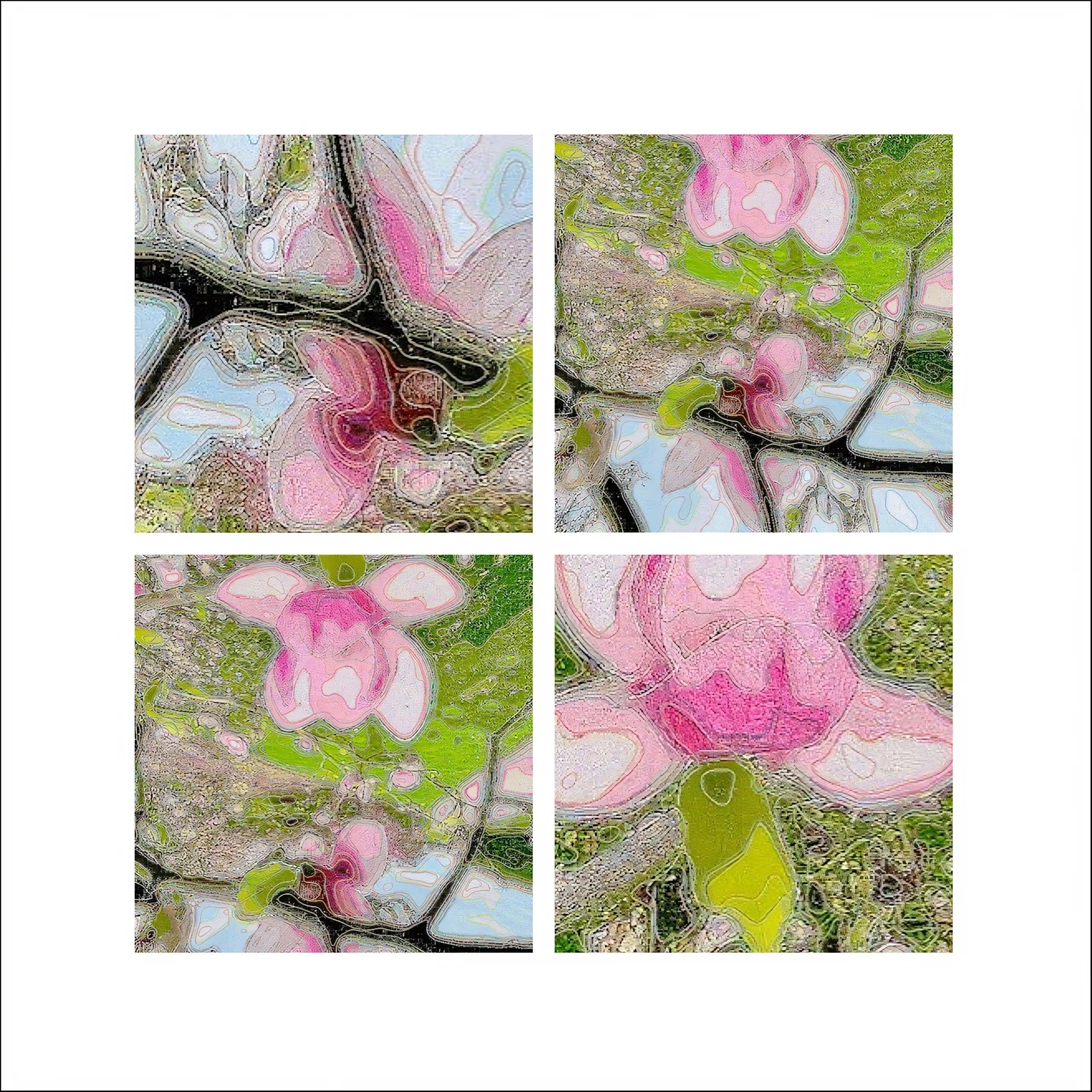
Mary Pat In Highland Park 3
Sylvia Bandyke, Royal Oak, MI, USA, is largely a self-taught photographer, having taken studio and art history classes in college. She began her art career by displaying photo collages in ArtPrize, an independent international art competition in Grand Rapids, MI, from 2014 to 2018. Subsequently, she has been juried into more than 100 group exhibitions in 24 states and accepted into numerous online international exhibitions. An award-winning artist, she keeps an eye open for interesting views of a subject while looking for hidden beauty every day. Most recently, she was a caregiver to her elderly mother and was able to create some memorable, unique art as a result of this experience.
I prefer using the collage format to integrate associated images into a cohesive unit that is even more compelling because of the embedded story. Having been a playwright and technical writer, I am accustomed to delivering content with a message. So now, as a visual communicator, I continue to provide meaning via the structure of the collage format, wherein the four photos confirm, augment, or even contradict each other if warranted. I enjoy offering the richness that the multiplicity of images provides, along with the impact gained through their thoughtful positioning. Ultimately, I intend to have my work act as a doorway to the viewer’s own mental and emotional framework regarding the collection of images, perhaps finding their own very personal meaning in them.
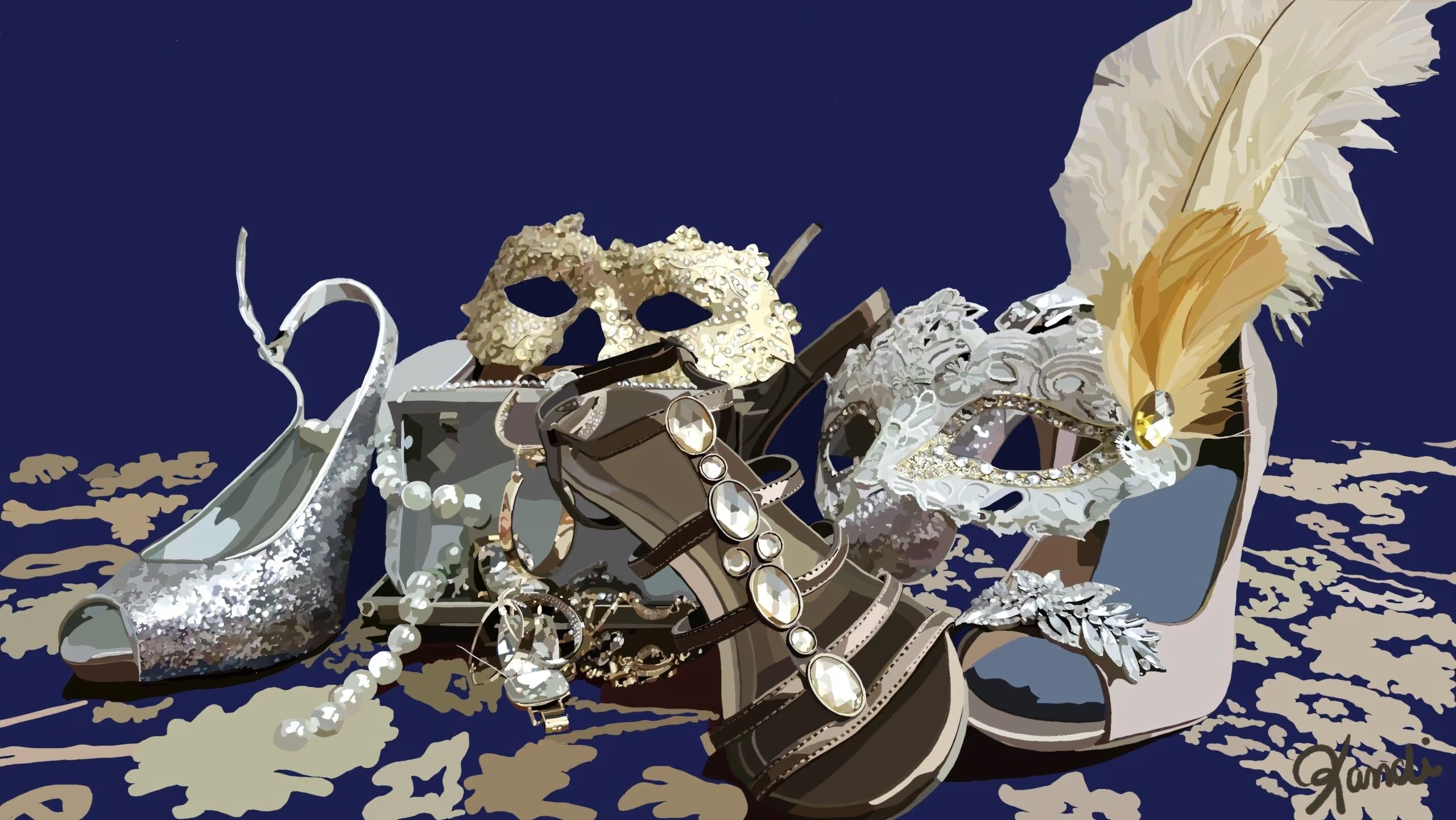
Masquerade Of The Ordinary
Kandi Finney is a multidisciplinary artist working primarily in digital painting and drawing. Her work examines identity, memory, and performance through carefully considered depictions of everyday objects. By isolating familiar forms and arranging them within deliberate compositions, she invites quiet reflection on the ways ordinary life holds emotional and symbolic weight.
Finney’s practice is rooted in attentiveness and restraint. She approaches art as an ongoing process, allowing time, intuition, and subtle shifts to guide each work. Rather than seeking resolution, her images remain open, dwelling in moments of pause and transition. This contemplative approach encourages viewers to slow down and consider identity as something fluid and evolving, shaped by experience rather than declaration.
Working digitally, Finney draws from traditions of still life and figurative painting while embracing the clarity and control of contemporary tools. Her layered process emphasizes surface, light, and tone, balancing stylization with emotional resonance. Color is used thoughtfully to create atmosphere and depth, supporting a sense of stillness rather than spectacle.
Through her work, Finney aims to elevate the overlooked and give form to quiet states of being. Her images suggest that meaning often emerges in subtle gestures and accumulated moments, inviting sustained looking and personal interpretation.
Masquerade of the Ordinary explores identity as something playful, flexible, and unfinished. The painting gathers shoes, masks, jewelry, and feathers into a shared space, objects often linked to celebration and transformation, yet here they appear mid pause, as if caught between uses. Rather than signaling a completed performance, these items suggest experimentation. Identity is not fixed or polished. It is something tried on, rearranged, and enjoyed while still becoming.
I am interested in the quiet humor and pleasure embedded in everyday objects. Shoes hint at movement even when still. Masks exaggerate expression while offering protection. Jewelry sparkles with intention, memory, and small indulgences. Collected together, these elements feel less ceremonial and more conversational, like remnants of a good time that is not quite over. The masquerade here is not about deception. It is about permission to play.
The title reflects a balance between seriousness and lightness. Masquerade implies drama and artifice, while the ordinary grounds the work in routine life. By bringing these ideas together, I point to how much of daily existence involves subtle performance, often approached with curiosity, improvisation, and occasional joy. The deep blue ground acts as a stage but also a sandbox, a space where objects are elevated yet unburdened by narrative rules. Nothing has to be resolved. Everything is allowed to remain in progress.
My digital process supports this sense of exploration. I build forms through layered shapes and deliberate textures, borrowing from traditional still life while embracing the clarity and playfulness of the digital medium. Reflections and shadows are carefully placed, but stylization is welcomed. I am interested in how objects feel emotionally rather than how they behave realistically, allowing color and surface to carry mood and personality.
Masquerade of the Ordinary ultimately celebrates becoming rather than arriving. It invites viewers to consider identity as something assembled through small choices, experiments, and moments of fun that are often overlooked. The work honors the in-between state, where nothing is final, the costume is still being adjusted, and the joy lies in the act of trying.

Master Time
Color can create worlds and emotions beyond our eyes, and it is up to the artist to shape these to their imagination. Charely Paulino is a young woman born in the Dominican Republic, a tropical island rich in culture and tradition. She immigrated to the United States by the age of fifteen. However, on her way to finding herself in an unknown country, she adhere to the art that filled her life with color. In the fall of 2023, he finished her bachelor’s degree in Studio Art in mixed media.
Her paintings usually evoke magical atmospheres created especially for each composition. Paulino is a lover of bibraded and fluid colors. Her paintings involve materials such as watercolor and gouache. Her works seek to construct the effect of a dream, something that cannot exist but can imagined. Her work reaches the subconscious through creating characters that interpret situations, emotions, and moments in life.
Thanks to her hard work, in the winter of 2023, Paulino had an individual exhibition at Kean University, also recognized by the same university by giving it space in an official letter. She is a young artist looking for how to make her way in the art world and continue filling paintings with color and stories.
The works I sent are related to one of my collections called (Ephemeral). With which I seek to illustrate the moments and emotions we go through in life. portraying life as a short path but full of decisions, and unexpected and unique moments for each person. As I already mentioned, I look for the greatest use of color in my work. I don’t want the colors to fight with each other, rather I like to create a world where they can coexist with each other. My work is traditional with the use of gouache. Gouache allows me to maintain the intensity of the colors and achieve the desired objectives even better. In all the paintings I deliver you can see how I apply vibrant moments but involving the emotions and personalities of each character.