

040717 Adrian
Dana Potter is an artist and educator specializing in two fields: printmaking and digital studies. Recently hired as a Professor of Interactive Digital Studies at the University of Northern Iowa, her students create digital projects to illustrate and inform public dialog. Potter maintains an active, vocal presence in the national arts and printmaking communities. In 2020 Potter received her Master of Fine Arts in printmaking from the University of Knoxville, TN. 2019 was a particularly advantageous year for Potter: she organized the first laser-cutter and printmaking-specific portfolio, “The Laser-Printmaker” for the Southern Graphics Council International Conference, Dallas, TX; and attended international, inter-media art residencies at The Eugeniusz Geppert Academy of Art and Design in Wrocław, Poland, and Arts Quarter Budapest in Hungary. Recently Potter’s work has been in both national and international exhibitions “9th International Printmaking Bienal Douro,” Douro, Portugal 2018; “2017 Beyond Printmaking 5,” Texas Tech University, Lubbock, Texas; and “Stand Out Prints 2016,” Highpoint Center for Printmaking, Minneapolis, MN. Recent solo shows include “Coherent Shadows”, Minneapolis College of Art and Design, Minneapolis, MN, 2019; and “Public Information Only” Ewing Gallery of Art, Knoxville, TN.
My studio is a laboratory where I test biometric and sensory technologies. I’ve worked with eye-trackers, Geo-location mapping, computer-mouse movement recordings, and most recently facial recognition. These technologies translate the physiological and behavioral characteristics of an individual into readable data for a computer. The collected data sets are visually rich for artistic appropriation: Eye-trackers reveal gradient heatmaps; facial recognition uses graphic lines and shapes overtop photographs, and computer-mouse movements create abstract line drawings. I make artworks to reveal what these complex processes look like because they are an invisible presence in our everyday life through touchpoints such as mobile phones, internet connection, and CCTV cameras. Translating these invisible forces into physical objects makes the reality of surveillance feel present and personal. The digital frontier is a capitalist one, social media platforms are the factory farms, and our individual profiles are harvesting grounds for data.
In the recent series, Data Figures, I created a series of screen-prints to investigate the computer vision behind facial recognition (FR), to understand what the computer does to a face. I reinterpret the logical instructions of facial recognition (FR) as artistic prompts for hand-collage and filter photos directly with facial recognition (FR) software called Edge Detection and Gabor Filtering, which are military technologies for identifying figures in video and images. The mixing of facial recognition and other surveillance tools with selfies and group photos tangibly connects social media to its role in surveillance capitalism. In early 2020, a technology company called ClearView AI scraped millions of public sites, including Facebook, YouTube, and Venmo, amassing nearly 3 billion photos for facial recognition, and sold the datasets to more than 600 law enforcement agencies in the US.
07 04 25
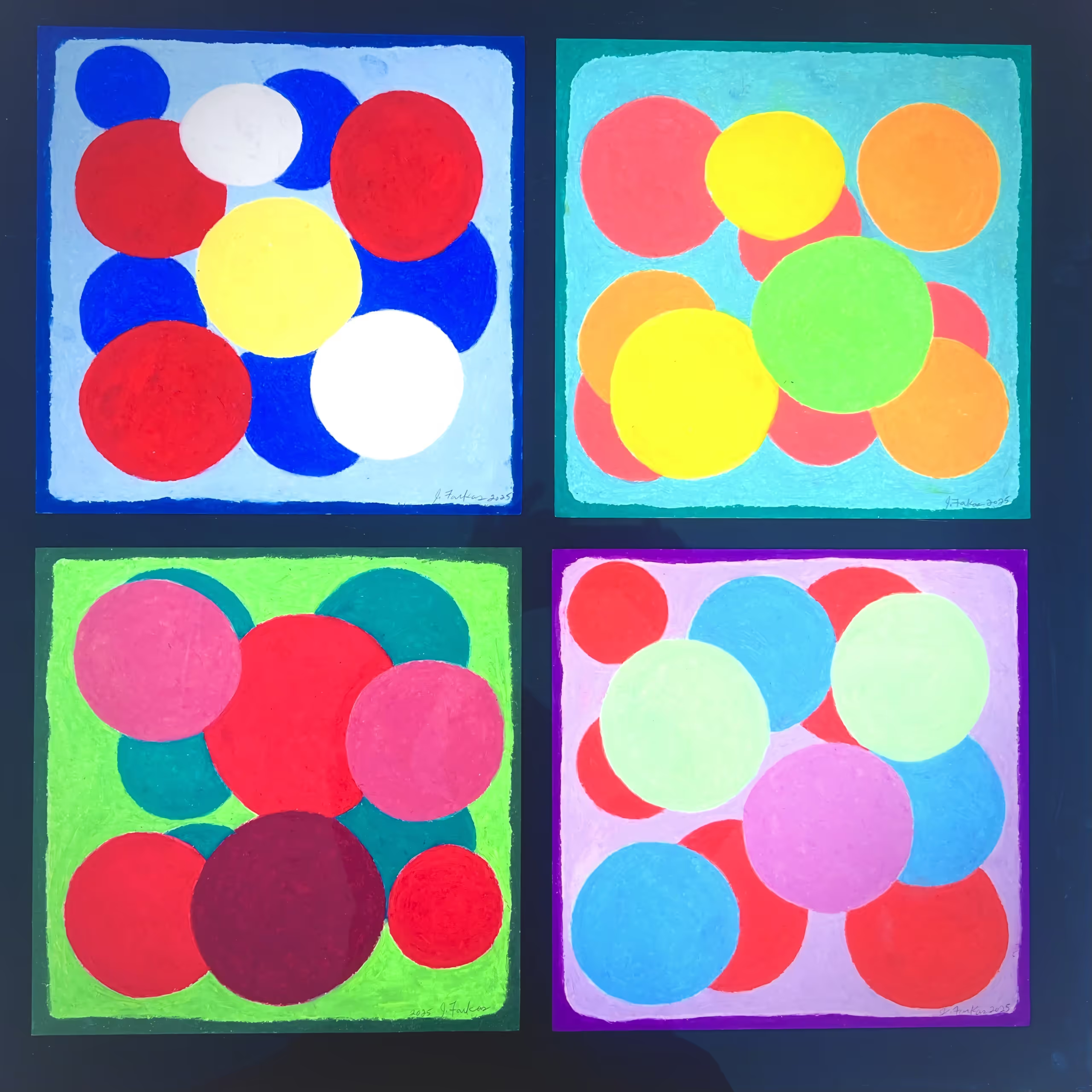
Jack Farkas has donned many hats: Dean of Gibbs College, owner of Estate Fine Art and Associates, and President of the Nutmeg Symphony Orchestra. His expertise has been sought by numerous art boards and judging panels, where his keen eye and vast knowledge have shaped the landscape of contemporary art. One of his crowning achievements was orchestrating solo exhibitions for iconic artists like Willem de Kooning, which garnered acclaim, with the New York Times lauding it as the “Coup of the Century.”
Globally recognized for his lectures at leading art institutions such as The Met, the National Gallery of Art, the Louvre, the Prado, the Hermitage, the Uffizi, the Vatican Museum, and the Guggenheim, Farkas has shared his vision and insight into the fusion of art and architecture. His lectures have not only educated but also transformed the way audiences perceive and interact with art.
Known for drawing inspiration from the essence of life itself, Farkas’s works are reflective of emotions, symbols, spirits, and cosmic energies. His creative process is dynamic, allowing the medium to speak and take form organically, whether it’s pastel, paint, or any other medium. Each work is an interplay of color, shape, and symbolism, pushing the boundaries of the medium to convey profound messages to the viewer.
Life itself is my greatest source of inspiration. The intricacies of the creative process and the enduring quest to leave one’s mark on the world fuel my artistic endeavors. My hope is that my art will serve as a beacon for those who come after me, guiding them with insights and reflections that make their own journeys more enlightened and less fraught with obstacles.
In sum, my artistic practice is a holistic engagement with the elements of color, symbolic representation, and spatial dynamics. Seamlessly weaving these components together through Life itself is my greatest source of inspiration. The intricacies of the creative process and the enduring quest to leave one’s mark on the world fuel my artistic endeavors. My hope is that my art will serve as a beacon for those who come after me, guiding them with insights and reflections that make their own journeys more enlightened and less fraught with obstacles.
In sum, my artistic practice is a holistic engagement with the elements of color, symbolic representation, and spatial dynamics. By seamlessly weaving these components together through painting, oil pastels, and printmaking, I strive to communicate in the universal language of art. Through this language, I aim to build lasting, meaningful connections with my audience, enriching their lives with the rich tapestry of color, emotion, and symbolism that populate our shared world. painting, oil pastels, and printmaking, I strive to communicate in the universal language of art. Through this language, I aim to build lasting, meaningful connections with my audience, enriching their lives with the rich tapestry of color, emotion, and symbolism that populate our shared world.
10 Days
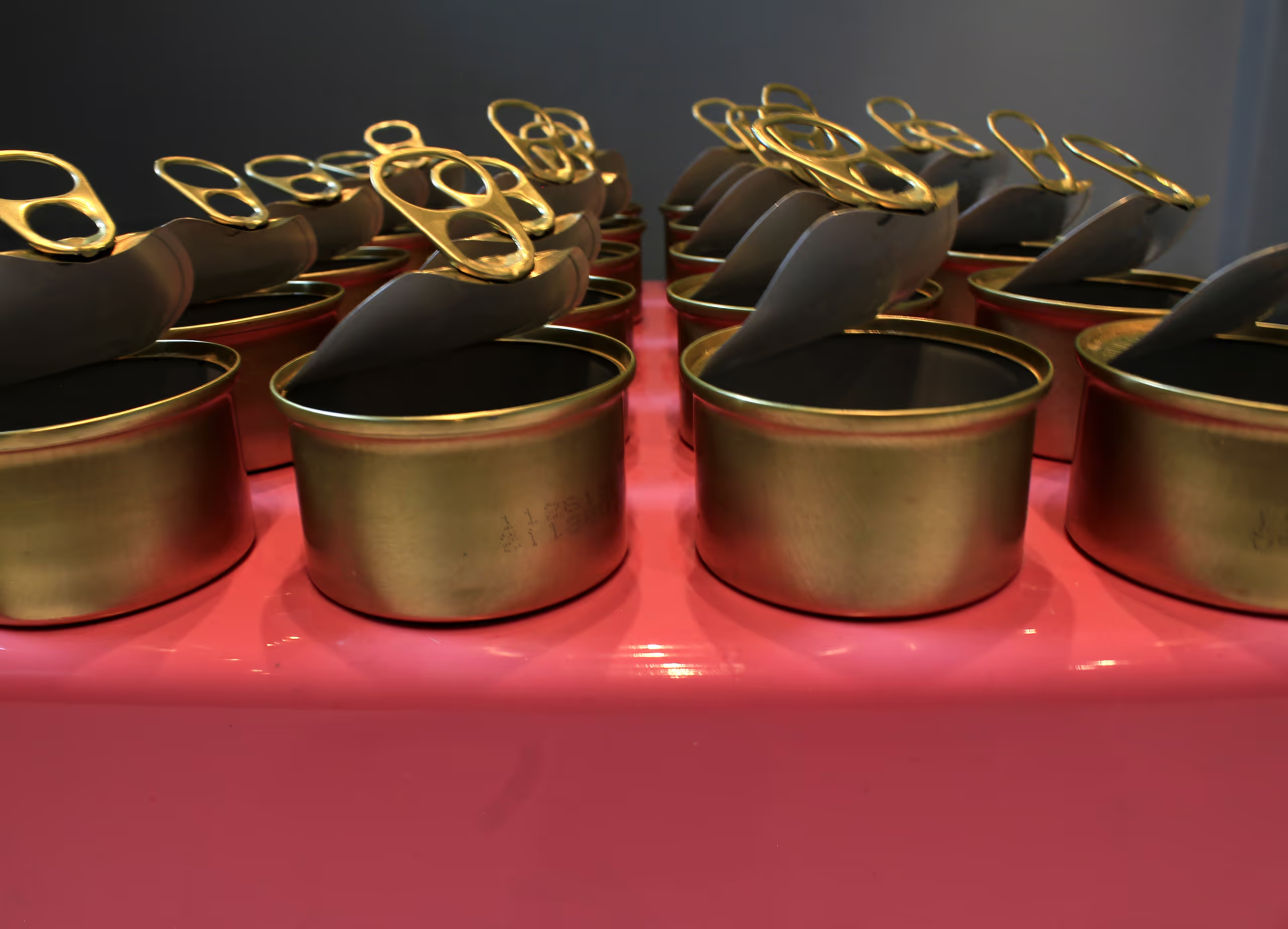
I’ve spent years trying to figure out who I am as an artist. In this search, I have moved all over the United States, seeking out forms and techniques – both old and new – as a means to study art. Initially, when I was younger, I pursued a classical education in New England as I had hoped to join the vanguard of a new figurative movement in art. I spent years drawing and sculpting from life, studying anatomy, and casting the human form. While I still love it – and consider it my home – I came to realize there was an absence for me in that singular pursuit. After some time and a few life-changing events, I moved to Chicago to pursue graduate studies in sculpture and sound art. After graduation and teaching at SAIC for a few years, I was awarded a tenure-track position at Central Michigan University, where I am now an Associate Professor. I still make sound sculpture, but these days I’m becoming interested in Silence as a phenomenon in and of itself.
Much can be said by saying as little as possible, and in service of this, I hope my work can speak for itself. I find that objects granted agency through sound (or removal of it) can become as intimate and immediate as we are to each other. These works resonate in their own bodies and become a viscous medium that pours into the ears of all those nearby. The connection of form and sound is powerful, and the experience one has when both are brought to bear is both natural and uncanny. Time is an important element in my work, and sound is a way for me to mark both distance and the passage of time. In many ways, I seek to close the loop and bring the past back to the present. Sound has this ability. While I don’t claim to have found a magic recipe for artmaking, I know that by embracing both the visual and the transmission, I can connect to my audience on a deeper level. You can always look away from a sculpture, but you can’t close your ears.
11. 11. 25.
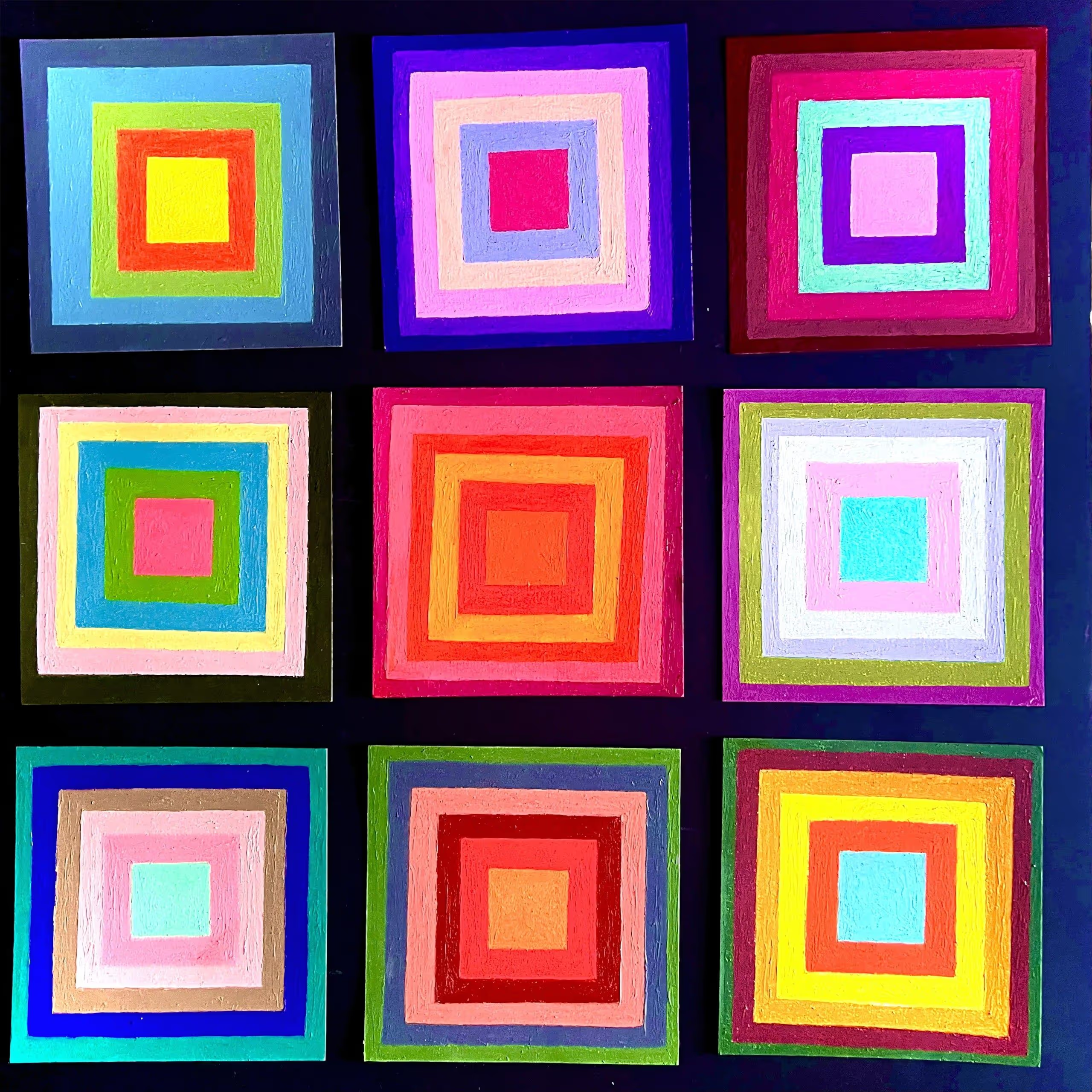
*Jack Farkas’s passion for art began in Bridgeport, Connecticut, inspired by his godparents. He earned a BFA from Maryland Institute College of Art and an MFA from Rochester Institute of Technology, with additional studies at Bradley University and NYU in art history, restoration, and law. His versatile skills include painting, printmaking, calligraphy, and pottery, with color as his signature element. Farkas has exhibited widely, including at the Carrousel du Louvre in Paris, where he also lectured. He received the prestigious Leonardo Award for artistic excellence and will participate in the 2025 Venice Biennale of Architecture and Art. An educator and organizer, he served as professor and dean, curated exhibitions acclaimed by the New York Times, and lectured at leading museums worldwide. Influenced by figures such as Churchill and Timothée Chalamet, his work explores emotion and connection through color and symbolism. Beyond art, he embraces traditional crafts, Freemasonry, and community service, while seeking new gallery representation to advance his vibrant artistic journey.
I am a painter, colorist, and printmaker whose work explores the interplay of color, symbols, and shapes across different spaces. My current pieces invite viewers on an imaginary journey through time and life’s experiences, where forms sometimes float and sometimes remain still, engaging the mind and emotions. I believe that each viewer brings their own interpretation, allowing the simple images to guide them inwardly and encourage personal reflection.
My subject matter centers on symbols and the emotional realms that color can evoke. Color serves as a powerful vehicle in this search for life and creation, opening pathways to deeper understanding. I am drawn to simple compositions that elevate consciousness, prompting examination of the self, the universe, and the mysteries of life. These works touch upon spiritual and even supernatural dimensions, inviting contemplation beyond the visible world.
Life itself, creation, and the intrinsic need to leave a meaningful imprint inspire my work. I create as part of my ongoing journey, hoping to offer insight and ease to those who follow their own paths through life. My art serves as a bridge for others to learn, reflect, and connect.
Technically, I embrace oil pastels for their ability to produce vibrant colors with both sharp and soft edges on paper. Regardless of medium—oil pastels, paint, or printmaking—I aim to communicate through the universal language of art, allowing each piece to speak openly and deeply to its audience.
15Mil Dollar Dinner
Heini Mika, an artist from Helsinki, Finland, has called the United States home for the last 5 years. From the vibrant pulse of New York City to the golden shores of Pompano Beach, Florida, Heini continues to make art with a spirit shaped by all three worlds. Heini holds a Bachelor’s degree in Fine Arts from the University of Worcester (UK), and she also has a degree in Fine Art and Visual Communications from Finland’s prestigious Pekka Halonen Academy of Art. Heini’s paintings have received global recognition, being showcased on four continents in prominent locations such as NYC, Paris, the UK, the UAE, and Indonesia. Her artworks have been featured in many notable publications, including British Vogue, and several of her pieces are cherished within private collections.
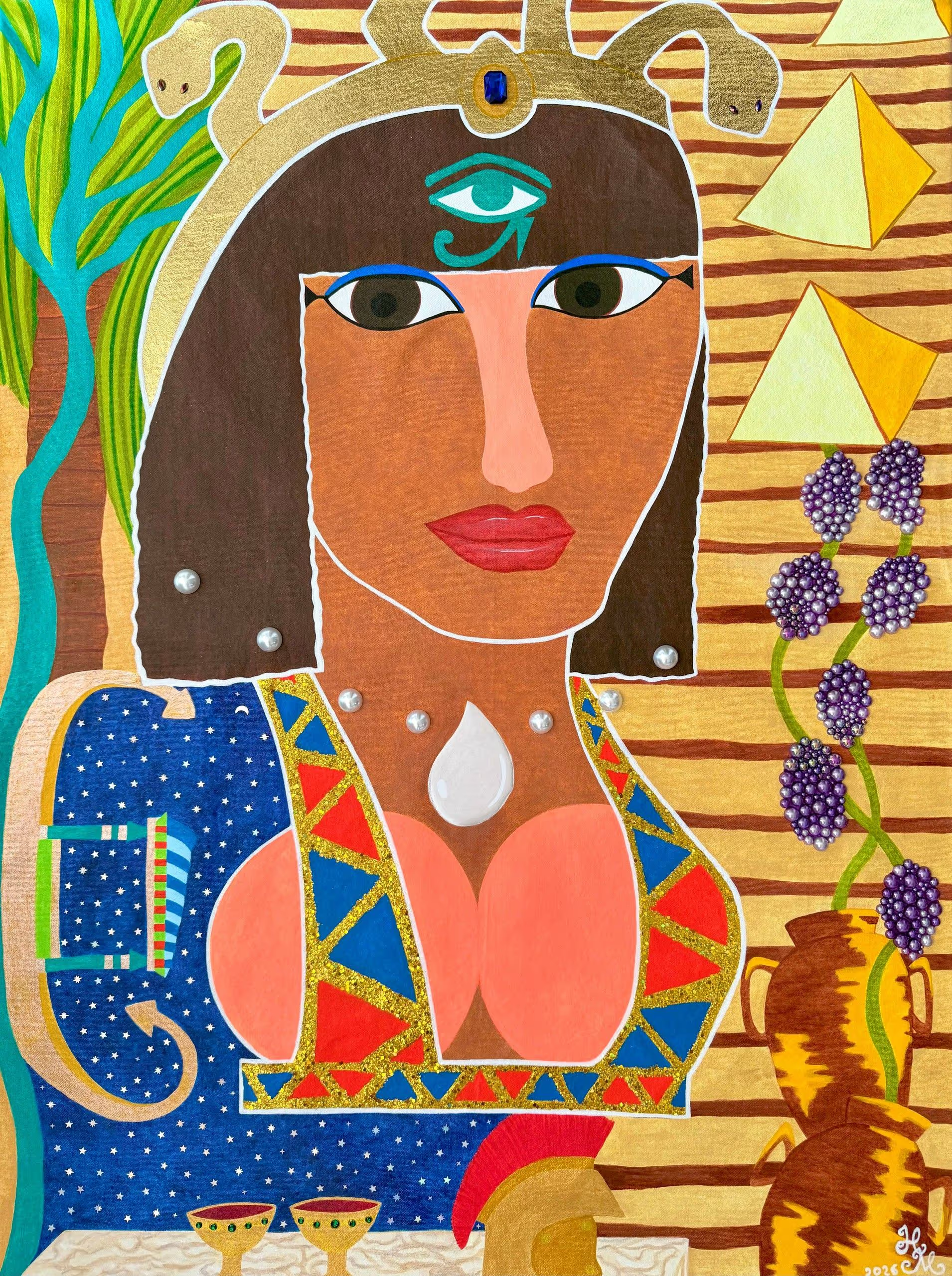
Heini’s ultra-contemporary paintings serve the viewer with a palette of vibrant colors and dynamic shapes while she gives you her unique perspective on women, fairytales, and history. They have been an important source of inspiration for Heini throughout her career as an artist, and this can be observed in her rich and intriguing original artworks.
Since forever, women have been the subject of great art, but rarely have we allowed to create great art. As a female artist living in the 21st Century, I find great inspiration in the female icons of the past. Famous women from Marie Antoinette to Miley Cyrus have served as profound sources of inspiration for me, due to their distinctive styles and unique spirits. In my art practice, I explore the contrast between the public portrayal of the women I admire and their true selves. My aim is to discover how the images of these influential women, given by pop culture, impact and shape my own artistic impressions of them. Just like the women I paint, I am an unconventional woman in the eyes of my society, and with my art practice, I want to invite viewers to look past the glittering images and see the depth and complexity of the women I paint, myself included.
Ultimately, my work serves as a reflection and exploration of this complex dynamic. While my intention is to showcase the vibrant and visually captivating images that pop culture has crafted around the women I idolize, I also remain very conscious of the underlying darkness that hides beneath the surface of their seemingly lighthearted images.
As a Finn, I grew up on satire, dark humor, and happy endings, and that is well reflected in my work. At first glance, my cartoonish mixed media paintings may depict my subject’s pop culture image perfectly, which is usually colorful, ditzy, and lacking in substance, but I am actually satirizing our perceptions of my female heroines. We are all guilty of prioritizing a person’s image over the narrative. But whether the viewer understands this duality or not, I still want them to have a good time when viewing my artwork.
I choose to work with acrylics, rhinestones, and glitter because their vibrant hues and plastic textures are well-suited for creating eye-catching artworks that are unique to me, and perfect for the subject matter.

16th From The Fool
Stephanie Kolpy is a Senior Lecturer of Art in the focused areas of Drawing, Painting, and Printmaking at the Ernest G. Welch School of Art at Georgia State University in Atlanta Georgia. Kolpy has participated in over 140 international to invitational exhibitions with seven solo exhibitions since 2003. Kolpy has a solo exhibition at Gallery 72 in Atlanta, GA, scheduled for June 2024. Since 2003, she received over 30 awards based on her portfolio and has been included in 30 art publications including the international publication in 2011 NOPLACENESS: Art in a Post-Urban Landscape, highlighting contemporary southern artists, and in 2022 The Hand Magazine, a competitive journal publishing printmaking and photography. Kolpy’s work is in the permanent collections of The Bradbury Museum in Arkansas, The Zuckerman Museum of Georgia, and The Yun Xiang Ju Group / Baoding City China Cultural Museum.
My current work is realized through multiple layers of monoprinting, drypoint, and hand-painted high-density watercolor ink. A symbolist in my approach, I’m interested in the visual and thematic parallels between apocalyptic mythos and the Holocene extinction—our present age—where ancient species are dying off en masse due to climate change. The theme of apocalypse—from the Greek word apokalypsis, meaning “to reveal”—has driven me to articulate what the future might “reveal” regarding the natural world. As our ecological crisis intensifies, humanity’s struggle with itself also intensifies through social unrest, toxic polarization, global pandemics, violence, and war. In my work, this conflict and unrest are exacerbated by modern-day conspiracy theories and harmful, science-denying myths, and I interrogate such narratives within a broader landscape of religious history and mythology.

19
Emily Weber, a recent graduate from the University of Hawaii at Manoa, uses photography as her creative medium when words fall short. From an early age, her natural eagerness to transform anything into art caught the attention of her father. Recognizing this as an opportunity, he introduced her to the world of photography, igniting a newfound passion for capturing life’s moments.
Growing up in the scenic beauty of San Diego, Emily’s attraction for Earth’s landscapes blossomed. She developed her skills in landscape photography, drawing inspiration from the picturesque surroundings. Noticing her talent, friends began to hire her for portraits and lifestyle shots. Emily also entered her works into many local art shows, one being the San Diego County Fair.
Following her high school graduation in 2017, Emily pursued her education at a local community college while simultaneously excelling as a student-athlete on the golf team. She earned her Associates in Photography, laying the foundation for her artistic journey. In 2019, she faced a pivotal decision upon moving to Oahu, Hawaii—to continue her golfing pursuits or fully embrace photography. After a hard decision, she enrolled at the University of Hawaii at Manoa, expanding her photographic horizons.
By the time Emily graduated in December 2023, a noticeable shift had occurred in her work—from capturing landscapes to delving into the realm of self-portraiture. Her lens began to focus on revealing the rawness of life and the challenges individuals navigate in the real world.
As she embarks on the next chapter, Emily is enthusiastic about the prospect of continuing to create impactful images and unraveling more layers of herself through her evolving artistic journey.
Emily Weber, a photographer based in Oahu, employs self-portraiture as her new medium to capture the burdens of societal expectations and their impact on individuals. This photograph embodies rawness, offering a glimpse into internal struggles stemming from the pressure we put on ourselves. Emily’s artistic vision aims to break down the mask of perfection, laying bare the authentic emotional landscapes within individuals navigating today’s society. Her body of work stands as a touching reminder to embrace imperfections and seek reassurance in the common threads of our shared human experiences.

1960 Mga
I am an artist from east Tennessee. I have been doing art since I was 6 years old. I went to the University of Tennessee and studied fine arts. In 1980, I went to Porsche Automobiles as a designer in Germany. I moved to Central Florida in 1983 and became an architectural illustrator and freelanced for over 25 years. I live back in east Tennessee now and am further pursuing my art career.
I am a traditional artist and am enthralled with extreme detail. There is so much to derive from exploring the intensity of the detail of an object, subject, or scene. I hope to take one into the exceptional world around us through the intensity of detail in my work.

2 Muses Realization Blue
Recent exhibitions included work at the Art Box Gallery/Zürich, Switzerland; Biennale Artbox Expo, Venice, Diversia international group exhibition, Toronto, Canada, Nudus Exhibition & Publication, Toronto, Canada, Plantarium International Exhibition & Publication, Toronto, Canada, SWA – Art Invitational, Southwest USA, MvVO Art Exhibition, New York, Art Metropole Europe, Barcelona, Spain; The Extended Body, International Art Exhibition, London, UK; Art Box/Eduardo Lira Art Gallery, Miami; Art Expo, Zürich, Switzerland; Art Box, Basel, Switzerland; Art Box/Stricoff Gallery, New York; The Scarab Club for artists, Detroit; The Brooklyn Art Library, New York.
Recently, my work has captured the interest of collectors in North America and Europe.
I have been an adjunct instructor of visual art at colleges in Canada and the USA and am currently instructing at College for Creative Studies, Department of Precollege & Continuing Education in Detroit, Michigan.
Prior to my fine arts career, I held executive-level positions in advertising and communications as an art director and illustrator in Canada and USA working on Fortune 500 businesses. Today and into the future, I am totally committed to continuing my gallery work and the education of visual artists.
Influenced by German Expressionists, I am a 2D artist using simple tools like pastels/markers/pencils, and paper product surfaces to create emotional connections and journeys.
My focus is on capturing spirit through the tools of drawing & encouraging viewers to complete each image with their own thoughts and dreams. My work’s message is in the viewers’ search for individual meaning through my subject. I’ve always seen the act of drawing as more than mark-making or visual notation, but rather a conversation and shared experience with those who witness it. My drawings often are human or botanical studies and constructed from an emotional search for content and structure rather than sight measurement and light management.