

Jamming
After having spent a decade in Greenwich Village where Kelly, and a group of close compadres, discovered “performance art” (when she first combined visual art & poetry), she then relocated to Northport, NY, and immersed herself in live poetry, visual art, and acting. Some publications include a full-length book of poetry “Barking at Sunspots”, “On Maxwell Street”, “Bards Annual”, “Grabbing the Apple (an anthology”), “Long Island Sounds (an anthology)”, “XANADU”, “Paumanok: Poems & Pictures of Long Island (an anthology)”, numerous small chapbooks and inclusion in many small press publications (“DICO,” “Voices International”, “AITIA, etc.). Kate has worked as a visual artist with other poets (a published book “ENTER”) and collaborated with other poets and musicians (e.g. David Amram on the CD “Northport Celebrates Jack”). She was honored to be awarded “New York State Woman of Distinction in the Arts” (2003). Kelly has been fortunate to have exhibited in many art exhibits, both group and solo, involved in organizing multi-media events (Sundays @ 7), was a member of the Bare Bones acting group, “performed” her poetry in many venues, was one of the founders of the Northport Arts Coalition and served as their first co-chair. She has served as a curator of shows for the Art League of Long Island and the Northport Arts Coalition. Recent visual art exhibits from 2020 – 2023 include curated group shows “Out of Isolation”, “Paradoxical Paradigms”, “Forever Young”, “We’ve Gone Wild”, “Artist’s Choice (an invitational)”, “Paper, Paint and Pixels” (2-person show) and solo exhibits, “a show of wanderings” and “New Works”.
After spending many years working in different media, i.e. traditional darkroom photography, oil/acrylic painting, sculpture (welding, wood, etc.), and most often a combination of all these approaches, I was introduced to using the computer as yet another tool to express myself, to share my vision of the world. The discovery of what it offered in the way of new approaches to creating my work, intrigued and excited me. I was afforded the tools that supplanted and/or enhanced other tools that I had been working with, and in altogether new & inspiring ways, the possibilities opened up an unexplored and most challenging world. As art progresses, innovative and exciting tools become available, and, as an artist, I am always curious, always experimenting and embracing different techniques to further my end as an artist, which is my attempt to communicate with the outside world.
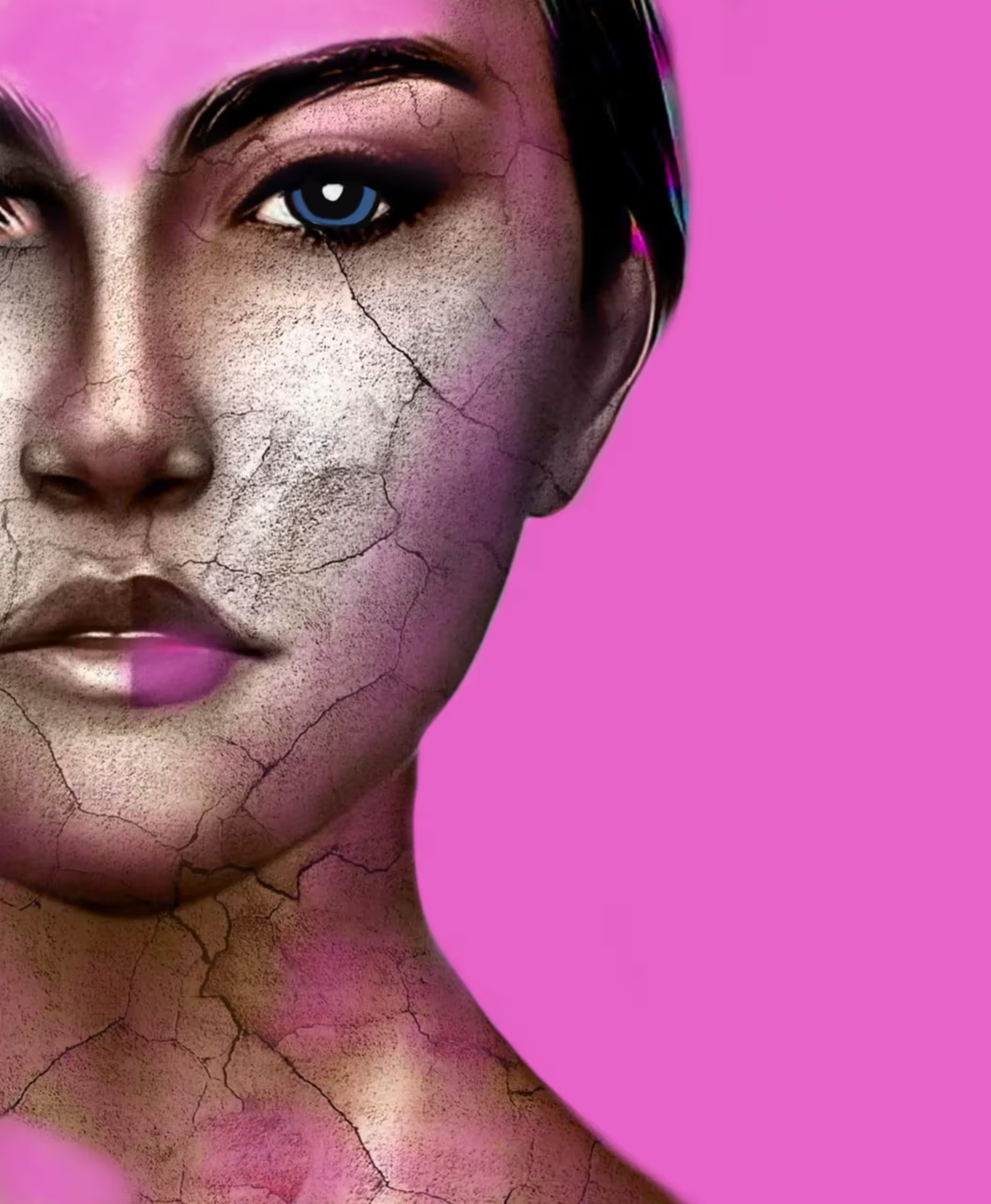
Jawwala XVIII
Pamela Chrabieh is a Lebanese-Canadian visual artist, researcher, activist, writer, co-founder & CEO of Lebanon-based creative hub Kulturnest (kulturnest.com), and consultant with extensive 25+ years of multidisciplinary and international experience in university teaching, academic research, visual arts and art direction/curatorial management, creative communications & content creation in the fields of education, international organizations/NGOs, arts & culture, humanities, and healthcare & bioethics, as well as project and program management, training, and conference/workshop organization.
Chrabieh holds a Higher Diploma in Fine Arts and Restoration of Icons, an MA in Theology, Religions, and Cultures, and a Ph.D. in Theology-Sciences of Religions. Dr. Chrabieh is the author of numerous publications — books, book chapters, academic papers, and online articles — in the fields of sciences of religions, theology, interreligious/intercultural dialogue, gender studies, youth studies, cultural studies, arts and culture, etc. in French, Modern Standard Arabic, and English. She was selected as one of Lebanon’s 100 most influential women in 2013 and won several prizes in Canada and Southwestern Asia.
Recent exhibitions: “Unyielding”, “Art her Way”, “Urban Canvas” and “Embodied Realities” Collective Exhibitions at Kulturnest – Lebanon; “La Semaine de la Parole”, Collective Exhibition, Québec – Canada; “Brain Cake,” International Art Exhibition, M.A.D.S. Art Gallery, La Pedrera, Barcelona-Spain & spatial.io; “Feel” Contemporary Virtual Exhibition, Art Maison Gallery & StudioArte22, Italy; “Women Talk, We Listen,” International Virtual Art Exhibition, Kato Wong Gallery, London-UK; Chicago Fine Art Salon – Online Gallery, Chicago-United States; “Adrenocromo for Dinner,” International Art Exhibition, M.A.D.S. Art Gallery, Milan-Italy & Fuerteventura-Spain; “Rise” Multiform Art Hybrid Exhibition at the Zico House, Beirut-Lebanon, and on spatial.io; Liquid Arsenal, Mixed Reality International Art Exhibition, M.A.D.S. Art Gallery, Milan-Italy & Fuerteventura-Spain; Images of Women, Virtual Group Exhibition, Independent & Image Art Space, Chongqing – China; The Healing Power of Color, Collective Exhibition, Manhattan Arts International and The Healing Power of ART & ARTISTS (HPAA), New York; Anima Mundi Festival – VISIONS, ITSLIQUID International Art Festival, Venice Biennale, Palazzo Ca’ Zanardi, Venice; and Engaging Gazes, Generating Poetry, Rotunda Gallery, AUD – United Arab Emirates.
My Jawwala (“Nomad”) collection is a series of archetypes that represent subjectivity reconstructions as contingent and provisional while interconnecting with past experiences and belongings, in which people create/recreate their sense of identity through kaleidoscopic encounters and ever-changing situations and apparatuses. The renewal of the self is depicted as disturbed by fixity and longing for it through stylized gazes channeling the visible to the invisible. These artworks are part of my integrated (phygital) iconography collections – expressing pieces of wounded memories of war by sublimating reality. Each icon depicts scattered elements of women torn by the vicious cycle of physical/psychological war and gives shape to the absence, the missing, the unspoken, the disintegrated,… to the afterlives of war survivors in their grief, nostalgia, exile, and remorse co-mingling with a slight hope (if any) for a future in which they reclaim the past from ossification, fixed boundaries, and hyperamnesia/hypoamnesia while transforming the immutable darkness to transitory realms.
Integrated (phygital) iconography is a style that I have been developing in the last few years. It combines traditional techniques of Levantine iconography with concept art and is an intricate process of digital transformation of physical icons’ writing.
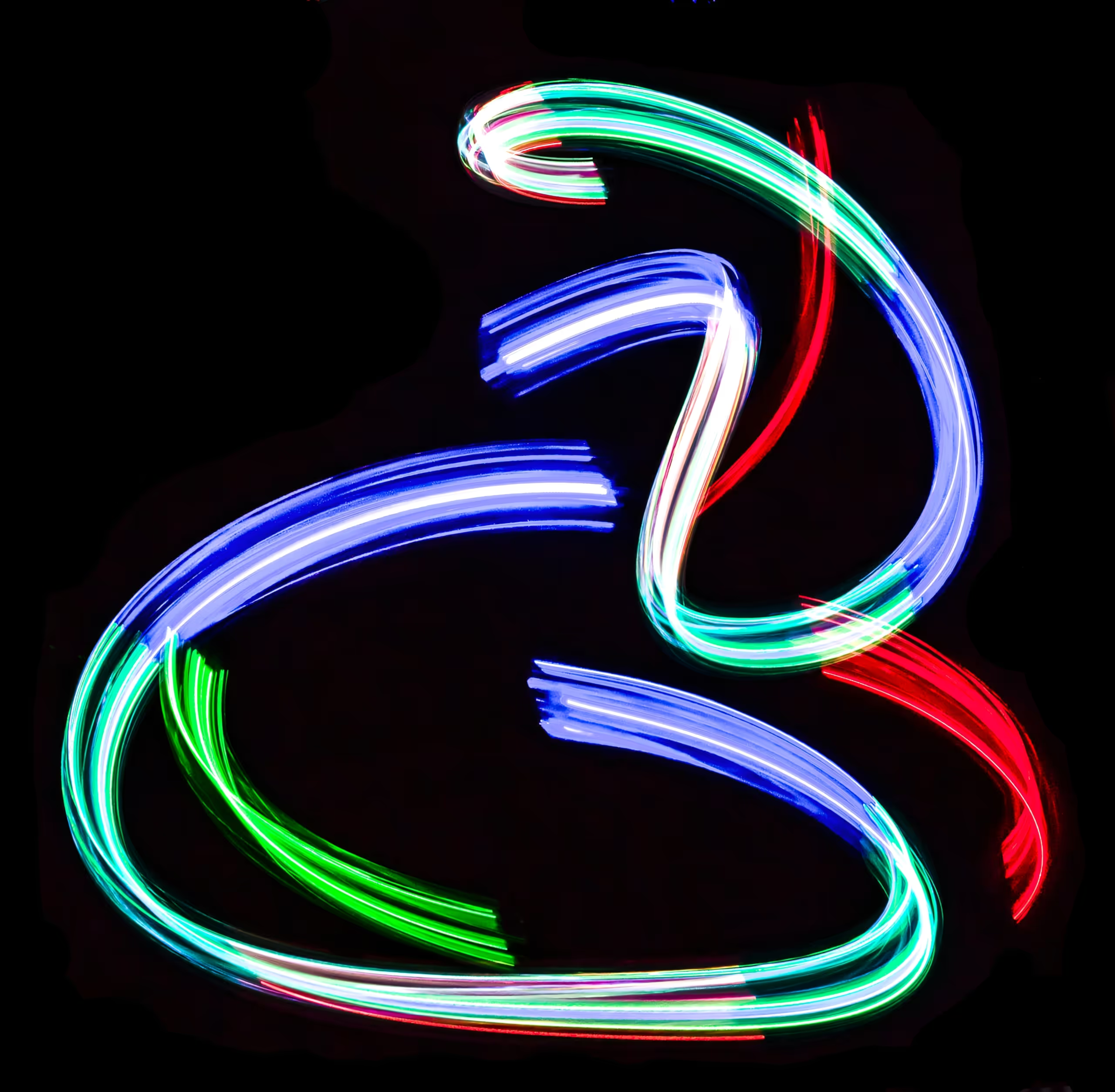
Jazz Dancer
Douglas Wolters is known for his unusual abstract photographs as well as his close-up portraits of botanical subjects. Recently, he participated in numerous group shows, both at local Washington, DC-area galleries and online. In 2024, he participated in two shows at the HMVC Gallery New York, three shows with Gallerium, and had four images accepted by the Delaware Photographic Society Circuit. Two of Mr. Wolters’s images were selected for the Cape Cod Art Center’s “Black and White” 2023 online photography exhibit, in which 142 photographers entered and only 35 images were selected. One of Mr. Wolters’s images was selected for Exhibizone’s “Curves 2023,” an international online exhibit in which 15 countries were represented. He was also selected for the Artistonish International January 2023 exhibit. Lenswork published Mr. Wolters’s images in three recent monographs. He has also won numerous awards, including first place in B & H Photo Video’s 2021 Optic contest (which came with over $1000 worth of gear) and Best in the Macro Division in the 2020 Mid-Atlantic Photo Visions exhibit. For four years, he won a Special Award in the annual Joe Miller International Abstract exhibits. In addition, he won 3rd place in the 86th Annual Wilmington International Exhibition of Photography, for which there were 2900 entries.
As a professional cellist and educator, I came to photography only after retirement. And as a musician, I bring a somewhat unusual set of perceptions to photography. Line, rhythm, harmony, and structure in music find their counterparts naturally in images.
One of my specialties is abstract photography, using a technique I have developed. Its starting point is always an actual photograph. I then manipulate the form and color with software, transforming it into a wholly new image. I am also devoted to photographing a series of botanical close-ups (or macro photography). These images resemble a theme with endless variations in detail, color, form, and beauty.
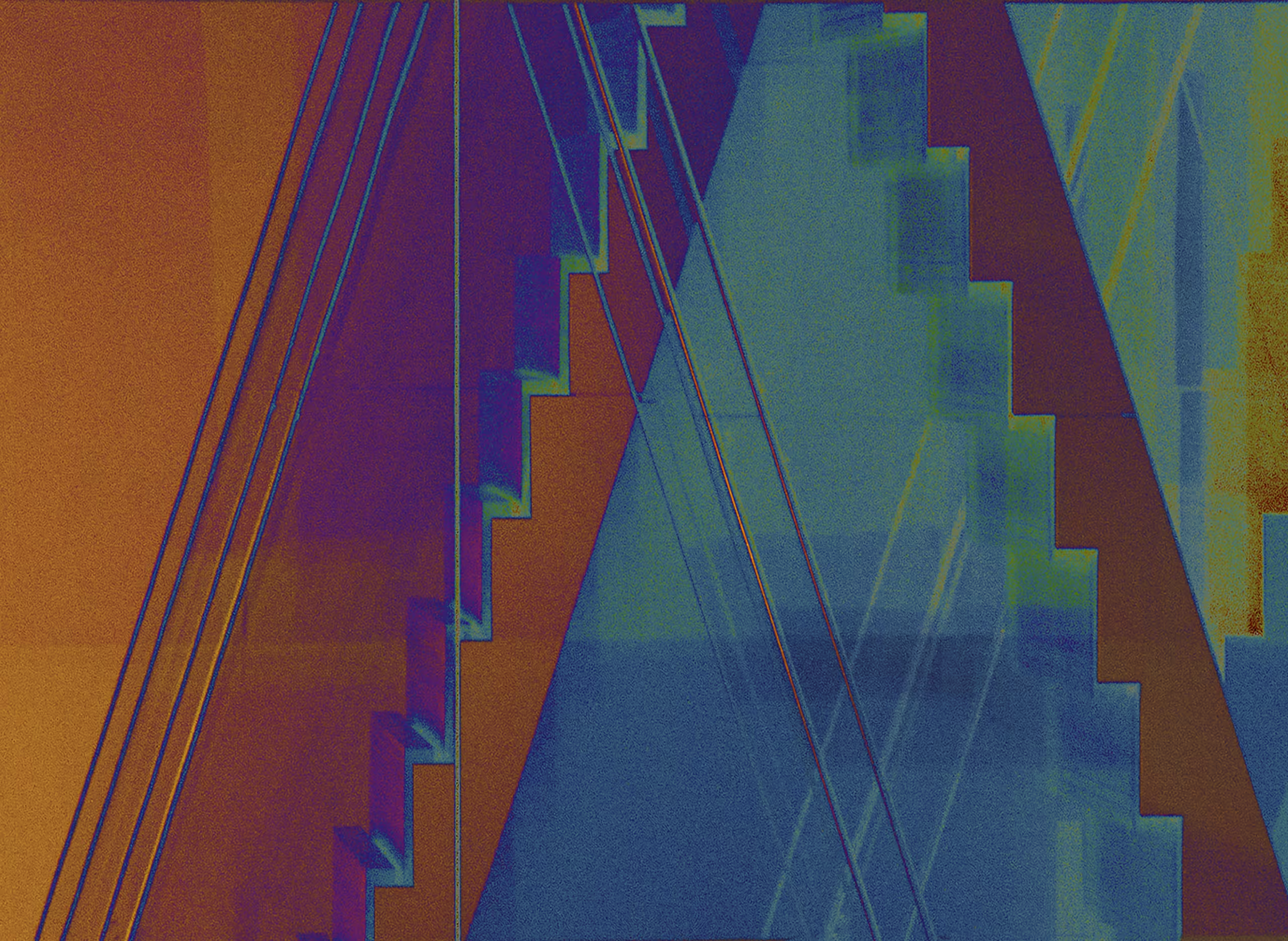
Jazzed
Babler’s work has been juried into: 38th September Competition – Alexandria Museum of Art juror Erika Mei Chua Holum, Associate Curator – Blaffer Art Museum; “Reflecting 2025”– Maryland Federation of Art; 38th Annual McNeese National Works on Paper Exhibition; “In the City” exhibit juror Christina Gomez (Art Institute Chicago); North American Print Biennial juror Elizabeth M. Rudy (Associate Curator of Prints Harvard Art Museums, Boston); Dubuque Museum of Art Biennial juror Pamela Hugdahl (Executive Director, Rochester Art Center); Rockford Art Museum Biennial Juried Exhibit of Contemporary Artists; Andrew James Wulf, Ph.D. (Director – Albany Museum of Art); Gary Freeburg (Professor/Director of Duke Hall Gallery of Fine Art at James Madison University); Amanda C. Burdan (Associate Curator – Brandywine River Museum of Art); Christiane Paul (Curator of New Media Arts at the Whitney Museum of American Art); Felice Frankel (Science photographer/research scientist); Malcolm Daniel (Curator of Photographs – Metropolitan Museum of Art, NYC); Kenneth Baker (Art Critic, San Francisco Chronicle); William Lieberman, Director of Zolla/Lieberman Gallery – Chicago; Annette Carlozzi (Sr. Curator at Blanton Museum of Art); Dr. Jefferson Harrison (Chief Curator Chrysler Museum of Art); Charlotta Kotik (Curator of Contemporary Art Brooklyn Museum of Art); David Houston (Chief Curator –Ogden Museum of Southern Art); Dr. Russell Panczenko (Director – Museum of Art, Madison Wisconsin); Siri Engberg (Walker Art Center); Stephen Phillips (Phillips Collection – Washington DC); Sam Gilliam (international artist); and Ed Paschke (international artist).
She is a Ragdale Residency Fellow and a juried member of the Illinois Arts Council’s Arts-In-Education Roster and has exhibited at Northwestern University, Concordia University, Rockford Art Museum, and the Alexandria Museum of Art. She was also a fine art consultant and advisor for Grumbacher/Prismacolor, along with developing a program for Blick Art. Her artwork is in corporate, university, and private art collections.
Color is a magic ingredient by establishes a visual mood. Compositional movement enhances that mood. Combined, these two components can energize and convey a message to the viewer. In my submission, “Jazzed”, artistic components are carefully used. In “Jazzed” a visual abstraction of music is presented.
As an artist, I am a visual storyteller. I create visual puzzles with purposeful ambiguity. The intent is for the viewer to become involved and react. A curator has described my artwork as smart and thoughtful and dense with information; gorgeous with color. Mysterious and challenging…puzzles for the viewer to solve.

Jeffrey
Ms. Lieberman is a New York based artist who shares an apartment overlooking the Hudson River with her husband and Bichon Frise, She studied fine art at the School of Visual Arts and Textile Design at Parsons School of Design and Fashion Design at FIT in New York City and began her art career as a textile/ surface pattern designer within the fashion and home furnishings industries creating patterns for Carole Little Industries in Los Angeles, California, and Liz Claiborne in New York as well as independent textile design studios throughout her 30-year career. Upon retirement from the fashion industry, she continues to utilize patterns throughout the representational artwork she currently creates often drawing inspiration from both the natural world, through travel, and the urban environment. This fascination with pattern is not just aesthetic, but also philosophical. For her, patterns represent the underlying interconnectedness of all things.
Her unique collages are a fusion of traditional and digital techniques. She starts with hand-drawn or painted elements, sometimes scanning and manipulating them digitally. This process allows her to experiment and iterate her works, often playing with enlarged scale, color placement, and pattern orientation to create her distinctive collage pieces. In her future projects, she plans to explore new mediums and techniques, pushing the boundaries of what is possible with patterns and collages.
“Jeffrey” is a mixed media collage utilizing original and vintage surface pattern designs and acrylics on stretched canvas and truly exemplifies the theme “the best of me”. Jeffrey is my soulmate of 52+ years. He is my source of love, laughter, joy, adventure, inspiration, confidence, honesty, and pride, and brought me out of my imposter syndrome shell to the joyous path of creativity I’m living now. Never too late, he brought out the “best of me”.
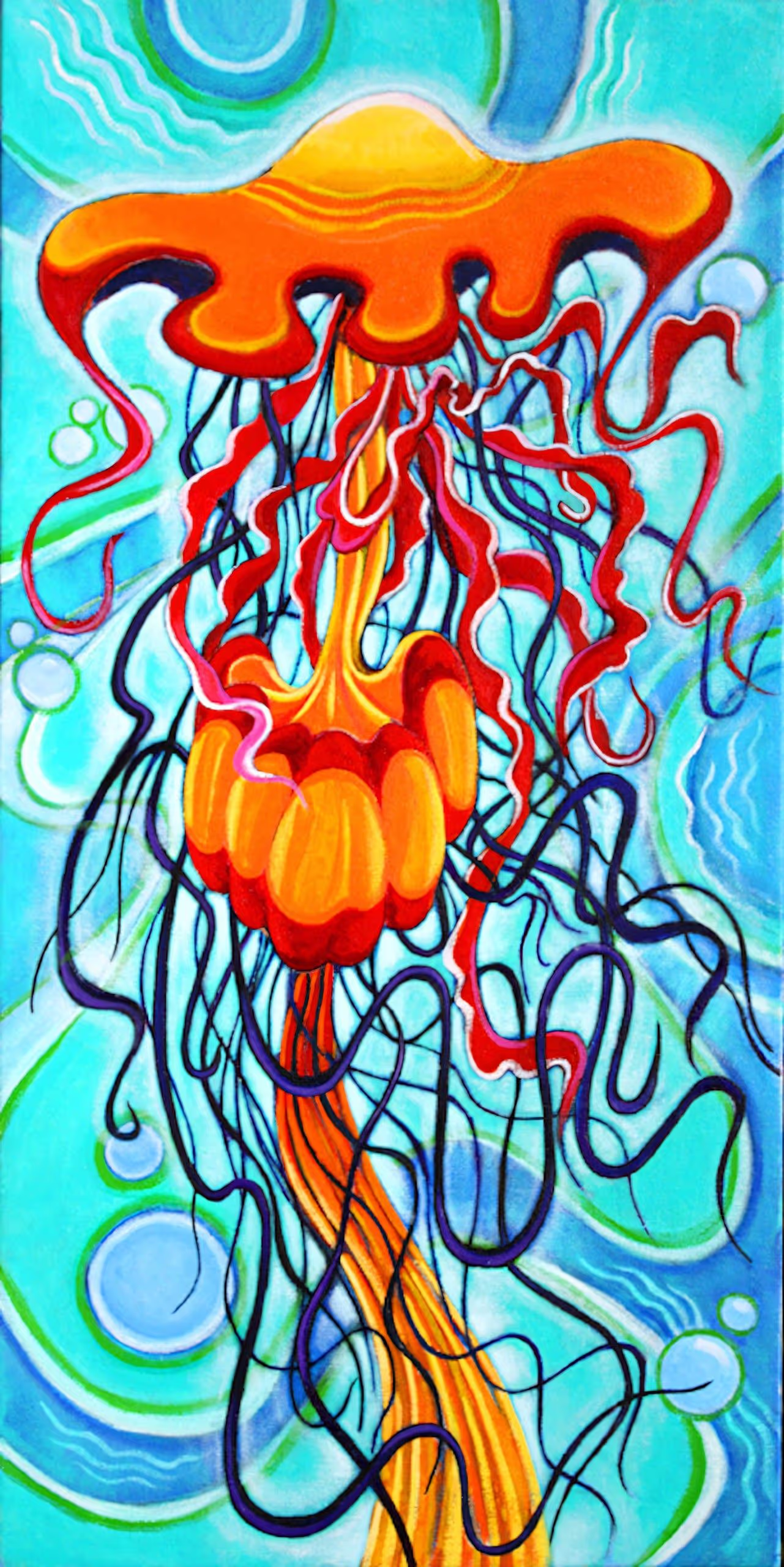
Jelly Love
Anthony Alexander received his formal art instruction at the Ontario College of Art, where the focus was on an academic interpretation of the human figure. The idea was that you had to learn the fundamental rules of academic drawing and painting in order to understand how to break them.
For over 35 years, he has worked in the digital medium as an art director, with Photoshop being his primary image creation tool. He also explored this medium and how it could be applied to fine art, but a few years ago, he realized that he wasn’t satisfied with the process. Something was missing, and that something was working with traditional organic materials and reflected light, as opposed to projected light.
He shifted his method of creating art back to using acrylic paint and watercolours, and to drawing every opportunity that he could. He uses acrylics because of the many vibrant colours available and, unlike oils, their quick drying time and the ability to use water as a mixing medium. Another advantage of acrylics is that, in addition to being an opaque paint, they can also be treated as a transparent medium. In this application, they are similar to watercolours, but he still enjoys the spontaneity of watercolours and paints with them often for more non-representational subject matter and as a means to “stay loose.”
“Colour is energy made visible.” — John Russell
I just love the subtle vibrations you feel in your fingertips as you drag graphite over textured paper or your brush over a freshly primed canvas, and it was organic sensations like these that I was missing in the digital process.
The paintings I have created for this show are all done with watercolour on paper and emphasize strong primary colours, which I build up gradually by using wash glazes and abundant under-painting for the desired effect. The many layers of paint used to get to the desired colour increase the overall density of the finished artwork.
I have also chosen non-representational subject matter because I am passionate about biomorphic shapes and equally fascinated by the “Fibonacci sequence” and ideal proportion that is so prevalent in nature. It is easy to see why so many artists derive inspiration from the variety of abstract shapes and colours found in these subjects.
Colour is so important to me because it’s colour (coupled with subject matter) that gets the most emotional response when looking at a painting. Only colour, however, has the ability to engage the observer in a subjective experience entirely on its own, and it is this type of experience that I am striving to attain.

Jenny Sunrise
I was always painting from a young age. I’m not sure if I always wanted to be an artist, but I was always drawn to creative fields and people. I received my Bachelor’s in fine arts from the School of the Art Institute of Chicago and my Masters in Experimental Animation from the California Institute of the Arts. As a professor, I took a lot of pleasure in teaching art to younger students and encouraging their growth. I’m happiest being engaged in creating work. Everyone has a story to tell. People use their body language to tell it more often than words. I try and retell those stories that I see the model express in my work.
Nature fascinates me in all of its variety. A lot of what I paint is derived from my observation of people and places. People are by far the most interesting subject. How they relate to the space around them and how that space defines them is a source of endless fascination. I hope the audience finds that relationship as exciting as I do.
Everyone has a story to tell. People use their body language to tell it more often than words. I try and retell those stories that I see the model express in my work.
Nature fascinates me in all of its variety. A lot of what I paint is derived from my observation of people and places. People are by far the most interesting subject. How they relate to the space around them and how that space defines them is a source of endless fascination. I hope the audience finds that relationship as exciting as I do.

Jewel Of The Aegean Print
Karen Kurka Jensen is an accomplished contemporary ink and watercolor artist, who portrays her deep connection to nature through mystical landscapes and abstract images. Jensen grew up in Minnesota where she was sidetracked from a library career following a traumatic car accident. She went in search of alternative healing after doctors could not relieve her chronic pain. She met a traditional Chinese healer who not only treated her successfully but introduced her to Chinese culture and heritage. This “accident” led her down a path of discovery, falling in love with the art of sumi-e. Karen met and began studying with American Sumi-e masters, Susan Frame and Susan Christie shortly after they returned from formal studies overseas in China and Japan, where their teachers were Zhuo He-Jun and Lu Yen Shao. She has continued research studies on her own from renowned Sumi-e artists such as Diana Kan and Gao Xingjian.
As an artist who specializes in Sumi-e art, I am deeply passionate about exploring the relationship between art and spirituality. My artwork is a reflection of my innermost thoughts, feelings, and beliefs, and is intended to serve as a vehicle for self-expression, meditation, and contemplation. For me, Sumi-e is the perfect medium.
Sumi-e, also known as Japanese ink painting, is a traditional art form that is deeply rooted in heart and vision. In my art, I strive to capture the spiritual essence of my subject. Whether I’m painting a landscape or an abstract expression, my goal is to create a piece of art that speaks to the viewer on a deeper level.
Ultimately, my art is a reflection of my own personal journey. Through my artwork, I seek to explore and express my own thoughts, feelings, and spirituality, while also providing a source of inspiration and reflection for others. Whether viewed as a simple piece of art or as a vehicle for meditation and contemplation, I hope that my work serves to uplift and inspire all who encounter it.

Joan Of Arc
Barbara Keim has used the computer as an art tool dating back to the early 1980s.
She originally received traditional fine arts training and became involved in graphic design/illustration freelance endeavors early on. She had incidentally been introduced to a high-end paint system while in NYC at a marketing demonstration and was completely enamored with computer graphics artistic potential of the software, and digital photography. This has since become her choice of artistic medium.
Her digital work has been published in publications internationally, inclusive of Prix Ars Electronica, book on artists, Linz, Austria, Delta Informatics corporation – Calendars, Athens, Greece, Encyclopedia of Living Artists, NY, NY. The best computer art in the World, Slide archive, Bloomsburg, PA, USA, and in Computer Graphics World Magazine, L.A. California.
She has exhibited her work in Austria, Canada, England, Greece, and all across the U.S.
She continues to teach, consult, and create computer graphics in Massachusetts.
“My interests lie in nature, wildlife, spirituality, and the human spirit. The most basic of creations in life are combined with technological media as a vessel to provide a divergent yet clean portrayal of themes I am drawn to.“
As a digital artist, I have always been interested in themes of spirituality, nature, and wildlife, as well as in the human condition and what makes people tick.
I am an avid advocate for the protection of wildlife, nature, and the environment.
I have worked in the area of computer graphics ever since the computer became a tool for creative pursuits.
I create my collage-inspired work using a combination of digital software integrated with my own drawings and photographs.
I prefer full vivid colors, and also create symbols in my art much like the Flemish artists did. My additional favorite art movements are Surrealism, Flemish Art, and Pop Art.